
Table of Contents
Scope and Contents of the Collection
| Ask a question |
| Request a visit |
| Suggest a change or correction |
| Potentially harmful content statement |

Overview of the Collection |
|
| Creator: | Waxman, Franz, 1906-1967. |
| Title: | Franz Waxman Papers |
| Inclusive Dates: | 1922-2008 |
| Quantity: | 49 linear ft. |
| Abstract: | Correspondence; manuscript scores; printed scores; clippings; articles and speeches; materials about the Los Angeles Music Festival; awards; and his autograph collection. Correspondents include American Society of Composers, Authors and Publishers, Leonard Bernstein, Boosey and Hawkes, Inc., Nicolai Brerezowsky, Aaron Copland, Werner Egk, Paul Eluard, James Forsyth, Lukas Foss, John Green, John te Groen, Jascha Heifetz, Dorothy Huttenback, Rolf Liebermann, Joshua Logan, Los Angeles Music Festival, J Marks, Charlotte Nicholls, Organisation Artistique Internationale, Menahem Pressler, Max Rabinoff, Marcella Rabwin, Rundfunk Hessischer, Dore Schary, Hans Sikorski, Isaac Stern, Leopold Stokowski, Alexandre Tansman, Union of Soviet Composers, Gottreid Von Emlin, Jerry Wald, Bruno Walter, John Waxman, Lella Simone Waxman, and Alma Mahler Werfel. |
| Language: | English, French, German |
| Repository: |
Special Collections Research Center, Syracuse University Libraries 222 Waverly Avenue Syracuse, NY 13244-2010 https://library.syracuse.edu/special-collections-research-center |
Biographical History
FRANZ WAXMAN 1906-1967
A Biographical Memoir by John W. Waxman
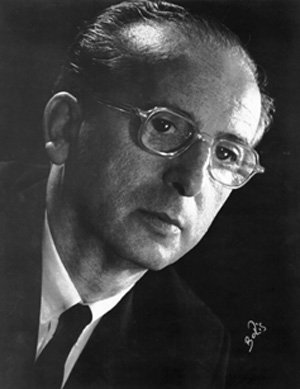 [Photo at right: Last portrait of Franz Waxman, taken by Boris Goldenberg in 1965,
for the premiere of The Song of Terezín at the Cincinnati May Festival.]
[Photo at right: Last portrait of Franz Waxman, taken by Boris Goldenberg in 1965,
for the premiere of The Song of Terezín at the Cincinnati May Festival.]
Franz Waxman led a variety of musical lives as composer, conductor and impresario. He was born in Konigshutte, Upper Silesia, Germany, on December 24, 1906, and was the youngest of seven children. No one in the family was musical except Franz, who started piano lessons at the age of six. His father was an industrialist, and not believing his son could earn a living in music, encouraged him in a banking career. He worked for two and a half years as a teller and used his salary to pay for lessons in piano, harmony and composition. He then quit the bank and moved to Dresden and then to Berlin to study music.
During this period he paid for his musical education by playing piano in nightclubs and with the Weintraub Syncopaters, a popular jazz band of the late 1920s. While with the band he began to do their arrangements, and this led to orchestrating some early German musical films. Frederick Hollander, who had written some music for the Weintraubs, gave Waxman his first important movie assignment: orchestrating and conducting Hollander's score for Josef von Sternberg's classic film, "The Blue Angel." The film's producer, Erich Pommer, who was also head of the UFA Studios in Berlin, was so pleased with the orchestration of the score that he gave Waxman his first major composing assignment: Fritz Lang's version of "Liliom" (1933) which was filmed in Paris. Pommer's next assignment, Jerome Kern's "Music in the Air" (Fox Films, 1934), took him to the United States, and he brought Waxman with him to arrange the music.
Waxman's first original Hollywood score was "The Bride of Frankenstein" (1935), which led to a two-year contract with Universal as head of the music department. He scored a dozen of the more than 50 Universal films on which he worked as music director. Among the best known are "Magnificent Obsession, "Diamond Jim" and "The Invisible Ray."
Two years after he went to Hollywood, Waxman, then 30, signed a seven-year contract with Metro-Goldwyn-Mayer to compose. He averaged about seven pictures a year, and it was during this period that he scored such famous Spencer Tracy films as "Captains Courageous," "Dr. Jekyll and Mr. Hyde" and "Woman of the Year." In 1937, he was loaned by M-G-M to David O. Selznick for "The Young at Heart" and was nominated for both Best Original Music and Best Score - the first two of 12 Academy Award nominations he was to receive for the 144 films he scored in his 32 years in Hollywood. In 1940 he was again loaned to Selznick, this time for "Rebecca," and was nominated for his third Academy Award.
Waxman left M-G-M in 1943 and began a long association with Warner Brothers. "Old Acquaintance" is from this period. (Selections from three more of his Warner Brothers scores can be heard on RCA albums: "Mr. Skeffington" is included in "Classic Film Scores for Bette Davis" and "To Have and Have Not" and "The Two Mrs. Carrolls" are included in "Casablanca - Classic Film Scores For Humphrey Bogart.")
In 1947 Waxman founded the Los Angeles International Music Festival, which he was to head for 20 years. World and American premieres of 80 major works by composers such as Stravinsky, Walton, Vaughan Williams, Shostakovitch and Schoenberg were given at the festival.
By 1947 Waxman had a busy schedule indeed. In addition to devoting a great deal of time to the festival, he was in demand at all the major studios, was guest conducting symphony orchestras in Europe as well as in the United States and was composing concert music. For the film "Humoresque" he wrote a special piece based on themes from Bizet's "Carmen," which was played by Isaac Stern on the soundtrack. The "Carmen Fantasie" has become standard repertoire and was recorded by Jascha Heifetz for RCA. Among Waxman's other concert works are "Overture for Trumpet and Orchestra," based on themes from "The Horn Blows at Midnight;" "Sinfonietta for String Orchestra and Timpani;" a dramatic song cycle "The Song of Terezin," and an oratorio, "Joshua."
Waxman won the Academy Award in 1950 for "Sunset Boulevard" and in 1951 for "A Place in the Sun." He is the only composer to have won the award for Best Score in two successive years. It was during the '50s and '60s that he composed some of his most important and varied scores. These are represented by the above two Academy Award winners as well as by "Prince Valiant" and "Taras Bulba." He had usually been associated with romantic films, but now he progressed to epic and jazz-oriented scores. "Crime in the Streets," "The Spirit of St. Louis," "Sayonara," "Peyton Place" and "The Nun's Story" are also from this period and the complete scores were issued on soundtrack albums. Franz Waxman received many honors during his lifetime, including the Cross of Merit from the Federal Republic of West Germany, honorary memberships in the Mahler Society and the International Society of Arts and Letters, and an honorary doctorate of letters and humanities from Columbia College. He died February 24, 1967, in Los Angeles at the age of 60.
Scope and Contents of the Collection
Documenting the German-American composer's career from the early 1920s through the late 1960s, the Franz Waxman Papers comprises correspondence, writings, memorabilia, recordings, and scores.
The Correspondence-subject files contains both incoming and outgoing letters and related material, most of which was generated between 1922 and 1967. Correspondence encompasses that of conductors (Eugene Ormandy, William Steinberg, Leopold Stokowski, Bruno Walter); composers (Aaron Copland, Lukas Foss, Rolf Liebermann, Igor Stravinksky, Alexander Tansman); family members (Alice Waxman, John Waxman, Lella Waxman); motion picture producers, directors, and associates (Louis R. Lipstone, Joshua Logan, Marcella Rabwin, Dore Schary, Jerry Wald, Hal B. Wallis, Jack L. Warner, Darryl F. Zanuck); musicians (Johnny Green, Menahem Pressler, Jascha Heifetz, Rudolf Serkin, Isaac Stern); and music managers (Dorothy Huttenback, William McKelvey Martin). Other correspondents include playwright James Forsyth; dance director J. Marks; music publisher Hans Sikorski; singer Herva Nelli; and UCLA Fine Arts Department faculty Frances Inglis and William W. Melnitz. In addition, the Correspondence-Subject Files incorporates the letters of music publishers (Boosey & Hawkes, Inc., Theodore Presser Company, Salabert, Inc.); music associations and professional organizations (American Society of Composers, Authors and Publishers [ASCAP], International Society for Contemporary Music, Musicians Mutual Protective Association, Southern California Symphony Association, Union of Soviet Composers); and theatrical agencies (Herbert Barrett Management, Inc., Columbia Artists Management, Inc., Basil Horsfield Management Ltd., Organisation Artistique Internationale). Other correspondents include CBS News, Ford Foundation, and Twentieth Century-Fox Film Corporation. Also, letters, clippings, programs, and publicity document the history of the Los Angeles Music Festival from 1947 through 1966. Other performance-based materials relate to the "Franklin D. Roosevelt Memorial Concert" and "The Song of Terezin."
Writings contains essays, notebooks, transcripts of speeches, and miscellaneous notes.
Encompassing a broad assortment of personal and printed documents, as well as a variety of formats, Memorabilia includes a music-related autograph collection; financial records; photographs of Waxman, other music professionals, and performances; printed material, including clippings (1928-1967), program notes (1940-1996), and publicity; scores by others, many bearing annotations by Waxman; and scripts for some of the films and theatrical productions with which Waxman was associated.
Recordings consists of more than a thousand recordings, at least 70% of which are not commercial releases, including rehearsals, concert performances, festival performances, personal recordings, and so on. Formats include tape and film as well as vinyl, shellac, and lacquer discs.
The collection contains a small number of Scores by others. These includes more than fifty annotated by Waxman and three arranged by Waxman.
Scores by Waxman contains original and reproduction scores for motion picture, radio and television productions.
Arrangement of the Collection
Correspondence is arranged alphabetically by correspondent. Writings are arranged alphabetically by type. Memorabilia is arranged alphabetically by type. Recordings are physically arranged and housed depending on format and size, but are listed in the inventory alphabetically by title, subdivided into personal and professional recordings. Scores by others are subdivided by Waxman's connection (annotated by, arranged by, etc.) and within that arranged alphabetically by title. Scores by Waxman are arranged alphabetically by title.
Restrictions
Access Restrictions
The majority of our archival and manuscript collections are housed offsite and require advanced notice for retrieval. Researchers are encouraged to contact us in advance concerning the collection material they wish to access for their research.
Use Restrictions
Written permission must be obtained from SCRC and all relevant rights holders before publishing quotations, excerpts or images from any materials in this collection.
Related Material
See also the papers of Miklos Rozsa and the Christopher Palmer Collection of Roy Webb Scores.
Additional material relating to Waxman's work for the movie industry may be found in the Warner Bros. Archives at the University of Southern California, 20th Century Fox's Fox Rental Library, and the Paramount Studio holdings at the UCLA Film and Television Archive. Additional material relating to Sayonara may be found in the Irving Berlin Collection held by the Library of Congress.
Subject Headings
Persons
Corporate Bodies
Subjects
Genres and Forms
Occupations
Administrative Information
Preferred Citation
Preferred citation for this material is as follows:
Franz Waxman Papers,
Special Collections Research Center,
Syracuse University Libraries
Acquisition Information
Majority, gift of estate of Franz Waxman.
Some items, gift of John Waxman.
Stadium Concerts Review program, gift of New York Philharmonic, 2014.
Finding Aid Information
Created by: GK
Date: Oct 1996
Revision history: 22 Aug 2005 - converted to EAD (MRR);
25 Jan 2007 - copyright updated (MRC);
18 Apr 2007 - related material (MRC);
8 Jun 2010 - tapes from Belfer (MRC);
13 Aug 2012 - Possessed, Rebecca, Suspicion adds; expanded Rebecca descriptions (MRC);
Aug 2012 - expanded descriptions (MRC);
8 Sep 2014 - adds: computer files, M14-034 (MRC);
22 Dec 2015 - related material updated (MRC);
1 Feb 2018 - recordings added (MRC);
1 Oct 2018 - remaining media processed; boxes 10, 10.5 and 20 updated (MRC);
22 Oct 2018 - additions and updates to boxes 14-17, 23, 25-26, OS 127 (MRC);
5 Dec 2018 - poster rehoused, Box 24 (MRC);
4 Feb 2019 - six film descriptions updated, recordings reorganized, scope and contents
updated (MRC);
7 Jun 2019 - broken discs rehoused, Oversize 130-133 (MRC);
30 Sep 2019 - waxman_1022 format corrected (MRC)
Inventory
| Correspondence-subject files | |||||||||||
| Box 1 | Biographical material | ||||||||||
| Box 1 | A (1 folder) | ||||||||||
| Box 1 | Abravanel, Maurice 1962 | ||||||||||
| Box 1 | Academy of Motion Picture Arts and Sciences 1945-1946 | ||||||||||
| Box 1 | American Council for Nationalities Service 1966 | ||||||||||
| Box 1 | American Society of Composers, Authors and Publishers (ASCAP) 1938, 1963, 1964, 1966, undated | ||||||||||
| Box 1 | Ansermet, Ernest 1961 | ||||||||||
| Box 1 | Aron, Paul 1952 | ||||||||||
| Box 1 | Associated Music Publishers, Inc. 1944-1965 | ||||||||||
| Box 1 | B (1 folder) | ||||||||||
| Box 1 | Bakst, Leon undated | ||||||||||
| Box 1 | Barbirolli, John 1957 | ||||||||||
| Box 1 | Barnett, John 1961 | ||||||||||
| Box 1 | [Herbert] Barrett Management, Inc. 1962-1966 | ||||||||||
| Box 1 | Becher, Rolf and Leontine 1922-1925 | ||||||||||
| Box 1 | Bennett, Robert Russell 1949, undated | ||||||||||
| Box 1 | Berezowsky, Nicolai and Judith 1952-1953, undated | ||||||||||
| Box 1 | Berger, Theodor 1956 | ||||||||||
| Box 1 | Bergman, Ingrid 1954, 1957-1958 | ||||||||||
| Box 1 | Bernstein, Leonard 1951, 1957-1958, 1965 | ||||||||||
| Beverly Hills Music Festival | |||||||||||
| See Los Angeles Music Festival . | |||||||||||
| Box 1 | Bing, Rudolf 1951 | ||||||||||
| Box 1 | Black, Frank 1943 | ||||||||||
| Box 1 | Boerner, Charlotte 1965 | ||||||||||
| Box 1 | Bohem, Endre 1948-1949 | ||||||||||
| Box 1 | Boosey and Hawkes, Inc. 1949, 1963-1965 | ||||||||||
| Box 1 | Borner, Wolfgang 1960, 1964, undated | ||||||||||
| Box 1 | Boyer, Charles 1949 | ||||||||||
| Box 1 | Brandt, Willy 1966 | ||||||||||
| Box 1 | Brooklyn Academy of Music | ||||||||||
| See also "Hansel and Gretel" . | |||||||||||
| Box 1 | Brown, Les 1959 | ||||||||||
| Brylawski, Fulton | |||||||||||
| See Columbia Pictures Corporation. | |||||||||||
| Box 1 | C (1 folder) | ||||||||||
| Box 1 | CBS News 1960, 1962, undated | ||||||||||
| Box 1 | Casadesus, Francis 1953 | ||||||||||
| Box 1 | Chassman, Joachim 1951 | ||||||||||
| Box 1 | Christians, Mady 1945 | ||||||||||
| Box 1 | Churchill, Sarah 1958 | ||||||||||
| Box 1 | Columbia Artists Management Inc. 1950, 1964-1965 | ||||||||||
| Box 1 | Columbia Pictures Corporation 1948 | ||||||||||
| Box 1 | Conley, Eugene 1948, undated | ||||||||||
| Box 1 | Copland, Aaron 1949, 1956-1957, 1960 | ||||||||||
| Box 1 | Corwin, Norman 1945 | ||||||||||
| Craft, Robert | |||||||||||
| See Stravinsky, Igor. | |||||||||||
| Box 1 | Crawford, Joan 1958, 1961 | ||||||||||
| Box 1 | Curtin, Phyllis 1965 | ||||||||||
| Box 1 | D (1 folder) | ||||||||||
| Box 1 | Dallapiccola, Luigi 1956, undated | ||||||||||
| Box 1 | Darnell, Linda 1954 | ||||||||||
| Box 1 | Davis, Bette undated | ||||||||||
| Box 1 | Dello Joio, Norman 1949 | ||||||||||
| Box 1 | DePriest, Jimmy 1960 | ||||||||||
| Box 1 | Dessau, Paul 1966 | ||||||||||
| Box 1 | Diether, Jack 1951 | ||||||||||
| Box 1 | Donaldson, Herbert 1965 | ||||||||||
| Box 1 | Dorfman, Ania undated | ||||||||||
| Box 1 | Downes, Olin 1949 | ||||||||||
| Box 2 | E (1 folder) | ||||||||||
| Box 2 | Egk, Werner 1955-1964, undated | ||||||||||
| Box 2 | Ehlers, Alice undated | ||||||||||
| Box 2 | Ehrling, Sixten 1961 | ||||||||||
| Box 2 | Einem, Gottfried von 1954-1957 | ||||||||||
| Box 2 | Eisenhower, Dwight D. 1957 | ||||||||||
| Box 2 | Eluard, Paul 1950, 1952, undated | ||||||||||
| Box 2 | Engel, Samuel G. and Ruth 1960-1961 | ||||||||||
| Box 2 | Erduran, Ayla 1956-1957 | ||||||||||
| Box 2 | Erskine, John 1946, 1947 | ||||||||||
| Box 2 | F (1 folder) | ||||||||||
| Box 2 | Feist, Leonard 1966 | ||||||||||
| Box 2 | Feuchtwanger, Lion and Marta 1956, 1960 | ||||||||||
| Box 2 | Ford Foundation 1957, 1964-1965 | ||||||||||
| Box 2 | Forsyth, James 1948-1965, undated | ||||||||||
| Box 2 | Foss, Lukas 1947-1964, undated | ||||||||||
| Box 2 | Freed, Arthur 1964 | ||||||||||
| Box 2 | Fried, Gerald 1966 | ||||||||||
| Box 2 | Fuchs, Viktor 1951-1952 | ||||||||||
| Box 2 | G (1 folder) | ||||||||||
| Box 2 | Galindo, Blas 1946 | ||||||||||
| Box 2 | Gershwin, Ira 1966 | ||||||||||
| Box 2 | Goehr, Walter 1950 | ||||||||||
| Box 2 | Goodman, Benny 1953 | ||||||||||
| Box 2 | Gould, Morton 1949 | ||||||||||
| Box 2 | Graf, Herbert 1952 | ||||||||||
| Box 2 | Green, Johnny 1946-1963 | ||||||||||
| Box 2 | Gueden, Hilde 1952 | ||||||||||
| Box 2 | H (1 folder) | ||||||||||
| Box 2 | Hale, Richard 1952 | ||||||||||
| Box 2 | "Hansel and Gretel" 1963 | ||||||||||
| Box 2 | Harris, Roy 1964-1965, undated | ||||||||||
| Box 2 | Hartman, Karl Amadeus 1960 | ||||||||||
| Box 2 | Hatch, Earl 1957 | ||||||||||
| Box 2 | Haubiel, Charles 1965 | ||||||||||
| Box 2 | Haun, Harry 1962 | ||||||||||
| Box 2 | Hayden, Jeffrey 1959 | ||||||||||
| Box 2 | Heifetz, Harold 1966 | ||||||||||
| Box 2 | Heifetz, Jascha 1947-1959, undated | ||||||||||
| Box 2 | Heindorf, Ray 1951-1952 | ||||||||||
| Box 2 | Hendl, Walter 1964 | ||||||||||
| Box 2 | Henreid, Paul and Lisl 1951-1952 | ||||||||||
| Box 2 | Herrman, Bernard 1945, 1950 | ||||||||||
| Box 2 | Hersholt, Jean 1946, 1955, undated | ||||||||||
| Box 2 | Hessischer Rundfunk 1956 | ||||||||||
| Box 2 | Heston, Charlton 1965 | ||||||||||
| Box 2 | Hilgenberg, Katherine 1952 | ||||||||||
| Box 2 | Holton, Bob 1945 | ||||||||||
| Box 2 | [Basil] Horsfield Management Ltd. 1965-1966 | ||||||||||
| Box 2 | Hotter, Heinz 1963 | ||||||||||
| Box 2 | Husa, Karel 1961 | ||||||||||
| Box 2 | Huttenback, Dorothy 1951-1964, undated | ||||||||||
| Box 2 | I (1 folder) | ||||||||||
| Box 2 | Inglis, Frances 1964-1965 | ||||||||||
| Box 2 | International Society for Contemporary Music 1957 | ||||||||||
| See also Memorabilia: Printed material. | |||||||||||
| Box 2 | Iturbi, Jose (secretary) 1966 | ||||||||||
| Box 3 | J (1 folder) | ||||||||||
| Box 3 | Jacobs, Arthur 1952 | ||||||||||
| Box 3 | Jaffe, Sam 1951 | ||||||||||
| Box 3 | Jolivet, Andre 1956 | ||||||||||
| Box 3 | Jurow, Martin 1945 | ||||||||||
| Box 3 | K (1 folder) | ||||||||||
| Box 3 | Karr, Gary 1965 | ||||||||||
| Box 3 | Kaufman, Louis 1952 | ||||||||||
| Box 3 | Kaye, Danny 1958 | ||||||||||
| Box 3 | Kendall, Raymond 1955, 1957 | ||||||||||
| Box 3 | Kennedy - "In Memoriam John F. Kennedy," November 18, 1964 | ||||||||||
| Box 3 | Kennedy, John F. (outgoing) undated | ||||||||||
| Box 3 | Kennedy, Robert F. 1965 | ||||||||||
| Box 3 | Kilenyi, Edward 1952 | ||||||||||
| Box 3 | Knudsen, Vern Oliver 1964 | ||||||||||
| Box 3 | Korngold, Erich Wolfgang 1941, 1949 | ||||||||||
| Box 3 | Koster, Henry 1951 | ||||||||||
| Box 3 | Kovacs, Rene 1965 | ||||||||||
| Box 3 | Kraft Suspense Theatre 1965 | ||||||||||
| Box 3 | Krims, Jayne and Milton 1951-1952 | ||||||||||
| Box 3 | Kubelik, Rafael 1951 | ||||||||||
| Box 3 | L (1 folder) | ||||||||||
| Box 3 | Lechtman, Harry L. 1964 | ||||||||||
| Box 3 | Lehmann, Lotte 1957 | ||||||||||
| Box 3 | Leinsdorf, Erich 1941, 1960 | ||||||||||
| Box 3 | Lenchner, Paula 1952 | ||||||||||
| Box 3 | LeRoy, Mervyn 1939, 1942 | ||||||||||
| Box 3 | Lert, Richard undated | ||||||||||
| Box 3 | Lewis, Earle R. 1943, undated | ||||||||||
| Box 3 | Lewis, Jerry 1955 | ||||||||||
| Box 3 | Liebermann, Rolf 1954-1965 | ||||||||||
| Box 3 | Lipstone, Louis R. 1948-1949, 1953, undated | ||||||||||
| Box 3 | Logan, Josh 1955, 1957, undated | ||||||||||
| Box 4 | Los Angeles Music Festival 1947-1951 (6 folders) | ||||||||||
| Box 5 | Los Angeles Music Festival 1952-1959 (8 folders) | ||||||||||
| Box 6 | Los Angeles Music Festival 1960-1963 (6 folders) | ||||||||||
| See also Memorabilia: Poster, Los Angeles Music Festival. | |||||||||||
| Box 7 | Los Angeles Music Festival 1964-1966 (4 folders) | ||||||||||
| See also Memorabilia: Photographs. | |||||||||||
| Box 8 | Lowenthal, Jerome undated | ||||||||||
| Box 8 | Loy, Max | ||||||||||
| See "In Memoriam John F. Kennedy" . | |||||||||||
| Box 8 | Lustig, Jan 1951 | ||||||||||
| Box 8 | M (1 folder) | ||||||||||
| Box 8 | MCA Artists Ltd. 1951-1952 | ||||||||||
| Box 8 | Mankiewicz, Joseph L. undated | ||||||||||
| Box 8 | Mann, Thomas 1945 | ||||||||||
| Box 8 | Marks, J. 1964-1965, undated | ||||||||||
| Box 8 | Martin, William McKelvey 1949, 1951, undated | ||||||||||
| See also "Hansel and Gretel" . | |||||||||||
| Box 8 | Mason, James 1952, undated | ||||||||||
| Box 8 | Melnitz, William W. 1960-1965, undated | ||||||||||
| Box 8 | Metropolitan Opera Association, Inc. 1952 | ||||||||||
| Box 8 | Milhaud, Darius 1957, 1960-1961 | ||||||||||
| Box 8 | Mitropoulos, Dimitri 1953, 1956 | ||||||||||
| Box 8 | Mohrhoff, Heinz 1958 | ||||||||||
| Box 8 | Monteux, Pierre 1957 | ||||||||||
| Box 8 | Murphy, Franklin D. 1962, 1965 | ||||||||||
| Box 8 | Musicians Mutual Protective Assocation 1944-1965 | ||||||||||
| Box 8 | Musicians Union Local 47 | ||||||||||
| See Musicians Mutual Protective Association. | |||||||||||
| Box 8 | N (1 folder) | ||||||||||
| Box 8 | Neel, Boyd 1954, undated | ||||||||||
| Box 8 | Negulesco, Jean 1951-1952, 1957 | ||||||||||
| Box 8 | Nelli, Herva 1951-1952 | ||||||||||
| Box 8 | Newman, Alfred 1950-1951, 1959 | ||||||||||
| Box 8 | Nicholls, Charlotte 1963-1964, undated | ||||||||||
| Box 8 | O (1 folder) | ||||||||||
| Box 8 | Odets, Clifford undated | ||||||||||
| Box 8 | Organisation Artistique Internationale 1949 | ||||||||||
| Box 8 | Ormandy, Eugene 1948, 1953, 1966 | ||||||||||
| Box 8 | P (1 folder) | ||||||||||
| Box 8 | Peck, Gregory 1948 | ||||||||||
| Box 8 | Peerce, Jan 1963 | ||||||||||
| Box 8 | Pelletier, Wilfrid 1954-1957 | ||||||||||
| Box 8 | Perls, Frank 1951-1952 | ||||||||||
| Box 8 | [Theodore] Presser Company 1966 | ||||||||||
| Box 8 | Pressler, Menahem and Sarah 1949, 1951-1952 | ||||||||||
| Box 8 | Prince, Harold 1964 | ||||||||||
| Box 8 | Prinz, Joachim undated | ||||||||||
| Box 8 | R (1 folder) | ||||||||||
| Box 8 | Rabinoff, Max 1949 | ||||||||||
| Box 8 | Rabwin, Marcella 1951-1965, undated | ||||||||||
| Box 8 | Rebner, Edward undated | ||||||||||
| Box 8 | Reese, Henry 1949, 1953 | ||||||||||
| Box 8 | Reher, Sven 1962 | ||||||||||
| Box 8 | Riess, Curt 1958 | ||||||||||
| Box 8 | Robinson, Edward G. 1965 | ||||||||||
| Box 8 | Ronayne, John 1966 | ||||||||||
| Box 8 | Roosevelt - "Franklin Delano Roosevelt Memorial" concert 1945 | ||||||||||
| Box 8 | Rudolf, Max 1963 | ||||||||||
| Box 8 | S (1 folder) | ||||||||||
| Box 8 | Salabert, Inc. 1948-1958, undated | ||||||||||
| Box 8 | Salinger, Pierre 1964 | ||||||||||
| San Francisco Contemporary Dancers | |||||||||||
| See Marks, J. . | |||||||||||
| Box 8 | Schary, Dore 1945-1958 | ||||||||||
| Box 8 | Schoenberg, Arnold undated | ||||||||||
| Box 8 | Schuman, William 1961-1965 | ||||||||||
| Box 8 | Schuster, Joseph 1959, 1961 | ||||||||||
| Box 8 | Selznick, David O. 1941, 1948 | ||||||||||
| Box 8 | Sendrey, Albert 1951 | ||||||||||
| Box 8 | Serkin, Rudolf 1965, 1967 | ||||||||||
| Box 8 | Sheehan, Winfield 1939 | ||||||||||
| Box 8 | Sidney, Louis K. 1938 | ||||||||||
| Box 8 | Siegel, Sol C. 1959 | ||||||||||
| Box 8 | Sikorski, Hans 1954-1966 | ||||||||||
| Box 8 | Smith, Gregg 1962 | ||||||||||
| Box 8 | Solomon, Izler 1951 | ||||||||||
| Box 8 | "The Song of Terezin" 1964-1968, undated | ||||||||||
| Box 8 | Southern California Symphony Association 1957, 1958, 1963 | ||||||||||
| Box 8 | Steinberg, William 1949-1964 | ||||||||||
| Box 8 | Steinert, Alexander and Louise 1947, 1951 | ||||||||||
| Box 8 | Stern, Isaac and Vera 1947-1964, undated | ||||||||||
| Box 8 | Stokowski, Leopold 1945, 1960, 1966 | ||||||||||
| Box 8 | Stoloff, Morris W. and Elsa 1951 | ||||||||||
| Box 8 | Stoska, Polyna 1955 | ||||||||||
| Box 8 | Stravinsky, Igor 1956, 1961 | ||||||||||
| See also Memorabilia : Photographs. | |||||||||||
| Box 8 | Szigeti, Joseph 1952 | ||||||||||
| Box 9 | T (1 folder) | ||||||||||
| Box 9 | Tansman, Alexandre 1954-1956 | ||||||||||
| Box 9 | Taubman, Howard 1957, 1961 | ||||||||||
| Box 9 | Toch, Ernst 1960 | ||||||||||
| Box 9 | Truman, Harry S. (outgoing, secretary) 1946, 1952 | ||||||||||
| Box 9 | Twentieth Century-Fox Film Corporation 1951-1959 | ||||||||||
| Box 9 | U, V (1 folder) | ||||||||||
| Box 9 | Union of Soviet Composers 1963-1964 | ||||||||||
| Box 9 | Van Cleave, Nathan Lang 1951 | ||||||||||
| Box 9 | Vincent, John Nathaniel 1957, 1961, undated | ||||||||||
| Box 9 | W (1 folder) | ||||||||||
| Box 9 | Wagner, Wieland 1951 | ||||||||||
| Box 9 | [Roger] Wagner Chorale 1949, 1961, undated | ||||||||||
| Box 9 | Wald, Jerry 1945-1962 | ||||||||||
| Box 9 | Wallis, Hal 1951-1953, undated | ||||||||||
| Box 9 | Walter, Bruno 1943-1961, undated | ||||||||||
| Box 9 | Walton, William 1956, 1957, 1966 | ||||||||||
| Box 9 | Wanger, Walter 1961 | ||||||||||
| See also Academy of Motion Picture Arts and Sciences. | |||||||||||
| Box 9 | "War Industries Concert" August 25, 1944 | ||||||||||
| Box 9 | "War Requiem" 1964 | ||||||||||
| Box 9 | Warner, Jack 1943, 1945, 1947, undated | ||||||||||
| Box 9 | Wasserman, Lew 1951-1952 | ||||||||||
| Box 9 | Waxman, Alice 1939-1956, undated | ||||||||||
| Box 9 | Waxman, John 1943-1960, 1993, undated | ||||||||||
| The 1993 item is a letter in German from Eva Fullgray, with John's response. | |||||||||||
| Box 9 | Waxman, Lella 1940-1966, undated | ||||||||||
| Box 9 | Welles, Orson 1956 | ||||||||||
| Box 9 | Werfel, Alma Mahler 1948-1960, undated | ||||||||||
| Box 9 | [H. W.] Wilson Company 1956 | ||||||||||
| Box 9 | Worth, Irene 1951 | ||||||||||
| Box 9 | Y, Z (1 folder) | ||||||||||
| Box 9 | Zanuck, Darryl F. 1950-1952 | ||||||||||
| Box 9 | Zissu, Marcus & Stein 1952-1966 | ||||||||||
| Writings | |||||||||||
| Box 10 | Essays by title, A-Z and untitled | ||||||||||
| Box 10 | Notebooks undated | ||||||||||
| Scores | |||||||||||
| See separate series, Scores, below. | |||||||||||
| Box 10 | Speeches 1960, undated | ||||||||||
| Box 10 | Miscellaneous | ||||||||||
| See also Memorabilia : Scores by others with Waxman annotations, below. | |||||||||||
| Memorabilia | |||||||||||
| Box 10 | Artwork for "The Story of Ruth" record jacket | ||||||||||
| Audiovisual material | |||||||||||
| See Recordings : Personal recordings. | |||||||||||
| Autograph collection | |||||||||||
| Box 10 | Berlioz, Hector | ||||||||||
| Box 10 | Gounod, Charles | ||||||||||
| Box 10 | Hollander, Victor | ||||||||||
| Box 10 | Humperdinck, Englebert | ||||||||||
| Box 10 | Scharwenka, Xaver | ||||||||||
| Box 10 | Toscanini, Arturo | ||||||||||
| Box 10 | Unidentified | ||||||||||
| Box 10.5 | Awards | ||||||||||
| Box 10 | Driving permit | ||||||||||
| Box 10 | Financial records | ||||||||||
| Funerary | |||||||||||
| Box 10 | Condolence letters to John Waxman | ||||||||||
| Box 10 | Funeral book | ||||||||||
| Box 10 | Tributes to Franz Waxman | ||||||||||
| Box 28 | Painting of Waxman | ||||||||||
| Box 24 | Poster, Los Angeles Music Festival 1961 | ||||||||||
| See also Correspondence-Subject files: Los Angeles Music Festival 1961. | |||||||||||
| Photographs | |||||||||||
| Waxman | |||||||||||
| Box 11 | Conducting and playing piano | ||||||||||
| Box 11 | Early photographs, Wachsman family and friends | ||||||||||
| Box 11 | Portraits | ||||||||||
| Box 11 | With others | ||||||||||
| Box 27 | Miscellaneous oversize | ||||||||||
| Others | |||||||||||
| Box 11 | Casals, Pablo | ||||||||||
| Box 11 | Ford, John Arnold | ||||||||||
| Box 11 | Liszt, Franz | ||||||||||
| Box 11 | Roman, Stella | ||||||||||
| Box 11 | Rozsa, Miklos | ||||||||||
| Box 11 | Stravinsky, Igor with George Balanchine and others, Los Angeles Music Festival circa 1956 | ||||||||||
| Miscellaneous | |||||||||||
| Performances | |||||||||||
| Box 11 | "Rally for the Living" poster negative | ||||||||||
| See also Memorabilia : Printed material. | |||||||||||
| Box 11 | The Spirit of St. Louis | ||||||||||
| Box 11 | Shostakovich party | ||||||||||
| Box 11 | Unidentified | ||||||||||
| Printed material | |||||||||||
| Clippings | |||||||||||
| Box 12 | Clippings 1928-1951 (6 folders) | ||||||||||
| Box 13 | Clippings 1952-1958 (7 folders) | ||||||||||
| Box 14 | Clippings 1959-1967, undated (6 folders) | ||||||||||
| Box 15 | Clippings 1983, 1985-2003, 2006-2008, undated - folder of 1997 material includes fax of cue sheet from movie PT 109 (Warner Bros., 1963), listing one piece by Waxman (15 folders) | ||||||||||
| Box 15 | Clippings, Los Angeles Examiner 1944-1961, undated (2 folders) | ||||||||||
| Program notes | |||||||||||
| Box 15 | 1940 "Florian" | ||||||||||
| Box 15 | 1940 Mar. 20 "Rebecca" | ||||||||||
| Box 15 | 1943 "We Will Never Die" | ||||||||||
| Box 15 | 1949 Paris concerts | ||||||||||
| Box 15 | 1955, 1957 International Society for Contemporary Music | ||||||||||
| Box 15 | 1957 Jul. 1 "Sinfonietta for string orchestra and tympani," in Stadium Concerts Review, Vol XL No. 2 | ||||||||||
| Gift of New York Philharmonic, 2014. | |||||||||||
| Box 15 | 1960 Santa Catalina Festival of the Arts | ||||||||||
| Box 15 | 1965 Cincinnati May Festival | ||||||||||
| Program notes and contemporary references | |||||||||||
| This material collected and donated by John Waxman. Filed chronologically by season (e.g., 1982-1983 season, 1997-1998 season, | |||||||||||
| Box 16 | Miscellaneous 1978-1979, 1984-1991 (10 folders) | ||||||||||
| Box 25 | Miscellaneous 1991-1998 (8 folders) | ||||||||||
| Box 26 | Miscellaneous 1997-2008, undated (12 folders) | ||||||||||
| Publicity | |||||||||||
| Box 17 | 1946 "Rally for the Living" | ||||||||||
| Box 17 | 1953 Los Angeles County Museum ChamberMusic Series | ||||||||||
| Box 17 | 1992 4. Filmharmonisches Konzert | ||||||||||
| Scores by others | |||||||||||
| See separate series, Scores by Others. | |||||||||||
| Box 10.5 | Sheet music, unidentified, on microfilm | ||||||||||
| Box 17 | Miscellany 1930-1987, 1998, undated - includes paper by SMU student Alex Stone on Sunset Boulevard | ||||||||||
| Scripts | |||||||||||
| Box 18 | "Berkeley Square" | ||||||||||
| Box 18 | "Carmen" | ||||||||||
| Box 18 | "The Centurions" (released as "The Lost Command") | ||||||||||
| Box 18 | "Christoph" | ||||||||||
| Box 18 | "[Offenbach] Conduit Le Bal" | ||||||||||
| Box 18 | "Dr. Jekyll and Mr. Hyde" | ||||||||||
| Box 18 | "Electra" | ||||||||||
| Box 18 | "Everyman" | ||||||||||
| Box 18 | "The Golden Curtain" | ||||||||||
| Box 18 | "Gurre-Lieder" | ||||||||||
| Box 18 | "Hamlet, Othello, Macbeth" (selections) | ||||||||||
| Box 18 | "Jazz" | ||||||||||
| Box 18 | "Joan of Arc at the Stake" (2 folders) | ||||||||||
| Box 18 | "Jocasta's Cry" | ||||||||||
| Box 18 | "Joshua" | ||||||||||
| Box 19 | "King David" | ||||||||||
| Box 19 | "Lonesome Train" | ||||||||||
| Box 19 | "Maximilian and Carlotta" | ||||||||||
| Box 19 | "A Midsummer Night's Dream" | ||||||||||
| Box 19 | "Orfeo Et Euridice" | ||||||||||
| Box 19 | "Orpheus" | ||||||||||
| Box 19 | "Persephone" | ||||||||||
| Box 19 | "Picasso, Notes for a Ballet" | ||||||||||
| Box 19 | "The Plot to Overthrow Christmas" | ||||||||||
| Box 19 | "The Prophet Isaiah" | ||||||||||
| Box 19 | "Volpone" | ||||||||||
| Writings by others | |||||||||||
| Lyrics | |||||||||||
| Box 19 | Clifford, Gordon | ||||||||||
| Box 19 | David, Mack | ||||||||||
| Box 19 | Kolpe, Max/Rotter, Fritz | ||||||||||
| Box 19 | LeClerq, Arthur | ||||||||||
| Box 19 | Nivoix, Paul | ||||||||||
| Box 19 | Strauss, Richard | ||||||||||
| Miscellaneous | |||||||||||
| Box 19 | Alberts, O.A. 3 items in verse undated | ||||||||||
| Box 19 | Batlle, Salvador Angel. "Franz Waxman: Musica en Caliz de Plata" 1994 | ||||||||||
| Recordings | |||||||||||
| Tapes are stored in boxes; request by title, ID #, and box number. Lacquer discs and films are stored individually; request by title and ID #. | |||||||||||
| Personal recordings | |||||||||||
| This subseries contains personal recordings, both audio and video, either made or acquired by Waxman. A few are of movies that include his music. | |||||||||||
| Audio | |||||||||||
| All tapes are home-made on standard audiocassettes unless otherwise indicated. | |||||||||||
| Box 20 | Black-Foxe March by Franz Waxman, the Guggenheim/Goldman Concert Band, Maestro Ainslee Cox 6/23/1983 (1/8 inch audio cassette; running time 30:00) (ID#: waxman_1122) | ||||||||||
| Box 20 | Franz Waxman: Carmen Fantasie, Hans Maile, soloist (1/8 inch audio cassette; running time 60:00) (ID#: waxman_1117) | ||||||||||
| Box 20 | The Creation of the Monster from the Bride of Frankenstein by Franz Waxman; Adventures in Music Orchestra, Newton Wayland, conductor February 7, 1982 (1/8 inch audio cassette; running time 30:00) (ID#: waxman_1121) | ||||||||||
| Box 20 | Waxman: Carmen Fantasy [sic]; Bell Telephone Hour Broadcast - Heifeetz 1946 - Stereo recording of Bruce Dukov, violin and Gordon Back, piano, performing "Carmen Fantasie", a showpiece to the movie "Humoresque". Mono recording of Bell Telephone Hour, concert performance of Heifeetz The Bell Telephone Hour series was broadcasted on NBC Radio, featuring the best in classical and Broadway music. (1/8 inch audio cassette; running time 90:00) (ID#: waxman_1116) | ||||||||||
| Box 20 | The Listening Room May 23, 1986 - Cassette label reads: "Music from the movies including the music of Franz Waxman". (1/8 inch audio cassette; running time 120:00) (ID#: waxman_1124) | ||||||||||
| Box 20 | The Omen and Other Themes, 50 Years of Classic Horror Film Music (commercial recording) (1/8 inch audio cassette) (ID#: waxman_1130) | ||||||||||
| Side 1: The Omen (1976) - Suite composed by Jerry Goldsmith; She (1965) - Suite composed by James Bernard; Rosemary's Baby (1968) - Lullaby composed by Christopher Komeda; Dr. Jekyll & Mr. Hyde (1941) - Suite composed by Franz Waxman; Side 2: King Kong (1933) - The Entrance of Kong, composed by Max Steiner; The Vampire Lovers (1970) - Suite composed by Harry Robinson; Fear in the Night (1972) Suite composed by John McCabe; Exorcist II: The Heretic (1977) - Regan's Theme composed by Ennio Morricone; Hellraiser (1987) - Resurrection composed by Christopher Young; Doctor Jekyll & Sister Hide (1971) - Suite composed by David Whitaker | |||||||||||
| Box 20 | Paradine Case; Rear Window 29/4/1983 (1/8 inch audio cassette; running time 60:00) (ID#: waxman_1128) | ||||||||||
| Side A: Music from The Paradine Case: Q. S. O.; Mills; Piers Lane; By Franz Waxman, Brisbane; Side B: Rear Window (1-138) MT, Juke Box, ET | |||||||||||
| Box 20 | Pioneer (Mini-cassette) (ID#: waxman_1129) | ||||||||||
| Box 20 | A Place in the Sun, by Franz Waxman - Scottish National Orchestra, Michael D. Davies, leader, Arthur Blake, conductor, James Phillips, alto sax (1/8 inch audio cassette; running time 90:00) (ID#: waxman_1127) | ||||||||||
| Box 20 | Ride to Dubno, from Taras Bulba, by Franz Waxman, New American Orchestra Concert 2/21/1984 (1/8 inch audio cassette; running time 60:00) (ID#: waxman_1123) | ||||||||||
| Box 20 | Rozsa: Guitar Sonata [Side B only] (1/8 inch audio cassette; running time 45:00) (ID#: waxman_1126) | ||||||||||
| Box 20 | The Silver Chalice (part 1 and 2) 11/24/1954 (1/8 inch audio cassette) (ID#: waxman_1118) | ||||||||||
| Box 20 | The Silver Chalice (soundtrack) 1954 (1/8 inch audio cassette; running time 60:00) (ID#: waxman_1119) | ||||||||||
| Side A: New Father; Little Helena; Basil the Slave; Luke; Simon the Magician; The Sacred Cup; The Chase; Deborah is Hurt; Side B: Basil Loves Helena; Desert Fight; Deborah's Lament; Finale | |||||||||||
| Box 20 | Max Steiner; Rozsa (1/8 inch audio cassette; running time 90:00) (ID#: waxman_1125) | ||||||||||
| Side A: Max Stein: 2 guitars final mix; Side B: guitar/ violin sonata (f.mx) | |||||||||||
| Box 20 | Waxman and Paganini, Louis Francini, violinist, Orchestre Symphonique de RTL, Louis de Froment, director October 5, 1978 (1/8 inch audio cassette; running time 60:00) (ID#: waxman_1120) | ||||||||||
| Side A: Carmen Fantasy [sic], Franz Waxman; Side B: Concerto No. 1, Paganini; [August] Wilhelmj; Cadenza by Emile Sauret | |||||||||||
| Film and video | |||||||||||
| Al Joseph (2) - Includes old box. Note on the box reads: "2 - Vidor, Will call". (Film: 16mm) (ID#: waxman_1140) | |||||||||||
| Bird Calls - Note on the old leader reads: "Bird Track - For Franz Waxman". (Film: 35mm magnetic track) (ID#: waxman_1143) | |||||||||||
| Opera (duplicating print) 1962 - Peter Zinner film. Film label reads: "Franz Waxman Concert Film, Russia (B-Roll)". Accompanied by a copy of old can label. (Film: 16mm) (ID#: waxman_1113) | |||||||||||
| Box 20 | Franz Waxman in Russia; Weintraub Short; Entartete Musik Documentary - Label on the VHS cassette starts with a "?" and is followed by the three listed titles. Dub of the Peter Zinner film "Opera". (VHS; running time 120:00) (ID#: waxman_1112) | ||||||||||
| Box 20 | Great Hollywood Composers: Franz Waxman May 22, 1996 - part of Turner Classic Movies series, hosted by Robert Osborne (VHS) (ID#: waxman_1145) | ||||||||||
| Gift of Turner Classic Movies, 1996. | |||||||||||
| Home, 8201 Mulholland 1961 - Includes old box. Outdoor views of a house, garden, cars, and valley. (Film: 16mm) (ID#: waxman_1142) | |||||||||||
| Moscow Rehearsal State Orchestra 3/15/1962 - Includes old box. Note on the box reads: "Moscow State Symphony". (Film: 16mm) (ID#: waxman_1141) | |||||||||||
| Opera (Post Production) 1962 - Peter Zinner film. Includes old label and Huston-Hale, Inc. invoice (dated 12/4/62) to Franz Waxman, for Composite release print order of the film "Opera". Old can label reads: "16mm Russian Film, Waxman - "Opera", Release Print." (Film: 16mm) (ID#: waxman_1139) | |||||||||||
| Opera (reversal print) - Peter Zinner's film. Peter Zinner was a film editor and a film maker. Film depicts "Большой зал Московской консерватории" (The Great Hall of Moscow Conservatory), Waxman in front of concert poster (Russian language), Waxman conducting in the concert hall, Waxman with different people. (Film: 16mm) (ID#: waxman_1138) | |||||||||||
| Russia Music (soundtrack for the film Opera) 1962 - Title mismatch: film leader reads: "Waxman short Music No. 1", title on the old label reads: "Russia Dialogue." The title was verified after digitization. Accompanied by a copy of old can label. (Film: 35mm magnetic track) (ID#: waxman_1114) | |||||||||||
| Russia Dialogue (soundtrack for the film Opera) 1962 - Title mismatch: film leader reads: "Russia dialogue", title on the old label reads: "Russia Music." Title was verified after digitization. Accompanied by a copy of old can label. (Film: 35mm magnetic track) (ID#: waxman_1115) | |||||||||||
| [Untitled] (Film: 35mm magnetic track) (ID#: waxman_1144) | |||||||||||
| Professional recordings | |||||||||||
| Most of this subseries consists of recordings of Waxman rehearsals and performances, but there are also a few recordings of others such as a 1938 speech by Adolf Hitler's speech. Some are commercially-produced items, others are "working copies" produced as part of a concert rehearsal or other project. Phonodiscs and tapes are interfiled. Items should be requested by title and ID number. | |||||||||||
| Oversize 116 | 20th Century Fox Lenin & Trotsky (1/4 inch audio tape) (ID#: waxman_0854) | ||||||||||
| 21, 22, Frei Weg! - Commercial 78 rpm (Shellac disc) (ID#: waxman_0307) | |||||||||||
| 21, 22, Frei Weg! | |||||||||||
| 3 Groschen Oper - Commercial 78 rpm (Shellac disc) (ID#: waxman_0302) | |||||||||||
| 3 Groschen Oper - Commercial 78 rpm (Shellac disc) (ID#: waxman_0303) | |||||||||||
| Oversize 133 | 3 Orange March - Includes piece of original sleeve with musical notes. (Lacquer discs/acetates) (ID#: waxman_0700) | ||||||||||
| 3 Orange March | |||||||||||
| 3 Penny Opera - Commercial 78 rpm (Shellac disc) (ID#: waxman_0304) | |||||||||||
| 3 Sonatas; Italian Symphonie 02/05/1938 (Lacquer discs/acetates) (ID#: waxman_0042) | |||||||||||
| 3rd Symphony 10/27/1939 (Lacquer discs/acetates) (ID#: waxman_0800) | |||||||||||
| 3rd Symphony | |||||||||||
| A696 Wax #1 (Lacquer discs/acetates) (ID#: waxman_0672) | |||||||||||
| Saxophone Solo with Piano Accomp. | |||||||||||
| Oversize 119 | Abraxas, Der Pakt, Die Verstrickung, Pandämonium, Das Trugbild, Die Begleichung (1/4 inch audio tape) (ID#: waxman_0959) | ||||||||||
| Oversize 119 | Academic Festival Overture, Opus 80; Symphony in E Flat K.16, Sinfonietta for Strings and Orchestra 6/11/1956 - Los Angeles Festival Broadcast; 8:30 pm performance at Royce Hall, UCLA (1/4 inch audio tape) (ID#: waxman_0953) | ||||||||||
| Ach, wie ist das Leben schon - Fox-trot aus dem Tonfilm: "Scampolo"; Chanson aus dem Tonfilm: "Scampolo" (Shellac disc) (ID#: waxman_0605) | |||||||||||
| Ach, wie ist das Leben schon, side A; Fur'n Groschen Liebe | |||||||||||
| Ach, wie oft kommt die Liebe unverhofft (Shellac disc) (ID#: waxman_0572) | |||||||||||
| Ach, wie oft kommt die Liebe unverhofft, Side A; Das Gluck kommt nur einmal im Leben | |||||||||||
| Adagio for Strings - Commercial 78 rpm (Shellac disc) (ID#: waxman_0346) | |||||||||||
| Adagio fron Symphony No. 10 (1/4 inch audio tape) (ID#: waxman_1027) | |||||||||||
| Addinsell: Warsaw Concerto - Commercial 78 rpm (Shellac disc) (ID#: waxman_0265) | |||||||||||
| Addinsell: Warsaw Concerto, Side A; Oliver Twist, Side B | |||||||||||
| Adolf Hitler Speech (Sides 1 and 4) 09/12/1938 (Lacquer discs/acetates) (ID#: waxman_0229) | |||||||||||
| Adolf Hitler Speech (Side 2) 09/12/1938 (Lacquer discs/acetates) (ID#: waxman_0230) | |||||||||||
| Adolf Hitler Speech (Sides 3 and 5) 09/12/1938 (Lacquer discs/acetates) (ID#: waxman_0231) | |||||||||||
| Adonis (Lacquer discs/acetates) (ID#: waxman_0812) | |||||||||||
| Beloved Infidel | |||||||||||
| Adventures of a Young Man (Lacquer discs/acetates) (ID#: waxman_0790) | |||||||||||
| Rosanna | |||||||||||
| Oversize 121 | Agon 1957 (1/4 inch audio tape) (ID#: waxman_0997) | ||||||||||
| Ah! Fors' & Lui - Commercial 78 rpm (Shellac disc) (ID#: waxman_0352) | |||||||||||
| Aida (1 of 3) 03/26/1949 (Lacquer discs/acetates) (ID#: waxman_0017) | |||||||||||
| Aida (2 of 3) 3/26/1949 (Lacquer discs/acetates) (ID#: waxman_0018) | |||||||||||
| Aida (3 of 3) 3/26/1949 (Lacquer discs/acetates) (ID#: waxman_0019) | |||||||||||
| The Airborne (1 of 4) aired 05/26/1946 - concert broadcast; electrically recorded for WM. Morris Agency; 48 West 48th Street, LOngacre 50242 (Lacquer discs/acetates) (ID#: waxman_0163) | |||||||||||
| side A, part 1 | |||||||||||
| The Airborne (2 of 4) aired 05/26/1946 - concert broadcast; electrically recorded for WM. Morris Agency; 48 West 48th Street, LOngacre 50242 (Lacquer discs/acetates) (ID#: waxman_0164) | |||||||||||
| side A, part 2 | |||||||||||
| The Airborne (3 of 4) aired 05/26/1946 - concert broadcast; electrically recorded for WM. Morris Agency; 48 West 48th Street, LOngacre 50242 (Lacquer discs/acetates) (ID#: waxman_0165) | |||||||||||
| side A, part 3 | |||||||||||
| The Airborne (4 of 4) aired 05/26/1946 - concert broadcast; electrically recorded for WM. Morris Agency; 48 West 48th Street, LOngacre 50242 (Lacquer discs/acetates) (ID#: waxman_0166) | |||||||||||
| side A, part 4 | |||||||||||
| Airborne Symphony 04/11/1946 (Lacquer discs/acetates) (ID#: waxman_0668) | |||||||||||
| Cities, Side A; Morning Poem, Side A; Hurry Up, Side B; Night Music, Side B | |||||||||||
| Airborne Symphony 04/11/1946 (Lacquer discs/acetates) (ID#: waxman_0669) | |||||||||||
| Threat & Approach, Side A; Cities, Side A; Morning Poem, Side B; Hurry-up, Side B | |||||||||||
| Airborne Symphony 04/01/1947 (Lacquer discs/acetates) (ID#: waxman_0670) | |||||||||||
| Ballad of Hist & Myth, Side A; Kittyhawk, Side A; The Enemy, Side B; Threat and Approach, Side B | |||||||||||
| Alabama - Song - Commercial 78 rpm (Shellac disc) (ID#: waxman_0305) | |||||||||||
| Alabama - Song, Side A; Denn wie man sich bettet, so liegt man, Side B | |||||||||||
| American Salute (Lacquer discs/acetates) (ID#: waxman_0787) | |||||||||||
| American Salute | |||||||||||
| Oversize 133 | American Salute, part 1; Death and Transfiguration, part 2 - performance recording (3). (Lacquer discs/acetates) (ID#: waxman_0484) | ||||||||||
| An Original Soundtrack Recording: Peyton Place 1958 (VinylDisc) (ID#: waxman_0727) | |||||||||||
| Side One Main Title; Hilltop Scene; Entering Peygon Place; Going To School; Rossi's Visit; After School; Side Two Swimming Scene; After The Party; Chase in the Woods; Constance's Story; Allison's Decision; The Rape; Draftees; Honor Roll; Love Me Michael; End Title | |||||||||||
| And Love Was Born - Commercial 78 rpm (Shellac disc) (ID#: waxman_0285) | |||||||||||
| And Love Was Born, Side A; We Belong Together, Side B | |||||||||||
| Andante and Rondo - Commercial 78 rpm (Shellac disc) (ID#: waxman_0387) | |||||||||||
| Part 1, Side A; Part 2, Side B | |||||||||||
| Anthony Eden Speech 09/21/1938 (Lacquer discs/acetates) (ID#: waxman_0233) | |||||||||||
| Apples, Peaches, and Cherries - Commercial 78 rpm (Shellac disc) (ID#: waxman_0325) | |||||||||||
| Apples, Peaches, and Cherries, Side A; The Man Who Couldn't Walk Around, Side B | |||||||||||
| L'Apprenti Sorcier (Shellac disc) (ID#: waxman_0615) | |||||||||||
| Part 1, Side A; Part 2, Side B | |||||||||||
| L'Apprenti Sorcier - Commercial 78 rpm (Shellac disc) (ID#: waxman_0338) | |||||||||||
| Arabella - Prelude to Act 3 - Commercial 78 rpm (Shellac disc) (ID#: waxman_0266) | |||||||||||
| Arabella - Prelude to Act 3, Side A; Arebella - Waltzes and Interlude, Side B | |||||||||||
| Aria from Don Giovanni 09/26/1947 (Lacquer discs/acetates) (ID#: waxman_0685) | |||||||||||
| Attends - Commercial 78 rpm (Shellac disc) (ID#: waxman_0263) | |||||||||||
| Attends, Side A; Le Plus Joli Reve, Side B | |||||||||||
| L'Auberg Du Petit Dragojn - Film Sonore (Shellac disc) (ID#: waxman_0584) | |||||||||||
| L'Auberg Du Petit Dragojn - Film Sonore, Side A; La Crise Est Finie - Film Sonore, Side B | |||||||||||
| Audition Disc 11/05/1941 - Scenes 2001 -10 to 2006 (Lacquer discs/acetates) (ID#: waxman_0782) | |||||||||||
| Little Goat Song; Woman song; Through the Bush; Cicto Londo | |||||||||||
| Avalon - Commercial 78 rpm (Shellac disc) (ID#: waxman_0294) | |||||||||||
| Avalon, Side A; Clouds, Side B | |||||||||||
| Bach Goes To Town - Commercial 78 (Shellac disc) (ID#: waxman_0245) | |||||||||||
| Bach Goes To Town, Side A; Boogie Woogie Rhapsody, Side B | |||||||||||
| Bachianas Brasileiras No. 5, Aria - Cantilena - commercial 78rpm; Voice with Accompaniment (Shellac disc) (ID#: waxman_0386) | |||||||||||
| (Beginning), side A; (Conclusion), side B | |||||||||||
| The Bartered Bride: Overture - Commercial 78 rpm (Shellac disc) (ID#: waxman_0350) | |||||||||||
| The Berlin Philharmonic Concerts - Film Soundtrack Compilation (VinylDisc) (ID#: waxman_0754) | |||||||||||
| Side 1 James Bond 007 - On Her Majesty's Secret Service; James Bond Theme; Goldfinger; We Have All The Time In the World; The Man With The Golden Gun; Moonraker; For Your Eyes Only; James Bond Theme; From Russia With Love; Thunderball; The Man With The Golden Arm; Side 2 Filmharmonic Fanfare; Those Magnificent Men In Their Flying Machines; Once Upon A Time In The West; Windjammer; The Bride of Frankenstein; Side 3 Gone With The Wind; Casablanca; The Guns of Navarone; Side 4 Ben Hur; Prelude; Love Theme; Burning Desert; Rawing of the Galley Slaves; Mother's Love; Parade of the Charioteers; Taras Bulba; Colonel Boogey | |||||||||||
| The Blue Danube - Commercial 78 rpm (Shellac disc) (ID#: waxman_0290) | |||||||||||
| The Blue Danube, Side A; The Last Drops, Side B | |||||||||||
| Oversize 116 | Beethoven Cycle 1, Concerto No. 1 for Piano and Orchestra in C Major, Opus 15 5/4/1965 - 8:30 pm performance at Royce Hall, UCLA (1/4 inch audio tape) (ID#: waxman_0838) | ||||||||||
| Oversize 116 | Beethoven Cycle 1, Concerto No. 4 for Piano and Orchestra in G Major, Opus 56 5/4/1965 - 8:30 pm performance at Royce Hall, UCLA (1/4 inch audio tape) (ID#: waxman_0837) | ||||||||||
| Oversize 116 | Beethoven Cycle 3, Concerto No. 2 for Piano and Orchestra in B-flat Major, Opus 19; Konzert Music for Strings and Brass 5/8/1965 - 8:30 pm performance at Royce Hall, UCLA (1/4 inch audio tape) (ID#: waxman_0836) | ||||||||||
| Oversize 116 | Beethoven Cycle 3, Concerto No. 5 for Piano and Orchestra in E-flat Major, Opus 73 5/8/1965 - 8:30 pm performance at Royce Hall, UCLA (1/4 inch audio tape) (ID#: waxman_0835) | ||||||||||
| Before The Fact (1 of 6) - includes sheet music (Lacquer discs/acetates) (ID#: waxman_0454) | |||||||||||
| Too Fast, Side A; | |||||||||||
| Before The Fact (2 of 6) - includes sheet music (Lacquer discs/acetates) (ID#: waxman_0455) | |||||||||||
| Morning Mail, Side A; | |||||||||||
| Before The Fact (3 of 6) - includes sheet music (Lacquer discs/acetates) (ID#: waxman_0456) | |||||||||||
| Lina Alone, Side A; | |||||||||||
| Before The Fact (4 of 6) - includes sheet music (Lacquer discs/acetates) (ID#: waxman_0457) | |||||||||||
| Melbeck's Office, Side A | |||||||||||
| Before The Fact (5 of 6) - includes sheet music (Lacquer discs/acetates) (ID#: waxman_0458) | |||||||||||
| Looking for John, Side A | |||||||||||
| Before The Fact (6 of 6) - includes sheet music (Lacquer discs/acetates) (ID#: waxman_0459) | |||||||||||
| Main Title, Side A; Finale, Side B | |||||||||||
| Oversize 116 | Beloved Infidel, music excerpts; Rope of Sand, music excerpts, Demetrius And the Gladiators - music excerpts (1/4 inch audio tape) (ID#: waxman_0823) | ||||||||||
| Oversize 121 | Belshazzar's Feast 6/11/1961 (1/4 inch audio tape) (ID#: waxman_0998) | ||||||||||
| Oversize 119 | Ben Hur; Concerto for Piano and Orchestra, Op. 31 (1/4 inch audio tape) (ID#: waxman_0960) | ||||||||||
| Beverly Hills Festival Orchestra Concert (1 of 5) 5/16/1947 (Lacquer discs/acetates) (ID#: waxman_0123) | |||||||||||
| The Marriage of Figaro Overture; Symphony No. 4 in A Major Opus 90 Movement 3 and 4 | |||||||||||
| Beverly Hills Festival Orchestra Concert (2 of 5) 5/16/1947 (Lacquer discs/acetates) (ID#: waxman_0124) | |||||||||||
| Symphony No. 4 in A Major Opus 90 Movement 1 and 2; Wie Bist Du Meine Koenigin; The Young Nun | |||||||||||
| Beverly Hills Festival Orchestra Concert (3 of 5) 5/16/1947 (Lacquer discs/acetates) (ID#: waxman_0125) | |||||||||||
| Morgen Opus 27 No. 4; Metamorphasis Study for 23 Solo Strings part 2; Excerpts from Act 1 Der Rosen Kavalier part 1 | |||||||||||
| Beverly Hills Festival Orchestra Concert (4 of 5) 5/16/1947 (Lacquer discs/acetates) (ID#: waxman_0126) | |||||||||||
| Metamorphosis Study for 23 Solo Strings parts 1 and 3 | |||||||||||
| Beverly Hills Festival Orchestra Concert (5 of 5) 5/16/1947 (Lacquer discs/acetates) (ID#: waxman_0127) | |||||||||||
| Excerpts from Act 1 Der Rosen Kavalier part 2 | |||||||||||
| Beverly Hills Festival Orchestra Concert (1 of 7) 5/9/1947 (Lacquer discs/acetates) (ID#: waxman_0116) | |||||||||||
| Coralian Overture; Symphony No. 5, Movement 1 parts 1 and 2, Movement 2 | |||||||||||
| Beverly Hills Festival Orchestra Concert (2 of 7) 5/9/1947 (Lacquer discs/acetates) (ID#: waxman_0117) | |||||||||||
| Prokofiev, Symphony No. 5 Movement 3 | |||||||||||
| Beverly Hills Festival Orchestra Concert (3 of 7) 5/9/1947 (Lacquer discs/acetates) (ID#: waxman_0118) | |||||||||||
| Prokofiev, Symphony No. 5 Movements 3 and 4 | |||||||||||
| Beverly Hills Festival Orchestra Concert (4 of 7) 5/9/1947 (Lacquer discs/acetates) (ID#: waxman_0119) | |||||||||||
| Brahms, Violin Concerto | |||||||||||
| Beverly Hills Festival Orchestra Concert (5 of 7) 5/9/1947 (Lacquer discs/acetates) (ID#: waxman_0120) | |||||||||||
| Brahms, Violin Concerto | |||||||||||
| Beverly Hills Festival Orchestra Concert (6 of 7) 5/9/1947 (Lacquer discs/acetates) (ID#: waxman_0121) | |||||||||||
| Brahms, Violin Concerto | |||||||||||
| Beverly Hills Festival Orchestra Concert (7 of 7) 5/9/1947 (Lacquer discs/acetates) (ID#: waxman_0122) | |||||||||||
| Brahms, Violin Concerto | |||||||||||
| Oversize 119 | Big Bankroll (1/4 inch audio tape) (ID#: waxman_0976) | ||||||||||
| Oversize 119 | Big Bankroll (1/4 inch audio tape) (ID#: waxman_0977) | ||||||||||
| Oversize 119 | Biography in Sound; Woodrow Wilson, Albert Schweitzer (1/4 inch audio tape) (ID#: waxman_0964) | ||||||||||
| Bird Calls - Bird Calls for "Pines of Rome" (Lacquer discs/acetates) (ID#: waxman_0683) | |||||||||||
| Bouree Fantasque - Commercial 78 rpm (Shellac disc) (ID#: waxman_0394) | |||||||||||
| Part 1, Side A; Part 2, Side B; | |||||||||||
| Brahms Concerto (Lacquer discs/acetates) (ID#: waxman_0696) | |||||||||||
| Part 3, Side A; Part 4, Side B; | |||||||||||
| Brahms Concerto (Lacquer discs/acetates) (ID#: waxman_0697) | |||||||||||
| Part 5, Side A; Part 6, Side B | |||||||||||
| Brandenburg 1; Elegy for Strings 03/02/1947 - Side A 4:30pm broadcast (Lacquer discs/acetates) (ID#: waxman_0035) | |||||||||||
| Oversize 117 | Bride of Frankenstein (1 of 4) - part of Franz Waxman re-recording preservation project 1979. Preservation re-recording of plastic pressing 33 1/3 rpm Sound track for Univerisal Pictures. Original discs creation part 1 pre-eq 4/3/35; Creation part 1 729-822B(t-5, t-6; Creation part 2 729-823 t-6, t-7,t-8,t-9; creation part 2 tre-eq. Rerecorded 3-19-79; this copy 1-23-80. (1/4 inch audio tape) (ID#: waxman_0894) | ||||||||||
| creation part one, creation part one; creation part 2, creation part 2 | |||||||||||
| Oversize 117 | Bride of Frankenstein (2 of 4) - part of Franz Waxman re-recording preservation project 1979. Preservation re-recording of Bride of Frankenstein sound track by Franz Waxman for Universal pictures plastic pressing - 33 1/3 rpm. Creation Part 3 729-833A t-3, t-4,t-5; Creation Part 3 pre-eq; Monster entrance and pastorale 729 803 811; Monster entrance and Pastorale pre-eq. Re-recorded 3/20/79; this copy 1/23/80. (1/4 inch audio tape) (ID#: waxman_0895) | ||||||||||
| Creation part 3; creation part 3; Monster entrance and Pastorale; Monster entrance and Pastorale. | |||||||||||
| Oversize 117 | Bride of Frankenstein (3 of 4) - part of Franz Waxman re-recording preservation project 1979. Preservation re-recording of Bride of Frankenstein soundtrack by Franz Waxman for Universal Pictures platic pressing 33 1/3 rpm. Menuetto pre-eq; Danse Macabre 729-819 T-2, t-3, t-4. Re-recorded 3/20/79; this copy 1/23/80 (1/4 inch audio tape) (ID#: waxman_0896) | ||||||||||
| Menuetto; Danse macabre | |||||||||||
| Oversize 117 | Bride of Frankenstein (4 of 4) - part of Franz Waxman re-recording preservation project 1979. Preservation re-recording of Bride of Frankenstein sound track by Franz Waxman for Universal Pictures platic pressing 33 1/3 cellutone acetate. re-recorded 3/29/79 this copy 1/23/80. (1/4 inch audio tape) (ID#: waxman_0897) | ||||||||||
| [no title listed] | |||||||||||
| Bride Of Frankenstein (1 of 12) 04/03/1935 - Live Stage 10 (VinylDisc) (ID#: waxman_0494) | |||||||||||
| Creation 1. Part | |||||||||||
| Bride Of Frankenstein (2 of 12) 04/03/1935 - Live Stage 10 (VinylDisc) (ID#: waxman_0495) | |||||||||||
| II. Part Creation Scene | |||||||||||
| Bride Of Frankenstein (3 of 12) 04/03/1935 - Live Stage 10 (VinylDisc) (ID#: waxman_0496) | |||||||||||
| III. Part Creation Scene | |||||||||||
| Bride Of Frankenstein (4 of 12) 04/03/1935 - Live Stage 10 (VinylDisc) (ID#: waxman_0497) | |||||||||||
| Monster Entrance, Side A; N.G., Side A; Pastorale and Chase, Side A | |||||||||||
| Bride Of Frankenstein (5 of 12) 04/03/1935 - Live Stage 10 (VinylDisc) (ID#: waxman_0498) | |||||||||||
| Menuetto, Side A | |||||||||||
| Bride Of Frankenstein (6 of 12) 04/03/1935 - Live Stage 10 (VinylDisc) (ID#: waxman_0499) | |||||||||||
| N.G. Side A; Without Bones, Side A; With Bones, Side A; | |||||||||||
| Bride Of Frankenstein (7 of 12) 04/03/1935 - Live Stage 10 (VinylDisc) (ID#: waxman_0500) | |||||||||||
| Creation Side A | |||||||||||
| Bride Of Frankenstein (8 of 12) 04/03/1935 - Live Stage 10 (VinylDisc) (ID#: waxman_0501) | |||||||||||
| N.G., Side A; Creation II Part, Side A; | |||||||||||
| Bride Of Frankenstein (9 of 12) 04/03/1935 - Live Stage 10 (VinylDisc) (ID#: waxman_0502) | |||||||||||
| Creation III Part, Side A | |||||||||||
| Bride Of Frankenstein (10 of 12) 04/03/1935 - Live Stage 10 (VinylDisc) (ID#: waxman_0503) | |||||||||||
| Bride Of Frankenstein (11 of 12) 04/03/1935 - Live Stage 10 (VinylDisc) (ID#: waxman_0504) | |||||||||||
| Monster Entrance, Side A; N.G., Side A; Pastorale, Side A | |||||||||||
| Bride Of Frankenstein (12 of 12) 04/03/1935 - Live Stage 10 (VinylDisc) (ID#: waxman_0505) | |||||||||||
| N.G., Side A; Without B., Side A; With B., Side A | |||||||||||
| Burmese Folk and Traditional Music 1953 - Burmese Folk Music; Contains Insert (VinylDisc) (ID#: waxman_0751) | |||||||||||
| Side 1 Kyo Song; Byaw Than; Patt Waing; Maung Saing; Saing; Saung; Pattala; Side 2 Don Min; Si Daw; Bon Gyi Than; Do Butt; O Zi; Kar Gyin; Burmese Violin; Burmese Guitar; Burmese Piano | |||||||||||
| But For You (Shellac disc) (ID#: waxman_0589) | |||||||||||
| But For You, Side A; There's Magic In The Air, Side B | |||||||||||
| Oversize 116 | Butterfly = madam (1/4 inch audio tape) (ID#: waxman_0826) | ||||||||||
| Buy A Ford - Automobile Commercials (Lacquer discs/acetates) (ID#: waxman_0810) | |||||||||||
| Buy A Ford | |||||||||||
| By the Waters of Minnetonka - Commercial 78 rpm (Shellac disc) (ID#: waxman_0280) | |||||||||||
| By the Waters of Minnetonka, Side A; Winnebego Love Song, Side B; Love with Tears, Side B; Pueblo Lullaby, Side B; Omaha Ceremonial, Side B | |||||||||||
| By The Weeping Waters - Commercial 78 rpm (Shellac disc) (ID#: waxman_0283) | |||||||||||
| By The Weeping Waters, Side A; Aooah, Side B; Her Blanket, Side B | |||||||||||
| C'est Pour Ca Qu'on S'aime - Commercial 78 rpm (Shellac disc) (ID#: waxman_0256) | |||||||||||
| C'est Pour Ca Qu'on S'aime, Side A; L'autre, Side B | |||||||||||
| C'est Pour Ca Qu'on S'aime - Commercial 78 rpm (Shellac disc) (ID#: waxman_0259) | |||||||||||
| C'est Pour Ca Qu'on S'aime, Side A; L'autre, Side B | |||||||||||
| Cantata No. 4 (Shellac disc) (ID#: waxman_0633) | |||||||||||
| Sinfonia, Side A; Chorus: Versus I, Side A; Duet Versus 6, Side B; Chorale: versus 7, Side B | |||||||||||
| Cantata No. 4 (Shellac disc) (ID#: waxman_0634) | |||||||||||
| Chorus: Versus 1 Christ Lag in Todesbanden (concluded), Side A; Aria: Versus 5 Hier ist das rechte Osterlamm, Side B | |||||||||||
| Cantata No. 4 (Shellac disc) (ID#: waxman_0635) | |||||||||||
| Duet: Versus 2 Den Tod niemand zwingen kunnt' (Part 1), Side A; Chorus: Versus 4 Es war ein wunderlicher Krieg, Side B | |||||||||||
| Cantata No. 4 (Shellac disc) (ID#: waxman_0636) | |||||||||||
| Duet: Versus 2 Den Tod niemand zwingen kunnt'(concluded), Side A; Aria: Versus 3 Jesus Christus, Gottes Sohn, Side B | |||||||||||
| Oversize 121 | Canticum Sacrum 06/17/1957 (1/4 inch audio tape; running time 31:00) (ID#: waxman_0999) | ||||||||||
| Greetings Prelude; Symphonies of Wind Instruments; Canticum Sacrum | |||||||||||
| Caprice (Shellac disc) (ID#: waxman_0595) | |||||||||||
| Caprice | |||||||||||
| Carmen - Commercial 78 rpm (Shellac disc) (ID#: waxman_0253) | |||||||||||
| Vorspiel | |||||||||||
| Oversize 118 | Carmen Fantasy (1/4 inch audio tape) (ID#: waxman_0918) | ||||||||||
| Carmen Fantasy Side 1 9/9/1946 (Lacquer discs/acetates) (ID#: waxman_0128) | |||||||||||
| Carmen Fantasy Side 2 9/9/1946 (Lacquer discs/acetates) (ID#: waxman_0129) | |||||||||||
| Carousel - Waltz - Commercial, 78rpm (Shellac disc) (ID#: waxman_0378) | |||||||||||
| (Beginning), side A; (Conclusion), side B | |||||||||||
| Carousel: Soliloquy - Commercial 78 rpm (Shellac disc) (ID#: waxman_0349) | |||||||||||
| I wonder what he'll think of me, Side A; I can see him when he's seventeen, Side B | |||||||||||
| Casablanca: Classic Film Scores for Humphrey Bogart 1974 - Contains Insert (VinylDisc) (ID#: waxman_0748) | |||||||||||
| Side A Casablanca Main Title; The immigrants; Morocco; "Sam I thought I told you never to play"; As time Goes By; Flashback; Rick Remembers Paris; Love Scene; The Airport; Major Strasser's Death; "...the beginning of a beautiful friendship"; Parrage to Marseille Rescue At Sea; The Treasure of the Sierra Madre Main Title; The Trek to the Gold; Fool's Gold; the Letter; Finale; The Gold Scatters in the Wind; The Big Sleep Love Themes; The Caine Mutiny March; Side B To Have and Have Not Main Title; The Two Mrs. Carrolls Main Title; The Embrace; The Storm; The Poisoned Milk; The Window; Geoffrey's Madness; Finale; Sabrina Main Title; The Larrabee Estate; The Left Hand of God Love Theme; Sahara Main Title; Virginia City Stagecoach; Love Scene; Key Largo Main Title; The Bridge; McCloud and Mr. Temple; Reminiscence; Morning; Finale | |||||||||||
| Oversize 120 | Cello Concerto in A minor, Opus 129 (1/4 inch audio tape) (ID#: waxman_0985) | ||||||||||
| Oversize 120 | Cello Concerto in A minor, Opus 129 - A Track, beginning, cadenza, from V to end (1/4 inch audio tape) (ID#: waxman_0981) | ||||||||||
| Oversize 120 | Chamber Music Concert 12/28/1951 - County Museum (Los Angeles?) (1/4 inch audio tape) (ID#: waxman_0988) | ||||||||||
| Oversize 119 | Chansons : Meisenbruch, Mummer, Ich hab die Sonne am Morgen, Wenn man wieder am Ende steht, Keiner auf der Welt, Mein Mann ist verhindent, Ich versetze Berge, He l'Amour, Das Lied vom kleinen Wind, Ponny, Let's Do It (1/4 inch audio tape) (ID#: waxman_0962) | ||||||||||
| Chant of the Eagle Dance - Commercial 78 rpm (Shellac disc) (ID#: waxman_0278) | |||||||||||
| Chant of the Eagle Dance, Side A; Chant of the Snake Dance, Side B | |||||||||||
| Charles Coiner United Nations Address 1/2/1953 - address by Charles Coiner to United Nations (Lacquer discs/acetates) (ID#: waxman_0020) | |||||||||||
| Charles Coiner United Nations Address 1/2/1953 - address by Charles Coiner to United Nations (Lacquer discs/acetates) (ID#: waxman_0021) | |||||||||||
| Children's Corner - Commercial 78 rpm (Shellac disc) (ID#: waxman_0267) | |||||||||||
| Doctor Gradus and Parnassum, Side A; Jumbo's Lullaby, Side B | |||||||||||
| Children's Corner - Commercial 78 rpm (Shellac disc) (ID#: waxman_0268) | |||||||||||
| Serenade for the Doll, Side A; The Snow is Dancing, Side B | |||||||||||
| Childrens' Corner, parts 5 and 6 (Shellac disc) (ID#: waxman_0269) | |||||||||||
| Childrens' Corner, parts 5 and 6 | |||||||||||
| Oversize 133 | Choir With Orchestra - Includes business card: Themes & Variations, Inc., John W. Waxman, president, with a note: "Bill - for the archiver!" (Lacquer discs/acetates) (ID#: waxman_0803) | ||||||||||
| Choir With Orchestra | |||||||||||
| Chopin Concerto 02/11/1946 (Lacquer discs/acetates) (ID#: waxman_0033) | |||||||||||
| Chopin Concerto 02/11/1946 (Lacquer discs/acetates) (ID#: waxman_0034) | |||||||||||
| Chorale-Prelude-Jesu - Commercial 78 rpm (Shellac disc) (ID#: waxman_0330) | |||||||||||
| Chorale-Prelude-Jesu, Side A; Joy of Man's Desiring, Side A; Prelude in E Major, Side B | |||||||||||
| Chorale and Canonic Variations Conclusion (1/2 inch audio tape) (ID#: waxman_1022) | |||||||||||
| Christmas Carol (KFI) 12/26/1943 (Lacquer discs/acetates) (ID#: waxman_0106) | |||||||||||
| Circus Overture; Para el Payaso (1/4 inch audio tape) (ID#: waxman_1046) | |||||||||||
| Clair De Lune - Commercial 78 rpm (Shellac disc) (ID#: waxman_0277) | |||||||||||
| No 3 Suite Bergamasque | |||||||||||
| Clair De Lune (Lacquer discs/acetates) (ID#: waxman_0597) | |||||||||||
| Clair De Lune, Side A; Golliwog's Cake-Walk, Side B | |||||||||||
| Oversize 121 | [Classical compositions, various] 06/11/1956 - 10th anniversary performance. (1/4 inch audio tape) (ID#: waxman_1001) | ||||||||||
| Academic Festival Overture; Opus 80; Symphony in D; Concerto for Violin and Orchestra; Sinfonietta for String Orchestra and Timpany; The Pines of Rome | |||||||||||
| Classic Film Scores for Bette Davis 1973 - includes insert (VinylDisc) (ID#: waxman_0747) | |||||||||||
| Side A Now Voyager; Dark Victory; A Stolen Life; The Private Lives of Elizabeth and Essex; Mr. Skeffington; In This Our Life; Side B All About Eve; Jezebel; Beyond the Forest; Juarez; The Letter; All This and Heaven Too | |||||||||||
| Classical Symphony (1/2 inch audio tape) (ID#: waxman_1087) | |||||||||||
| Classical Symphony in D Major - Commercial 78 rpm (Shellac disc) (ID#: waxman_0345) | |||||||||||
| Side A 4th Movement - Finale - Molto Vivace; Side B The Love for Three Oranges | |||||||||||
| Columbia Presents Corwin (Side 2 of 3) 7/10/1945 - film score (Lacquer discs/acetates) (ID#: waxman_0223) | |||||||||||
| Columbia Presents Corwin (Sides 1 and 3 of 3) 7/10/1945 - film score (Lacquer discs/acetates) (ID#: waxman_0222) | |||||||||||
| Comedy Sketch - Home Recording (Lacquer discs/acetates) (ID#: waxman_0805) | |||||||||||
| Comedy Sketch - "In an Office"; Piano Elude | |||||||||||
| Oversize 118 | Re-recordings of commercial discs (1 of 4) - part of Franz Waxman re-recording preservation project. Preservation re-recordings of Telefuken a 1484 45 rpm; Echo 113 78rpm; Electrola EG 2639 78rpm; German Grammophon 24764B 78rpm; ABC paramount 45-10196 45rpm; Italian Columbia SCMQ 1099 45rpm; Columbia Promotion record 4-41024 45rpm; Columbia 4-42513 radio station copy 45rpm.Re-recorded by Walter welch December 7, 1970. (1/4 inch audio tape) (ID#: waxman_0905) | ||||||||||
| Gruss Und Kuss Veronika; coning in time; Scampolo: Furn Groschen Liebe; Cimarron; Sayonara; Fior di Loto, katsumi Love theme; Syaronara, katsumi love theme,; my Geisha, you are sympathy to me. | |||||||||||
| Oversize 118 | Re-recordings of commercial discs (2 of 4) - part of Franz Waxman re-recording preservation project. Preservation re-recordings of commercial 78 rpms; French gramophone K-7938; French Gramophome K-6652 special edition; Odeon 0-11779a; Decca PO 5107 Polydor; Decca PO 5107 polydor; Parlophone R 1557; Parlophone B 48249-I; Parlophone B 48248-II. Re-recorded by Walter Welch December 7, 1970 (1/4 inch audio tape) (ID#: waxman_0906) | ||||||||||
| Plus seule chaque Jour; Le Petite de Montparnasse; Ich und die Laisern; the slump is over; without a word; the slump os over one only sees that in Paris; the only girl, ther's magic in the air; paprika; Scampolo | |||||||||||
| Oversize 118 | Re-recordings of commercial discs (3 of 4) - part of Franz Waxman re-recording preservation project. Preservation re-recordings of commercial 78 rpm recordings/ Columbia DW2169; Columbia DW 2145; victor 25475; Kristall 3356; Odeon )-11827; Parlophon 48248; Gloria GO 10424 (1/4 inch audio tape) (ID#: waxman_0907) | ||||||||||
| Mir ist so millionar zu mute: Scampolo Furn Groschen Liebe; Scampolo ach, wie ist das leven schon; Paparika das Gluck kommt nur einmal im Leben: paprika ach, wie oft kommt die Liebe unverfofft; Love on the run gone; Gruss und Kuss Veroniks; | |||||||||||
| Oversize 118 | Re-recordings of commercial discs (4 of 4) - part of Franz Waxman re-recording preservation project. Preservation re-recordings of Decca 1098; Capitol 142; Brunswick 7793; Columbia DW 2173; Columbia DF 1576 Cl 5005; CL 5009, CL 5008. Re-recorded by Walter L. Welch December 3, 1970. (1/4 inch audio tape) (ID#: waxman_0908) | ||||||||||
| Love on the run: gone; Old acquaintance; Love on the rund : Gone; Gruss und Kuss Veronika: die Kleinen Madchen mit d. treuen blick; La Crise est Finie: onne voit ca qua Paris, Sana un mot. | |||||||||||
| Concert Symphony for Violin and Orchestra (VinylDisc) (ID#: waxman_0742) | |||||||||||
| Side 1 Allegro con Brio; Adagio; Adagio; Side 2 Lento | |||||||||||
| Oversize 116 | Concert Waltz; Façade (1/4 inch audio tape) (ID#: waxman_0861) | ||||||||||
| Oversize 117 | Concertante - part of Franz Waxman re-recording project 1979. Preservation re-recording of Universal records acetate 78 rpm. Re-recording by Syracuse University Audio Archives. (1/4 inch audio tape) (ID#: waxman_0885) | ||||||||||
| Concertante | |||||||||||
| Concertino Da Camera - Commercial 78 rpm (Shellac disc) (ID#: waxman_0332) | |||||||||||
| Concertino Da Camera, Side A; Rhapsody for Alto Saxophone, Side B | |||||||||||
| Concertino Da Camera - Commercial 78 rpm (Shellac disc) (ID#: waxman_0333) | |||||||||||
| Concertino Da Camera; | |||||||||||
| Concertino da Camera (1/2 inch audio tape) (ID#: waxman_1065) | |||||||||||
| Concerto aired 07/08/1957 - Los Angeles Festival Broadcast (Lacquer discs/acetates) (ID#: waxman_0413) | |||||||||||
| Le Martyr (start), side A; Le Martyr (continued), side B | |||||||||||
| Concerto for Piano and Orchestra - Commercial 78 rpm (Shellac disc) (ID#: waxman_0334) | |||||||||||
| Concerto for Piano and Orchestra | |||||||||||
| Concerto for Piano and Orchestra - Commercial 78 rpm (Shellac disc) (ID#: waxman_0335) | |||||||||||
| Concerto for Piano and Orchestra | |||||||||||
| Concerto for Piano and Orchestra - Commercial 78 rpm (Shellac disc) (ID#: waxman_0336) | |||||||||||
| Concerto for Piano and Orchestra | |||||||||||
| Concerto for Piano and Orchestra No. 2 (1/4 inch audio tape) (ID#: waxman_1052) | |||||||||||
| Oversize 119 | Concerto for Two Pianos (1/4 inch audio tape) (ID#: waxman_0952) | ||||||||||
| Concerto for Two Violins and Orchestra (1/4 inch audio tape) (ID#: waxman_1041) | |||||||||||
| Concerto for Violin (Lacquer discs/acetates) (ID#: waxman_0657) | |||||||||||
| Concerto For Violin, 2nd Movement, Part 1, Side A; Concerto For Violin, 4th Movement, Side B | |||||||||||
| Concerto For Violin 06/23/1946 (Lacquer discs/acetates) (ID#: waxman_0656) | |||||||||||
| Concerto for Violin, 1st Movement, Part 1, Side A; Concerto for Violin, 2nd Movement, Concluded, Side B; 3rd Movement, Side B | |||||||||||
| Concerto For Violin and Orchestra (1/2 inch audio tape) (ID#: waxman_1073) | |||||||||||
| Concerto For Violin and Orchestra (1/2 inch audio tape) (ID#: waxman_1078) | |||||||||||
| Concerto No. 1 (1 of 2) (1/2 inch audio tape) (ID#: waxman_1063) | |||||||||||
| Concerto No. 1 (2 of 2) (1/2 inch audio tape) (ID#: waxman_1064) | |||||||||||
| Concerto No. 2 in G Minor - Commercial 78 rpm (Shellac disc) (ID#: waxman_0337) | |||||||||||
| 1st Movement - Allegro Moderato | |||||||||||
| Concerto No. 2, Konzert Music (1 of 2) (1/2 inch audio tape) (ID#: waxman_1088) | |||||||||||
| Concerto No. 2, Konzert Music (2 of 2) (1/2 inch audio tape) (ID#: waxman_1089) | |||||||||||
| Concerto No. 23 in A Major (1/4 inch audio tape) (ID#: waxman_1036) | |||||||||||
| Concerto No. 3 (1 of 2) (1/2 inch audio tape) (ID#: waxman_1090) | |||||||||||
| Concerto No. 3 (2 of 2) (1/2 inch audio tape) (ID#: waxman_1091) | |||||||||||
| Concerto No. 4 (1 of 2) (1/2 inch audio tape) (ID#: waxman_1061) | |||||||||||
| Concerto No. 4 (2 of 2) (1/2 inch audio tape) (ID#: waxman_1062) | |||||||||||
| Concerto No. 5 (1 of 2) (1/2 inch audio tape) (ID#: waxman_1092) | |||||||||||
| Concerto No. 5 (2 of 2) (1/2 inch audio tape) (ID#: waxman_1093) | |||||||||||
| Concerto Symphonique No. 4 - Commercial 78 rpm (Shellac disc) (ID#: waxman_0313) | |||||||||||
| Concerto Symphonique No. 4 | |||||||||||
| Coriolan Overture Op. 62 - Commercial 78 rpm (Shellac disc) (ID#: waxman_0347) | |||||||||||
| Coriolan Overture; Eroica Symphony 06/27/1946 (Lacquer discs/acetates) (ID#: waxman_0026) | |||||||||||
| Costa Brava - Main Theme from the Motion Picture "Sayonara"; film soundtrack; instrumental (VinylDisc; running time 2:12; 2:25) (ID#: waxman_0756) | |||||||||||
| Costa Brava, side A; Katsumi Love Theme, side B | |||||||||||
| Oversize 117 | [Crime in the streets] - part of Franz Waxman re-recording project 1979. Preservation re-recordings of Lindbrook Production Readi Recorders and Decca. Re-recorded by Walter Welch December 10, 1970. (1/4 inch audio tape) (ID#: waxman_0879) | ||||||||||
| Crime in the streets: background music par II; theme and variations- fugato. | |||||||||||
| Crime In The Streets (Lacquer discs/acetates) (ID#: waxman_0436) | |||||||||||
| Background Music, Side A; | |||||||||||
| Crime In The Streets (Lacquer discs/acetates) (ID#: waxman_0437) | |||||||||||
| Background Music, Side A; | |||||||||||
| Oversize 118 | Crime in the Streets (1 of 3) - Reel 1 of 3 (1/4 inch audio tape) (ID#: waxman_0933) | ||||||||||
| Oversize 118 | Crime in the Streets (2 of 3) - Reel 2 of 3 (1/4 inch audio tape) (ID#: waxman_0934) | ||||||||||
| Oversize 118 | Crime in the Streets (3 of 3) - Reel 3 of 3 (1/4 inch audio tape) (ID#: waxman_0935) | ||||||||||
| Oversize 117 | Crosby Williams Christmas tv shows 1971 (1/4 inch audio tape) (ID#: waxman_0900) | ||||||||||
| Cydalise Et Le Chevre-pied - Commercial 78 rpm (Shellac disc) (ID#: waxman_0326) | |||||||||||
| Cydalise Et Le Chevre-pied; | |||||||||||
| Damnation of Faust (Shellac disc) (ID#: waxman_0620) | |||||||||||
| Rakoczy March, Side A; Presto and March, Side B | |||||||||||
| Dance Song - Commercial 78 rpm (Shellac disc) (ID#: waxman_0279) | |||||||||||
| Dance Song; Butterfly Dance, Side A; Shuffling Feet, Side A; Deer Dance, Side B | |||||||||||
| Dark World 11/7/1940 (Lacquer discs/acetates) (ID#: waxman_0226) | |||||||||||
| Darling, How I Long To Go (Lacquer discs/acetates) (ID#: waxman_0809) | |||||||||||
| Darling, How I Long To Go; Where the Lonesome Pine Trees Blow | |||||||||||
| Das Currendemadchen - Commercial 78 rpm (Shellac disc) (ID#: waxman_0308) | |||||||||||
| Das Currendemadchen, Side A; O Mond, Side B | |||||||||||
| Das Deutsche Volkslied - Commercial 78 rpm (Shellac disc) (ID#: waxman_0247) | |||||||||||
| "Ah, how then is it possible", Side A; "Thou who art in my thoughts", Side B | |||||||||||
| Das Deutsche Volkslied - Commercial 78 rpm (Shellac disc) (ID#: waxman_0248) | |||||||||||
| "The good Comrade - I had a Comrade", Side A; "Hunter's Life - In Wood and on Moorland", Side B | |||||||||||
| Das gluck kommt nur einmal im Leben (Shellac disc) (ID#: waxman_0586) | |||||||||||
| Das Gluck kommt nur einmal im Leben, Side A; 1000 Worte Liebe, Side B | |||||||||||
| Dause Macabre 01/08/1938 (Shellac disc) (ID#: waxman_0712) | |||||||||||
| Dause Macabre, Side A; La Mer, Side B | |||||||||||
| Day At The Circus 09/19/1939 (Lacquer discs/acetates) (ID#: waxman_0796) | |||||||||||
| Tiger Rag | |||||||||||
| Oversize 133 | Death and Transfiguration, parts 1 and 3 - performance recording (2; 4). (Lacquer discs/acetates) (ID#: waxman_0485) | ||||||||||
| Death and Transfiguration (2 of 3) (Lacquer discs/acetates) (ID#: waxman_0486) | |||||||||||
| Part 4, Side A; Symphony No. 4 Part 1, Side B; | |||||||||||
| Death and Transfiguration (3 of 3) (Lacquer discs/acetates) (ID#: waxman_0487) | |||||||||||
| Part 5, Side A; Symphony No. 4 Part 2, Side B; | |||||||||||
| Oversize 120 | Debussy Saint-Sebastien - part of Franz Waxman re-recording project 1979 [Franz Waxman Re-Recording Project (3 of 3)] (1/4 inch audio tape) (ID#: waxman_1105) | ||||||||||
| Le Martye de Saint-Sebastien (conclusion) | |||||||||||
| Dedication (Shellac disc) (ID#: waxman_0244) | |||||||||||
| Widmung "Dedication"; "In the Shadow of My Locks"; "Mouse-trap Spell"; | |||||||||||
| Democratic Program (Sides 1 and 3) 11/06/1944 (Lacquer discs/acetates) (ID#: waxman_0241) | |||||||||||
| Democratic Program (Sides 2 and 4) 11/06/1944 (Lacquer discs/acetates) (ID#: waxman_0240) | |||||||||||
| Der Freischutz (1 of 2) - commercial, 78rpm; opera (Shellac disc) (ID#: waxman_0384) | |||||||||||
| In 3 Parts, Part III, Overture - Completion, side A; Intermezzo to Act III, side B | |||||||||||
| Der Freischutz (2 of 2) - commercial, 78rpm; opera; Imported Recording (Shellac disc) (ID#: waxman_0385) | |||||||||||
| In 3 Parts, Overture - First Part, side A; Overture - Second Part, side B | |||||||||||
| Der Rosenkavalier (1 of 4) aired 10/08/1946 - concert broadcast (Lacquer discs/acetates) (ID#: waxman_0156) | |||||||||||
| side A, Act 2, part 1; side B, Act 2, part 3 | |||||||||||
| Der Rosenkavalier (1 of 8) aired 12/14/1946 - Concert Broadcast (Lacquer discs/acetates) (ID#: waxman_0140) | |||||||||||
| side A, part 1; side B, part 2 | |||||||||||
| Der Rosenkavalier (2 of 4) aired 10/08/1946 - concert broadcast (Lacquer discs/acetates) (ID#: waxman_0157) | |||||||||||
| side A, Act 2, part 2; side B, Act 2, part 4 | |||||||||||
| Der Rosenkavalier (2 of 8) aired 12/14/1946 - Concert Broadcast (Lacquer discs/acetates) (ID#: waxman_0141) | |||||||||||
| side A, part 3; side B, part 4 | |||||||||||
| Der Rosenkavalier (3 of 4) aired 10/08/1946 - concert broadcast (Lacquer discs/acetates) (ID#: waxman_0158) | |||||||||||
| side A, track 1, Act 2, part 5; track 2, Act 3, part 1; side B, Act 3, part 3 | |||||||||||
| Der Rosenkavalier (3 of 8) aired 12/14/1946 - Concert Broadcast (Lacquer discs/acetates) (ID#: waxman_0142) | |||||||||||
| side A, part 5; side B, part 7 | |||||||||||
| Der Rosenkavalier (4 of 4) aired 10/08/1946 - concert broadcast (Lacquer discs/acetates) (ID#: waxman_0159) | |||||||||||
| side A, Act 3, part 2; side B, Act 3, part 4 | |||||||||||
| Der Rosenkavalier (4 of 8) aired 12/14/1946 - Concert Broadcast (Lacquer discs/acetates) (ID#: waxman_0143) | |||||||||||
| side A, part 6; side B, part 8 | |||||||||||
| Der Rosenkavalier (5 of 8) aired 12/14/1946 - Concert Broadcast (Lacquer discs/acetates) (ID#: waxman_0144) | |||||||||||
| side A, part 10; side B, part 12 | |||||||||||
| Der Rosenkavalier (6 of 8) aired 12/14/1946 - Concert Broadcast (Lacquer discs/acetates) (ID#: waxman_0145) | |||||||||||
| side A, part 9; side B, part 11 | |||||||||||
| Der Rosenkavalier (7 of 8) aired 12/14/1946 - Concert Broadcast (Lacquer discs/acetates) (ID#: waxman_0146) | |||||||||||
| side A, part 13; side B, part 15 | |||||||||||
| Der Rosenkavalier (8 of 8) aired 12/14/1946 - Concert Broadcast (Lacquer discs/acetates) (ID#: waxman_0147) | |||||||||||
| side A, part 14 | |||||||||||
| The Devil Doll (1 of 9) (Lacquer discs/acetates) (ID#: waxman_0506) | |||||||||||
| The Devil Doll (2 of 9) (Lacquer discs/acetates) (ID#: waxman_0507) | |||||||||||
| The Devil Doll (3 of 9) (Lacquer discs/acetates) (ID#: waxman_0508) | |||||||||||
| The Devil Doll (4 of 9) (Lacquer discs/acetates) (ID#: waxman_0509) | |||||||||||
| The Devil Doll (5 of 9) (Lacquer discs/acetates) (ID#: waxman_0510) | |||||||||||
| The Devil Doll (6 of 9) (Lacquer discs/acetates) (ID#: waxman_0511) | |||||||||||
| The Devil Doll (7 of 9) (Lacquer discs/acetates) (ID#: waxman_0512) | |||||||||||
| The Devil Doll (8 of 9) (Lacquer discs/acetates) (ID#: waxman_0513) | |||||||||||
| Lashna | |||||||||||
| The Devil Doll (9 of 9) (Lacquer discs/acetates) (ID#: waxman_0514) | |||||||||||
| Bying flowers - Accordion Solo | |||||||||||
| Dialogues for Jazz Combo and Orchestra (Lacquer discs/acetates) (ID#: waxman_0684) | |||||||||||
| Dialogues for Jazz Combo and Orchestra | |||||||||||
| Oversize 117 | Dialogues for Jazz Combo and Symphony Orchestra, Movements 3 and 4 (1/4 inch audio tape) (ID#: waxman_0868) | ||||||||||
| Diamond Jim Brady (Lacquer discs/acetates) (ID#: waxman_0524) | |||||||||||
| Lullaby | |||||||||||
| Diamond Jim Brady (Lacquer discs/acetates) (ID#: waxman_0525) | |||||||||||
| After The Banquet | |||||||||||
| Diamond Jim Brady (Lacquer discs/acetates) (ID#: waxman_0526) | |||||||||||
| Jim Brady's End | |||||||||||
| Die Flederamaus Overture - Commercial 78 rpm (Shellac disc) (ID#: waxman_0344) | |||||||||||
| Die Hochzeit des Figaro - Commercial 78 rpm (Shellac disc) (ID#: waxman_0389) | |||||||||||
| Die Hochzeit des Figaro, Side A; Die Entfuhrung aus dem Serail, Side B; | |||||||||||
| Die kleinen Madchen mit d.treuen Blick (Shellac disc) (ID#: waxman_0582) | |||||||||||
| Die kleinen Madchen mit d.treuen Blick, Side A; Grub and Kub Veronika, Side B | |||||||||||
| Die kleinen Madchen mit dem treuen Blick (Lacquer discs/acetates) (ID#: waxman_0576) | |||||||||||
| Die kleinen Madchen mit dem treuen Blick, Side A; Grub and Kub Veronika, Side B | |||||||||||
| Die Mainacht - commercial, 78rpm; voice and piano; (recorded in Europe) (Shellac disc) (ID#: waxman_0383) | |||||||||||
| Die Mainacht, side A; Der Nussbaum, side B | |||||||||||
| Die Meistersinger - Prelude To Act 3 (Shellac disc) (ID#: waxman_0600) | |||||||||||
| Part 1, Side A; Part 2, Side B | |||||||||||
| Die Meistersinger Overture (Shellac disc) (ID#: waxman_0376) | |||||||||||
| Die Meistersinger Overture (Part 1), Side A ;Die Meistersinger Overture (Concluded), Side B | |||||||||||
| Die Natali recorded 12/23/1960 - orchestral performance recording (Lacquer discs/acetates) (ID#: waxman_0784) | |||||||||||
| Die Natalie, side A | |||||||||||
| Digital Premiere Recordings from the Films of Alfred Hitchcock: Family Plot - Strangers On A Train - Suspicion - Notorious 1985 - Recordings from the Films of Alfred Hitchcock: Family Plot, Strangers On a Train, Suspicion, Notorious by John Williams, Dimitri Tiomkin, Franz Waxman, and Roy Webb (VinylDisc) (ID#: waxman_0723) | |||||||||||
| Side One 1. Family Plot Williams 3:54 End Credits; 2. Strangers On A Train Tiomkin 16:13 Main Title and Approaching The Train, Ann and Guy, The Warning and Bruno's Threat, The Tennis Game The Cigarette Lighter, Bruno's Death and Finale; Side Two 1. Suspicion Waxman 12:04 Main Title, Sunday Morning, The Chairs Are Back, Melbeck's Office, Looking for Johnny, Too Fast, Finale; 2. Notorious Webb Arranged and Orchestrated by C Palmer 5:46 Main Title; Unica; Troubled Mind; Alicia Collapses; Finale and End Cast | |||||||||||
| Digital Premiere Recordings from the Films of Alfred Hitchcock: Family Plot - Strangers On A Train - Suspicion - Notorious 1985 - Recordings from the Films of Alfred Hitchcock: Family Plot, Strangers On a Train, Suspicion, Notorious by John Williams, Dimitri Tiomkin, Franz Waxman, and Roy Webb (VinylDisc) (ID#: waxman_0724) | |||||||||||
| Side One 1. Family Plot Williams 3:54 End Credits; 2. Strangers On A Train Tiomkin 16:13 Main Title and Approaching The Train, Ann and Guy, The Warning and Bruno's Threat, The Tennis Game The Cigarette Lighter, Bruno's Death and Finale; Side Two 1. Suspicion Waxman 12:04 Main Title, Sunday Morning, The Chairs Are Back, Melbeck's Office, Looking for Johnny, Too Fast, Finale; 2. Notorious Webb Arranged and Orchestrated by C Palmer 5:46 Main Title; Unica; Troubled Mind; Alicia Collapses; Finale and End Cast | |||||||||||
| Dinner for Harold L. Ickes by Hollywood Democratic Committee (Disc 1 of 5) 10/08/1944 (Lacquer discs/acetates) (ID#: waxman_0235) | |||||||||||
| Dinner for Harold L. Ickes by Hollywood Democratic Committee (Disc 2 of 5) 10/08/1944 (Lacquer discs/acetates) (ID#: waxman_0236) | |||||||||||
| Dinner for Harold L. Ickes by Hollywood Democratic Committee (Disc 3 of 5) 10/08/1944 (Lacquer discs/acetates) (ID#: waxman_0237) | |||||||||||
| Dinner for Harold L. Ickes by Hollywood Democratic Committee (Disc 4 of 5) 10/08/1944 (Lacquer discs/acetates) (ID#: waxman_0238) | |||||||||||
| Dinner for Harold L. Ickes by Hollywood Democratic Committee (Disc 5 of 5) 10/08/1944 (Lacquer discs/acetates) (ID#: waxman_0239) | |||||||||||
| Dirge (Shellac disc) (ID#: waxman_0623) | |||||||||||
| Part 1, Side A; Part 2, Side B | |||||||||||
| Oversize 117 | Divertimento (1/4 inch audio tape) (ID#: waxman_0867) | ||||||||||
| Divinites Du Styx - Commercial 78 rpm (Shellac disc) (ID#: waxman_0351) | |||||||||||
| Divinites Du Styx, Side A; Ahi Mon Fils, Side B | |||||||||||
| Djangology - Commercial 78 rpm (Shellac disc) (ID#: waxman_0295) | |||||||||||
| Djangology, Side A; Ultrafox, Side B | |||||||||||
| Don Quixote (Disc 1 of 2) 10/22/1938 - Orchestral Music (Lacquer discs/acetates) (ID#: waxman_0201) | |||||||||||
| Don Quixote (Disc 2 of 2) 10/22/1938 - Orchestral Music (Lacquer discs/acetates) (ID#: waxman_0202) | |||||||||||
| Draußen in der Welt - paper label on disc gives the German spelling of Waxman: Wachsmann (Shellac disc) (ID#: waxman_0604) | |||||||||||
| Draußen in der Welt, foxtrot aus dem Tonfilm: Die schonen Tage von Aranjuez, side A; GruB und KuB - Veronika, foxtrot aus dem gleichnamigen Tonfilm, side B | |||||||||||
| Oversize 117 | Ein Heldenleben - part of Franz Waxman re-recording preservation project 1979. Preservation re-recording of Ein Heldenleben by National Hollywood Symphony Orchestra? Franz Waxman acetate on aluminum 78 rpm. Re recorded by the Syracuse University Audio Archives. (1/4 inch audio tape) (ID#: waxman_0899) | ||||||||||
| Ein Heldenleben | |||||||||||
| Oversize 119 | Ein Heldenleben, Part 1 (1/4 inch audio tape) (ID#: waxman_0973) | ||||||||||
| Ein Heldenleben Op. 40 (1 of 3) recorded 07/1948 - tone poem; symphony orchestra (Lacquer discs/acetates) (ID#: waxman_0410) | |||||||||||
| part 1, side A; part 4, side B | |||||||||||
| Ein Heldenleben Op. 40 (2 of 3) recorded 07/1948 - tone poem; symphony orchestra (Lacquer discs/acetates) (ID#: waxman_0411) | |||||||||||
| part 2, side A; part 5, side B | |||||||||||
| Ein Heldenleben Op. 40 (3 of 3) recorded 07/1948 - tone poem; symphony orchestra (Lacquer discs/acetates) (ID#: waxman_0412) | |||||||||||
| part 3, side A; part 6, side B | |||||||||||
| Eine Feste Burg - Commercial 78 rpm (Shellac disc) (ID#: waxman_0296) | |||||||||||
| Eine Feste Burg, Side A; Russian Christmas Music, Side B | |||||||||||
| Elegie - Commercial 78 rpm (Shellac disc) (ID#: waxman_0359) | |||||||||||
| Elegie, Side A; The Moon is High in the Sky, Side B | |||||||||||
| En Saga - Commercial 78 rpm (Shellac disc) (ID#: waxman_0328) | |||||||||||
| En Saga - Commercial 78 rpm (Shellac disc) (ID#: waxman_0329) | |||||||||||
| Escape 08/08/1940 (Lacquer discs/acetates) (ID#: waxman_0799) | |||||||||||
| Isoldes Liebestod | |||||||||||
| Estrella (Lacquer discs/acetates) (ID#: waxman_0598) | |||||||||||
| Estrella, Side A; Valse Bluette, Side B; | |||||||||||
| Euryanthe; Symphonie No. 2 Allegro 02/12/1938 (Lacquer discs/acetates) (ID#: waxman_0045) | |||||||||||
| Everyone Says "I Love You" - Commercial 78 rpm (Shellac disc) (ID#: waxman_0301) | |||||||||||
| Everyone Says "I Love You", Side A; Butterflies in the Rain, Side B | |||||||||||
| Ezekiel Saw De Wheel - Commercial 78 rpm (Shellac disc) (ID#: waxman_0319) | |||||||||||
| Ezekiel Saw De Wheel, Side A; Swing Low, Sweet Chariot, Side A; Keep Yo' Hand On The Plow, Side A, Hold On; Good News, Side B; Standin' in De Need of Prayer, Side B; Religion is a Fortune, Side B | |||||||||||
| Facade (Lacquer discs/acetates) (ID#: waxman_0698) | |||||||||||
| William Walton | |||||||||||
| Facade (Lacquer discs/acetates) (ID#: waxman_0699) | |||||||||||
| Noches Espagnol | |||||||||||
| The Fair at Sorochinsk - Commercial 78 rpm (Shellac disc) (ID#: waxman_0271) | |||||||||||
| The Fair at Sorochinsk, Side A; Golliwog's Cakewalk, Side B | |||||||||||
| The Fair at Sorochinsk - Commercial 78 rpm (Shellac disc) (ID#: waxman_0272) | |||||||||||
| A Hot Day in Little Russia | |||||||||||
| Fantaisie - From Die Meistersinger of Nuremberg; commercial 78 (Shellac disc) (ID#: waxman_0252) | |||||||||||
| Fantasia (1/2 inch audio tape) (ID#: waxman_1094) | |||||||||||
| Farewell Message 12/11/1936 - Commercial 78 rpm (Shellac disc) (ID#: waxman_0372) | |||||||||||
| Part 1, Side A; Part 2, Side B | |||||||||||
| Farewell Message 12/11/1936 - Commercial 78 rpm (Shellac disc) (ID#: waxman_0373) | |||||||||||
| Part 1, Side A; Part 2, Side B | |||||||||||
| Fast and Furious (1 of 3) 3/10/1940 - Scenes 113, 114, 115, 116 (Lacquer discs/acetates) (ID#: waxman_0080) | |||||||||||
| Fast and Furious (2 of 3) 3/10/1940 - Scenes 117_1, 117_2, 118, 119_1, 119_2 (Lacquer discs/acetates) (ID#: waxman_0081) | |||||||||||
| Fast and Furious (3 of 3) 3/10/1940 - Scenes 120_1, 120_2 (Lacquer discs/acetates) (ID#: waxman_0082) | |||||||||||
| Faust-Ballet - Commercial 78 rpm (Shellac disc) (ID#: waxman_0388) | |||||||||||
| Variationa de Cleopatre, Side A; Les Troyennes, Side A; Variations du Miroir, Side B; Danse de Phryne, Side B; | |||||||||||
| Faust - Nuit De Walpurgis - Commercial 78 rpm (Shellac disc) (ID#: waxman_0391) | |||||||||||
| Faust - Nuit De Walpurgis, Side A; Prison Scene, Side A; Faust - Le Jour Va Luire, Side B; | |||||||||||
| Faust - Nuit De Walpurgis - Commercial 78 rpm (Shellac disc) (ID#: waxman_0392) | |||||||||||
| Dans las bruyeres, Side A; Jus-qu' aux premiers, Side B; | |||||||||||
| Faust Ballet - Commercial 78 rpm (Shellac disc) (ID#: waxman_0390) | |||||||||||
| Les Nubiennes, Side A; Danse Antique, Side A; Cleopatra and the Golden Cup, Side B; | |||||||||||
| The Fawn and the Shepherdess (1/4 inch audio tape) (ID#: waxman_1023) | |||||||||||
| Felix Slatkin 07/17/1962 (Lacquer discs/acetates) (ID#: waxman_0608) | |||||||||||
| My Geisha | |||||||||||
| Fior Di Loto - Slow mod., Dal film Sayonara; Slow; film soundtrack (VinylDisc) (ID#: waxman_0764) | |||||||||||
| Fior Di Loto, side A; Come Prima, side B | |||||||||||
| First Rhapsody for Clarinet (Shellac disc) (ID#: waxman_0617) | |||||||||||
| Beginning, Side A; Conclusion, Side B | |||||||||||
| First Symphony (1/4 inch audio tape) (ID#: waxman_1024) | |||||||||||
| Five String Banjo Tunes - Commercial 78 rpm (Shellac disc) (ID#: waxman_0323) | |||||||||||
| Old Joe Clark, Side A; Chilly Winds, Side A; Cripple Creek, Side A; Cole Creek March, Side A; The Train, Side B | |||||||||||
| Flower Song from Carmen aired 08/19/1947 - Incomplete item digitization please skip (Lacquer discs/acetates) (ID#: waxman_0134B) | |||||||||||
| For Everything There Is A Season, Time Cycle (1 of 2) (1/2 inch audio tape) (ID#: waxman_1079) | |||||||||||
| For Everything There Is A Season, Time Cycle (2 of 2) (1/2 inch audio tape) (ID#: waxman_1080) | |||||||||||
| Four Ostinatos - instrumental music (Lacquer discs/acetates) (ID#: waxman_0678) | |||||||||||
| 1. "Chimes" 2. Lullaby (on the name "Chalfa"), side A; Blue Arabesque, Little Boogie-Woogie, side B | |||||||||||
| Franco-Flemish chansons of the 15th Century (Shellac disc) (ID#: waxman_0626) | |||||||||||
| Zwischen Berg, Side A; Pourrai-je Avoir, Side A; Le Jour s'endort, Side B; Ma Maitresse, Side B | |||||||||||
| Francophone - French Course (Shellac disc) (ID#: waxman_0637) | |||||||||||
| 5th Lesson, Side A; 6th Lesson, Side B | |||||||||||
| Francophone - French Course (Shellac disc) (ID#: waxman_0638) | |||||||||||
| 7th Lesson, Side A; 8th Lesson, Side B | |||||||||||
| Francophone - French Course (Shellac disc) (ID#: waxman_0639) | |||||||||||
| 11th Lesson, Side A; 12th Lesson, Side B | |||||||||||
| Francophone - French Course (Shellac disc) (ID#: waxman_0640) | |||||||||||
| 9th Lesson, Side A; 10th Lesson, Side B | |||||||||||
| Francophone - French Course (Shellac disc) (ID#: waxman_0641) | |||||||||||
| 19th Lesson, Side A; 20th Lesson, Side B | |||||||||||
| Francophone - French Course (Shellac disc) (ID#: waxman_0642) | |||||||||||
| 13th Lesson, Side A; 14th Lesson, Side B | |||||||||||
| Francophone - French Course (Shellac disc) (ID#: waxman_0643) | |||||||||||
| 15th Lesson, Side A; 16th Lesson, Side B | |||||||||||
| Francophone - French Course (Shellac disc) (ID#: waxman_0644) | |||||||||||
| 17th Lesson, Side A; 18th Lesson, Side B | |||||||||||
| Francophone - French Course (Shellac disc) (ID#: waxman_0645) | |||||||||||
| 21th Lesson, Side A; 22th Lesson, Side B | |||||||||||
| Francophone - French Course (Shellac disc) (ID#: waxman_0646) | |||||||||||
| 23th Lesson, Side A; 24th Lesson, Side B | |||||||||||
| Francophone - French Course (Shellac disc) (ID#: waxman_0647) | |||||||||||
| 25th Lesson, Side A; 26th Lesson, Side B | |||||||||||
| Francophone - French Course (Shellac disc) (ID#: waxman_0648) | |||||||||||
| 27th Lesson, Side A; 28th Lesson, Side B | |||||||||||
| Francophone - French Course (Shellac disc) (ID#: waxman_0649) | |||||||||||
| 29th Lesson, Side A; 30th Lesson, Side B | |||||||||||
| Frankenstein (Lacquer discs/acetates) (ID#: waxman_0533) | |||||||||||
| 8. Reel, Side A; 9. Reel, Side B | |||||||||||
| Oversize 116 | Franz Waxman Biography at Hollywood Museum 9/19/1964 (1/4 inch audio tape) (ID#: waxman_0857) | ||||||||||
| Oversize 117 | Franz Waxman dubs from discs not from Belfer Audio Archives 1 of 2 - Dubs from discs not done at Belfer Audio Archive. Includes; Hudson-Terraplane Dealers and Earl Anthony Inc. "the Waikians" broadcast fragmented incomplete. (1/4 inch audio tape) (ID#: waxman_0893) | ||||||||||
| Bride of Frankenstein: pastorale, chase, menuetto, danse Macabre; Invisible Ray; Magnificent Obsession; The Waikikians | |||||||||||
| Oversize 117 | Franz Waxman dubs from discs not from Belfer Audio Archives 2 of 2 - Dubs from Discs not from Belfer Audio Archive. (1/4 inch audio tape) (ID#: waxman_0892) | ||||||||||
| Objective Burma; Tristan Fantasy; bride of Frankenstein creation part 1, creation part 2; Creation part 3 monster entrance. | |||||||||||
| Oversize 116 | Franz Waxman Interview with Bookspan 1962 (1/4 inch audio tape) (ID#: waxman_0856) | ||||||||||
| Free and Equal Blues - Commercial 78 rpm (Shellac disc) (ID#: waxman_0324) | |||||||||||
| French Dances of the 16th Century (Shellac disc) (ID#: waxman_0628) | |||||||||||
| Bassedance, Side A; Toudion, Side A; Allemande, Side A; Pavane, Side B; Branle Simple, Side B; Branle Double, Side B; Branle de Bourgogne, Side B; Branle de Champagne, Side B | |||||||||||
| French Harpsichord Music in Couperin's Time (Shellac disc) (ID#: waxman_0630) | |||||||||||
| Tombeau en forme d'Allemande, Side A; Le Fendant d'Oreille, Side B; La Noce d'Autell, Side B | |||||||||||
| French Operatic Arias (Shellac disc) (ID#: waxman_0618) | |||||||||||
| The Damnation of Faust - Mephistopheles' Aie And Serenade, Side A; The Damnation of Faust - Song of the Flea, Side B; Romeo Et Juliette - Ballad of Queen Mab, Side B | |||||||||||
| French Suite (1/2 inch audio tape) (ID#: waxman_1074) | |||||||||||
| French Suite For Orchestra (1/2 inch audio tape) (ID#: waxman_1072) | |||||||||||
| Fuer Franzchen 1936 - Recitation in German (Lacquer discs/acetates) (ID#: waxman_0808) | |||||||||||
| Fur Franzchen | |||||||||||
| Fur'n Groschen Liebe (Shellac disc) (ID#: waxman_0571) | |||||||||||
| Fur'n Groschen Liebe, Side A; Ach wie ist das Leben schon, Side B | |||||||||||
| Fur'n Groschen Liebe (Shellac disc) (ID#: waxman_0578) | |||||||||||
| Fur'n Groschen Liebe, Side A; Halli - Halloh | |||||||||||
| Fury (Lacquer discs/acetates) (ID#: waxman_0529) | |||||||||||
| Lynch - March | |||||||||||
| Fury (Lacquer discs/acetates) (ID#: waxman_0530) | |||||||||||
| The Ghoast's 2nd Version | |||||||||||
| Fury (Lacquer discs/acetates) (ID#: waxman_0531) | |||||||||||
| At Joe's Home | |||||||||||
| Fury - Chattermusic (Lacquer discs/acetates) (ID#: waxman_0528) | |||||||||||
| Chatter Music | |||||||||||
| Fury - Main Title (Lacquer discs/acetates) (ID#: waxman_0527) | |||||||||||
| Main Title | |||||||||||
| Oversize 117 | The Fury and Next Time We Love - part of Franz Waxman re-recording project 1979. Preservation re-rerecording of Fury sound track from RCA Victor sample record pressing 78 rpm. Preservation re-recording of Next Time We Love sound track Cellutone acetate 33 1/3 rpm. Re-recorded at the Syracuse University Audio Archives 1979. (1/4 inch audio tape) (ID#: waxman_0882) | ||||||||||
| Fury main theme, At Joe's Home, the ghosts, chatter music; next time we love main theme, end title, liliom? (no good). | |||||||||||
| Furzo del Destino Overture; Concerto in G Minor (1 of 2) (1/4 inch audio tape) (ID#: waxman_1047) | |||||||||||
| Furzo del Destino Overture; Concerto in G Minor (2 of 2) (1/4 inch audio tape) (ID#: waxman_1048) | |||||||||||
| German Dances; Five Pieces for String Orchestra (1/4 inch audio tape) (ID#: waxman_1026) | |||||||||||
| German Municipal Music of the 17th Century (Shellac disc) (ID#: waxman_0627) | |||||||||||
| Suite for Five Brass Instruments, Side A; Suite for Five Brass Instruments, Side B | |||||||||||
| German Organ Music of the 17th Century (Shellac disc) (ID#: waxman_0632) | |||||||||||
| Choralle-Prelude: "Vater Unser", Side A; Chorale-Paraphrase: "Credo", side B | |||||||||||
| Oversize 120 | German Program in the Chamber Music Concerts, Adagio from Quartet No. 1, Opus 18, Violin Concerto in D, Don Quixote Suite, Cembalo Concerto in A 4/20/1958 - Los Angeles County Museum (1/4 inch audio tape) (ID#: waxman_0987) | ||||||||||
| Oversize 116 | German Song - soprano with piano accompaniment (1/4 inch audio tape) (ID#: waxman_0825) | ||||||||||
| Gloria; Roger Wagner Chorale (1/4 inch audio tape) (ID#: waxman_1042) | |||||||||||
| God is My Copilot, main title (Lacquer discs/acetates) (ID#: waxman_0024) | |||||||||||
| Gone (Shellac disc) (ID#: waxman_0579) | |||||||||||
| Gone, Side A; Love, What Are You Doing to My Heart, Side B | |||||||||||
| Gone (Shellac disc) (ID#: waxman_0581) | |||||||||||
| Gone, Side A; I Love You From Coast to Coast, Side B | |||||||||||
| GONE - Fox Trot (Shellac disc) (ID#: waxman_0573) | |||||||||||
| GONE - Fox Trot, Side A; I Love You From Coast to Coast - Fox Trot, Side B | |||||||||||
| GONE - Fox Trot (Shellac disc) (ID#: waxman_0574) | |||||||||||
| GONE - Fox Trot, Side A; I Love You From Coast to Coast - Fox Trot, Side B | |||||||||||
| Great Americana Film Scores: The Kentuckian 1977 (VinylDisc) (ID#: waxman_0746) | |||||||||||
| Side 1 The Kentuckian Suite Prelude; The Stagecoach; Victory; The Forest; Nocturne; Night Sounds; Scherzo; Miss Susie; The Rope; Finale; Side 2 Down To The Sea In Ships Main title & New Bedford Harbor; Hornpipe; Ol' Briny Jed; End Title; In Love & War Main Title; Requiem; Sunrise at Campobello Suite Main Title; Hyde Park; Ten Years Wiser & End Cast | |||||||||||
| Gruss Und Kuss - Veronika (Shellac disc) (ID#: waxman_0575) | |||||||||||
| Gruss Und Kuss - Veronika, Side A; Die kleinen Madchen mit dem freuen Blick, Side B | |||||||||||
| Oversize 118 | gunsmoke dub - gunsmoke radio due and a lot more stuff; dub of Allied Artists fascentation. (1/4 inch audio tape) (ID#: waxman_0909) | ||||||||||
| gunsmoke dub; fascenation dub | |||||||||||
| Oversize 131 | Harold in Italy, part 1; Dr. Townsend Plan (1 of 3) 6/12/1944; 6/24/1944; 11/11/1944 - Concert broadcast. Concert at Symphony Hall, Boston (Lacquer discs/acetates) (ID#: waxman_0160) | ||||||||||
| Side A: Harold in Italy, part 1; side B: Dr. Townsend Plan, Arizona #18 (The word transcription appears in opening remarks), not re-recorded, 1/1987, 2.5T, AW | |||||||||||
| Oversize 132 | Harold in Italy, part 2; [Dr. Townsend Plan?] (2 of 3) 11/11/1944 - Side A: concert broadcast. (Lacquer discs/acetates) (ID#: waxman_0161) | ||||||||||
| Side A, part 2; Side B: promo for Warner Brothers film "The Conspirators" (1944), director Jean Negulesco, music: "Siboney"; "I love you", Warner Brother's Studio Orchestra., “reference recording only” label with illegible markings in red crayon | |||||||||||
| Oversize 132 | Harold in Italy, part 3; Dr. Townsend Plan (3 of 3) 11/11/1944 (Lacquer discs/acetates) (ID#: waxman_0162) | ||||||||||
| Side A: concert broadcast. Side B (no label): Dr. Francis E. Townsend talks on "State Townsend Employment and Retirement Mutual Insurance Plan; Proposition No. 11, H. R. 1649. | |||||||||||
| Haydn Concerto Grosso No. 1 in B Minor (4 of 4) (Lacquer discs/acetates) (ID#: waxman_0052) | |||||||||||
| Heifetz (Lacquer discs/acetates) (ID#: waxman_0601) | |||||||||||
| 3, Side A; Heifetz [Unknown Word], Side B; | |||||||||||
| Heifetz (Lacquer discs/acetates) (ID#: waxman_0602) | |||||||||||
| 1, Side A; Heifetz [Unknown Word], Side B; | |||||||||||
| Here Lies Love - Commercial 78 rpm (Shellac disc) (ID#: waxman_0287) | |||||||||||
| Here Lies Love, Side A; Please, Side B | |||||||||||
| Hexpoda (Shellac disc) (ID#: waxman_0616) | |||||||||||
| Beginning, Side A; Conclusion, Side B | |||||||||||
| Hidden Valley - piano Duo with Orch. and Chorus (VinylDisc; running time 2:40; 2:50) (ID#: waxman_0757) | |||||||||||
| Hidden Valley, side A; Cimarron, side B | |||||||||||
| His Brother's Wife (1 of 10) (Lacquer discs/acetates) (ID#: waxman_0548) | |||||||||||
| Main Title | |||||||||||
| His Brother's Wife (10 of 10) (Lacquer discs/acetates) (ID#: waxman_0557) | |||||||||||
| Charley's Death | |||||||||||
| His Brother's Wife (2 of 10) (Lacquer discs/acetates) (ID#: waxman_0549) | |||||||||||
| Summer Holiday | |||||||||||
| His Brother's Wife (3 of 10) (Lacquer discs/acetates) (ID#: waxman_0550) | |||||||||||
| Can't We Fall in Love | |||||||||||
| His Brother's Wife (4 of 10) (Lacquer discs/acetates) (ID#: waxman_0551) | |||||||||||
| Guess Who? - A Balcony Scene | |||||||||||
| His Brother's Wife (5 of 10) (Lacquer discs/acetates) (ID#: waxman_0552) | |||||||||||
| Serum Montage | |||||||||||
| His Brother's Wife (6 of 10) (Lacquer discs/acetates) (ID#: waxman_0553) | |||||||||||
| Serum Montage | |||||||||||
| His Brother's Wife (7 of 10) (Lacquer discs/acetates) (ID#: waxman_0554) | |||||||||||
| Rita in Danger | |||||||||||
| His Brother's Wife (8 of 10) (Lacquer discs/acetates) (ID#: waxman_0555) | |||||||||||
| The Prayer | |||||||||||
| His Brother's Wife (9 of 10) (Lacquer discs/acetates) (ID#: waxman_0556) | |||||||||||
| Rita | |||||||||||
| Hoffmanns Erzahlungen (Shellac disc) (ID#: waxman_0613) | |||||||||||
| Hoffmanns Erzahlungen, Side A; Wiener Blut, Side B | |||||||||||
| Hollywood Bowl (1 of 5) 09/02/1946 (Lacquer discs/acetates) (ID#: waxman_0101) | |||||||||||
| National Anthem; Coralian Overture; Piano Concerto No. 1 | |||||||||||
| Hollywood Bowl (2 of 5) 09/02/1946 (Lacquer discs/acetates) (ID#: waxman_0102) | |||||||||||
| Prelude to the Afternoon of a Faun; Piano Concerto No. 1 | |||||||||||
| Hollywood Bowl (3 of 5) 09/02/1946 (Lacquer discs/acetates) (ID#: waxman_0103) | |||||||||||
| Florida Senator Claude Pepper; Frank Sinatra; Rhapsody in Blue | |||||||||||
| Hollywood Bowl (4 of 5) 09/02/1946 (Lacquer discs/acetates) (ID#: waxman_0104) | |||||||||||
| Florida Senator Claude Pepper; Frank Sinatra; Lonesome Train | |||||||||||
| Hollywood Bowl (5 of 5) 09/02/1946 (Lacquer discs/acetates) (ID#: waxman_0105) | |||||||||||
| Lonesome Train | |||||||||||
| Hollywood Bowl concert (1 of 4) 8/19/1947 (Lacquer discs/acetates) (ID#: waxman_0131) | |||||||||||
| Meistersinger Elegy; Romeo and Juliet part 1 beginning | |||||||||||
| Hollywood Bowl concert (2 of 4) 8/19/1947 (Lacquer discs/acetates) (ID#: waxman_0132) | |||||||||||
| Romeo and Juliet, conclusion; Lalo, Symphony Espagnol Movements 1 and 4 | |||||||||||
| Hollywood Bowl concert (3 of 4) 8/19/1947 (Lacquer discs/acetates) (ID#: waxman_0133) | |||||||||||
| Zigeunerweisen; Symphony Espagnol Movement 5; Gayane and Hebrew Melody | |||||||||||
| Hollywood Bowl concert (4 of 4) 8/19/1947 (Lacquer discs/acetates) (ID#: waxman_0134) | |||||||||||
| Romanian Rhapsody; Bach Gavotte; Midsummer Night's Dream | |||||||||||
| Oversize 116 | Horn Concerto (1/4 inch audio tape) (ID#: waxman_0824) | ||||||||||
| Huck Finn; Good News - MGM Theatre of the Air (Lacquer discs/acetates) (ID#: waxman_0224) | |||||||||||
| Humoresque - Violin w/ Orchestra + Piano Accomp. (Lacquer discs/acetates) (ID#: waxman_0676) | |||||||||||
| Tristan Part 1, Side A; Tristan Part 2, Side B | |||||||||||
| Humoresque (Lacquer discs/acetates) (ID#: waxman_0691) | |||||||||||
| Flight of the Bumblebee, Side A; Cesar Franc - Violin Sonata, Side B | |||||||||||
| Humoresque (Lacquer discs/acetates) (ID#: waxman_0009) | |||||||||||
| Humoresque, Tristan (Lacquer discs/acetates) (ID#: waxman_0064) | |||||||||||
| Humoresque: Carmen arrangement - D2228 (Lacquer discs/acetates) (ID#: waxman_0005) | |||||||||||
| Humoresque: Carmen arrangement - C7157 #2 - 7564 1; C7157 #2 - 7564 2 (Lacquer discs/acetates) (ID#: waxman_0011) | |||||||||||
| Humoresque: Carmen Fantasy arrangement - D2245 (Record for im Warner) (Lacquer discs/acetates) (ID#: waxman_0008) | |||||||||||
| Humoresque: Concerto arrangement - D2248 (added violin channel) 7367-4 (Lacquer discs/acetates) (ID#: waxman_0006) | |||||||||||
| Oversize 130 | Humoresque: Romeo and Juliet arrangement - 7963-3,4,5. NOT TRANSFERRED. (Lacquer discs/acetates) (ID#: waxman_0010) | ||||||||||
| Humoresque: Symphonie Espagnole arrangement and Concerto Movment 1 arrangement - D2247 (added violin channel) 7376-3-4-546; D2247 (added violin channel) 7566-4 (Lacquer discs/acetates) (ID#: waxman_0007) | |||||||||||
| Hymnos Der Liebe - Orchestral Music (Lacquer discs/acetates) (ID#: waxman_0171) | |||||||||||
| I The Jury (Lacquer discs/acetates) (ID#: waxman_0786) | |||||||||||
| Mary Bellany, Side A | |||||||||||
| I The Jury 06/09/1953 (Lacquer discs/acetates) (ID#: waxman_0788) | |||||||||||
| I. Research Period Gregorian Chant (VinylDisc) (ID#: waxman_0750) | |||||||||||
| Introitus "Requiem Aeternam"; Kyrie; Oratio "Fidelium Deus omnium"; Epistola (1. Cor. 15, 51-57); Graduale "Requiem aeternam"; Tractus "Absolve, Domine"; Sequentia "Dies irae"; Evangelium; Offertorium "Domine Jesu Christe"; Praefatio Defunctorum; Sanctus; Pater noster; Agnus Dei; Communio "Lux Arterna"; Postcommunio "animabus quaesumus"; Requiescant in pace | |||||||||||
| I'd Be A Tree If You'd Be My Blossom - Commercial 78 rpm (Shellac disc) (ID#: waxman_0291) | |||||||||||
| I'd Be A Tree If You'd Be My Blossom, Side A; Messina Waltz, Side B | |||||||||||
| I'm Arricordo e Napule - Commercial 78 rpm (Shellac disc) (ID#: waxman_0397) | |||||||||||
| I'm Arricordo e Napule, Side A; | |||||||||||
| I've Got You On My Mind - Commercial 78 rpm (Shellac disc) (ID#: waxman_0299) | |||||||||||
| I've Got You On My Mind, Side A; Who's Afraid of the Big, Bad Wolf?, Side B | |||||||||||
| I've Told Ev'ry Little Star - Commercial 78 rpm (Shellac disc) (ID#: waxman_0284) | |||||||||||
| I've Told Ev'ry Little Star, Side A; The Song is You, Side B | |||||||||||
| Il Segreto Di Susanna - Gioia, La Nube Leggera - Commercial 78 rpm (Shellac disc) (ID#: waxman_0361) | |||||||||||
| Il Segreto Di Susanna - Gioia, La Nube Leggera, Side A; Manon - Adieu Notre Petite Table, Side B | |||||||||||
| In a Summer Garden - Commercial 78 rpm (Shellac disc) (ID#: waxman_0331) | |||||||||||
| In Our Time (Lacquer discs/acetates) (ID#: waxman_0031) | |||||||||||
| In Reference to Mr. Dewey (1 of 3) aired 11/07/1944 - Speech Broadcast (Lacquer discs/acetates) (ID#: waxman_0714) | |||||||||||
| Part 1, side A; Part 2, side B | |||||||||||
| In Reference to Mr. Dewey (2 of 3) aired 11/07/1944 - Speech Broadcast (Lacquer discs/acetates) (ID#: waxman_0715) | |||||||||||
| Part 3, side A; Part 4, side B | |||||||||||
| In Reference to Mr. Dewey (3 of 3) aired 11/07/1944 - Speech Broadcast (Lacquer discs/acetates) (ID#: waxman_0716) | |||||||||||
| Part 5, side A | |||||||||||
| Oversize 119 | Interview with Franz Waxman (1/4 inch audio tape) (ID#: waxman_0978) | ||||||||||
| Interview with Naomi Reynolds (Lacquer discs/acetates) (ID#: waxman_0686) | |||||||||||
| Interview with Naomi Reynolds; "Lonesome Train" performance announcement; Hollywood Bowl "Symphony of the Stars" | |||||||||||
| The Invisible Ray 12/13/1935 (Lacquer discs/acetates) (ID#: waxman_0535) | |||||||||||
| The Accident, Side A; Love Scene, Side A; Poor Girl, Side A; The Storm, Side B; The Accident, Side B; | |||||||||||
| Oversize 117 | The Invisible Ray - part of Franz Waxman re-recording project 1979. Preservation re-recordings of cellutone acetates 33 1/3 recorded on December 13, 1935. Re-recorded at the Syracuse University Audio Archives 1979. (1/4 inch audio tape) (ID#: waxman_0883) | ||||||||||
| Accident, Newspaper insert, love scene, Poor Girl; the Storm, The Accident. | |||||||||||
| The Jones Laughing Record (Introducing The Flight of the Bumble Bee) (Shellac disc) (ID#: waxman_0375) | |||||||||||
| The Jones Laughing Record (Introducing The Flight of the Bumble Bee), Side A;My Pretty Girl, Side B | |||||||||||
| Introduction and Rondo Capriccioso - Commercial 78 rpm (Shellac disc) (ID#: waxman_0327) | |||||||||||
| Introduction and Rondo Capriccioso; | |||||||||||
| Invitation to Music (Disc 1 of 2) 03/19/1947 - Orchestral Music (Lacquer discs/acetates) (ID#: waxman_0173) | |||||||||||
| Invitation to Music (Disc 2 of 2) 03/19/1947 - Orchestral Music (Lacquer discs/acetates) (ID#: waxman_0174) | |||||||||||
| Isaiah - Performance Reading (Lacquer discs/acetates) (ID#: waxman_0785) | |||||||||||
| Isaiah - Performance Reading | |||||||||||
| L'isle Joyeuse - Commercial 78 rpm (Shellac disc) (ID#: waxman_0395) | |||||||||||
| L'isle Joyeuse, Side A; La Soiree Dans Grenade, Side B | |||||||||||
| Italian Ballades of the 14th Century (Shellac disc) (ID#: waxman_0631) | |||||||||||
| Ita se n'era, Side A; lo son un pellegrin, Side A; Gloria in cielo, Side B; O celestial lume, Side B | |||||||||||
| Italian Symphonie 02/05/1938 (Lacquer discs/acetates) (ID#: waxman_0043) | |||||||||||
| Je M'ennuie - Commercial 78 rpm (Shellac disc) (ID#: waxman_0258) | |||||||||||
| Je M'ennuie, Side A; Assez, Side B | |||||||||||
| Je Nai Que Mon Coeur (Shellac disc) (ID#: waxman_0588) | |||||||||||
| Je Nai Que Mon Coeur, Side A; Si Vous Saviez, Side B | |||||||||||
| Je Sais Que Vous Etes Jolie I - Commercial 78 rpm (Shellac disc) (ID#: waxman_0255) | |||||||||||
| Je Said Que vous Etes Jolie I, Side A; Par Correspondance, Side B | |||||||||||
| Joan Of Arc (1 of 4) (Lacquer discs/acetates) (ID#: waxman_0001) | |||||||||||
| Joan of Arc, parts 1 and 3 | |||||||||||
| Joan of Arc (2 of 4) (Lacquer discs/acetates) (ID#: waxman_0002) | |||||||||||
| Joan of Arc, Part 2 and Commentary | |||||||||||
| Joan of Arc (1 of 3) 01/04/1948 - Commentary and parts I to IV (Lacquer discs/acetates) (ID#: waxman_0012) | |||||||||||
| Joan of Arc (2 of 3) 01/04/1948 (Lacquer discs/acetates) (ID#: waxman_0013) | |||||||||||
| Joan of Arc (3 of 3) 01/04/1948 (Lacquer discs/acetates) (ID#: waxman_0014) | |||||||||||
| Joan of Arc (3 of 4) (Lacquer discs/acetates) (ID#: waxman_0003) | |||||||||||
| Joan of Arc, Part 4 | |||||||||||
| Joan of Arc (4 of 4) (Lacquer discs/acetates) (ID#: waxman_0004) | |||||||||||
| Joan of Arc, part 5 | |||||||||||
| Joan of Arc at the Stake 1949 (Lacquer discs/acetates) (ID#: waxman_0108) | |||||||||||
| Joan of Arc at the Stake 1949 (Lacquer discs/acetates) (ID#: waxman_0109) | |||||||||||
| Joan of Arc at the Stake 1949 (Lacquer discs/acetates) (ID#: waxman_0110) | |||||||||||
| Joan of Arc at the Stake 1949 (Lacquer discs/acetates) (ID#: waxman_0111) | |||||||||||
| Johannes Passion - Ruh't Wohl Ihr Heiligen Gebeine - Commercial 78 rpm (Shellac disc) (ID#: waxman_0354) | |||||||||||
| Jonny Boy Variations 08/08/1938 (Lacquer discs/acetates) (ID#: waxman_0661) | |||||||||||
| Jonny Boy Variations Played by Franz Waxman, Side A; Parody on Einst Lubish or an Evening at Ernt Lubisch's House, Side B | |||||||||||
| Oversize 119 | Joshua, parts of libretto 1/2/1962 (1/4 inch audio tape) (ID#: waxman_0975) | ||||||||||
| Jubilee (Shellac disc) (ID#: waxman_0622) | |||||||||||
| Part 1, Side A; Part 2, Side B | |||||||||||
| Jue de Cortes; Suite Introspectiva (1 of 2) (1/4 inch audio tape) (ID#: waxman_1044) | |||||||||||
| Jue de Cortes; Suite Introspectiva (2 of 2) (1/4 inch audio tape) (ID#: waxman_1045) | |||||||||||
| Kaddisch - Commercial, 78rpm; Recorded in Europe (Shellac disc) (ID#: waxman_0381) | |||||||||||
| Kaddisch, side A; Adobah, side B | |||||||||||
| The Katsumi Love Theme - From the Warner Bros. Picture "Sayonara" (VinylDisc; running time 2:35; 2:38) (ID#: waxman_0759) | |||||||||||
| The Katsumi Love Theme, side A; Cafe Rio, side B | |||||||||||
| Katsumi Love Theme - Warner Bros. Film "Sayonara" (VinylDisc; running time 2:48; 2:48) (ID#: waxman_0758) | |||||||||||
| Katsumi Love Theme, side A; Katsumi Love Theme, side B | |||||||||||
| Katsumi Love Theme - From the Warner Bros. Picture "Sayonara"; From the MGM Picture "Rainfree County" (VinylDisc; running time 3:07; 2:26) (ID#: waxman_0765) | |||||||||||
| Katsumi Love Theme, side A; Never Till Now, side B | |||||||||||
| Katsumi Theme (Lacquer discs/acetates) (ID#: waxman_0609) | |||||||||||
| Katsumi Theme | |||||||||||
| King George VI Speech 09/03/1939 (Lacquer discs/acetates) (ID#: waxman_0227) | |||||||||||
| Oversize 118 | King of Roaring 20's; Big Bankroll - Reel 1 of 4 (1/4 inch audio tape) (ID#: waxman_0937) | ||||||||||
| Oversize 118 | King of Roaring 20's; Big Bankroll - Reel 2 of 4 (1/4 inch audio tape) (ID#: waxman_0938) | ||||||||||
| Oversize 118 | King of Roaring 20's; Big Bankroll - Reel 3 of 4 (1/4 inch audio tape) (ID#: waxman_0939) | ||||||||||
| Oversize 119 | King of Roaring 20's; Big Bankroll - Reel 4 of 4 (1/4 inch audio tape) (ID#: waxman_0940) | ||||||||||
| Kipling's Jungle Book 1979 (VinylDisc) (ID#: waxman_0741) | |||||||||||
| Side One Miklos Rosza Jungle Book Suite 27:32; Side Two Franz Waxman Paradine Case 11:25; Roy Webb Enchanted Cottage 12:00 | |||||||||||
| Knick Knack (Shellac disc) (ID#: waxman_0585) | |||||||||||
| Knick Knack, Side A; Coming in Time, Side B | |||||||||||
| Oversize 120 | Kol Nidre; Cello Concerto (1/4 inch audio tape) (ID#: waxman_0986) | ||||||||||
| Oversize 120 | Kol Nidre; Cello Concerto - A Track; The "cello concerto" is unknown. J.S. Bach never wrote a cello concerto, but the cello is a featured instrument in "Brandenburg Concerto No. 6" - the concerto could also be a piece written by a different Bach (it does not specify) (1/4 inch audio tape) (ID#: waxman_0982) | ||||||||||
| Oversize 118 | La Bohème 1/20/1962 (1/4 inch audio tape) (ID#: waxman_0915) | ||||||||||
| Oversize 118 | La Bohème 1/20/1962 (1/4 inch audio tape) (ID#: waxman_0914) | ||||||||||
| La Boite a Joujoux - Commercial 78 rpm (Shellac disc) (ID#: waxman_0274) | |||||||||||
| Une des poupees se reveille et marche en cadence; pas de i elephant; Danse le l'Arlequin; Polichinelle; La Soldat Auglais; Le Negre et le Policeman | |||||||||||
| La Boite a Joujoux - Commercial 78 rpm (Shellac disc) (ID#: waxman_0275) | |||||||||||
| Tableau Complet; Danse de la Poupee; Ronde des Poupees | |||||||||||
| La Cathedrale Engloutie - Commercial 78 rpm (Shellac disc) (ID#: waxman_0400) | |||||||||||
| La Cathedrale Engloutie, Side A; Malaguena, Side B; | |||||||||||
| La Cathedrale Engloutie (Shellac disc) (ID#: waxman_0611) | |||||||||||
| La Cathedrale Engloutie, Side A; La Cathedrale Engloutie, Side B | |||||||||||
| LA [Los Angeles] County Band 3/1/1947 - Orchestra Broadcast (Lacquer discs/acetates) (ID#: waxman_0015) | |||||||||||
| LA [Los Angeles] County Band 3/1/1947 - Orchestra Broadcast (Lacquer discs/acetates) (ID#: waxman_0016) | |||||||||||
| La Crise Est Finie - Film Sonore (Shellac disc) (ID#: waxman_0583) | |||||||||||
| La Crise Est Finie - Film Sonore, Side A; La Crise Est Finie - Film Sonore, Side B | |||||||||||
| La Favorita: O Mio Fernando - Commercial 78 rpm (Shellac disc) (ID#: waxman_0355) | |||||||||||
| La Favorita: O Mia Fernando, Side A; Jeanne D'Arc: Adieu Forets, Side B | |||||||||||
| La Golondrina - Commercial 78 rpm (Shellac disc) (ID#: waxman_0317) | |||||||||||
| La Golondrina, Side A; La Paloma, Side B | |||||||||||
| La Juive_ Rachel! Quand du Seigneur la grande tutelaire (Lacquer discs/acetates) (ID#: waxman_0679) | |||||||||||
| La Juive_ Rachel! Quand du Seigneur la grande tutelaire | |||||||||||
| La Men 01/08/1938 (Shellac disc) (ID#: waxman_0713) | |||||||||||
| La Men, 2nd Part, Side A; La Men, 3rd Part, Side B | |||||||||||
| Oversize 116 | La Traviata Jul 1960 (1/4 inch audio tape) (ID#: waxman_0833) | ||||||||||
| Oversize 116 | La Traviata Jul 1960 (1/4 inch audio tape) (ID#: waxman_0832) | ||||||||||
| Oversize 116 | La Traviata Jul 1960 (1/4 inch audio tape) (ID#: waxman_0831) | ||||||||||
| Oversize 116 | La Traviata Jul 1960 (1/4 inch audio tape) (ID#: waxman_0829) | ||||||||||
| La Traviata (Sides 1 and 3) 12/01/1946 - Opera (Lacquer discs/acetates) (ID#: waxman_0213) | |||||||||||
| La Traviata (Sides 2 and 4) 12/01/1946 - Opera (Lacquer discs/acetates) (ID#: waxman_0214) | |||||||||||
| La Traviata (Sides 1 and 3) 12/08/1946 - Opera (Lacquer discs/acetates) (ID#: waxman_0215) | |||||||||||
| La Traviata (Sides 2 and 4) 12/08/1946 - Opera (Lacquer discs/acetates) (ID#: waxman_0216) | |||||||||||
| Oversize 116 | La Traviata, side 2 Jul 1960 - 7 min fragment NBC Radio The Catholic Hour (1/4 inch audio tape) (ID#: waxman_0830) | ||||||||||
| The Last of Callahan - Commercial 78 rpm (Shellac disc) (ID#: waxman_0322) | |||||||||||
| The Last of Callahan, Side A; The Ways of the World, Side A; Glory In The Meeting House, Side A; Grub Springs, Side B; The Eight of January, Side B; Sally Goodin, Side B; Cindy, Side B | |||||||||||
| Le Bal Martiniquais - Commercial 78 rpm (Shellac disc) (ID#: waxman_0362) | |||||||||||
| First Movement: Chanson Creole, Side A; Second Movement: Beguine, Side B | |||||||||||
| Le Chaland Qui Passe - Commercial 78 rpm (Shellac disc) (ID#: waxman_0261) | |||||||||||
| Le Chaland Qui Passe, Side A; J'ai Laisse Mon Coeur, Side B | |||||||||||
| Le Chant Des Oyseaux (Shellac disc) (ID#: waxman_0629) | |||||||||||
| Part 1, Side A; Part 2, Side B | |||||||||||
| Le Corsere Overture; Joan of Arc at the Stake; Ravel 1949 (Lacquer discs/acetates) (ID#: waxman_0107) | |||||||||||
| Le Crepuscule Des Dieux - Commercial 78 rpm (Shellac disc) (ID#: waxman_0357) | |||||||||||
| Marche Funebre: 1st Partie, Side A; Marche Funebre: 2nd Partie, Side B | |||||||||||
| Le Martyre De Saint-Sebastien - Commercial 78 rpm (Shellac disc) (ID#: waxman_0401) | |||||||||||
| No. 1 - La Cour des Lys, Side A; No. 2 - Danse extatique et Finale du ler Acte | |||||||||||
| Le Martyre De Saint-Sebastien - Commercial 78 rpm (Shellac disc) (ID#: waxman_0402) | |||||||||||
| No. 3 - La Passion, Side A; No. 4 - Le bon Pasteur, Side B; | |||||||||||
| Oversize 118 | Le Martyre de Saint Sébastien 6/18/1956 - 10th Anniversary; Spelled "St. Sebastion" on reel; Reel 2 (1/4 inch audio tape) (ID#: waxman_0930) | ||||||||||
| Oversize 118 | Le Martyre de Saint Sébastien 6/18/1956 - 10th Anniversary; Spelled "St. Sebastion" on reel; Reel 3 (1/4 inch audio tape) (ID#: waxman_0931) | ||||||||||
| Oversize 118 | Le Martyre de Saint Sébastien, Concerto for Piano, Trumpet and String Orchestra 6/18/1956 - 10th Anniversary; Spelled "St. Sebastion" on reel; Reel 4 (1/4 inch audio tape) (ID#: waxman_0932) | ||||||||||
| Oversize 118 | Le Martyre de Saint Sébastien, Side A 6/18/1956 - 10th Anniversary; Spelled "St. Sebastion" on reel; Reel 1 (1/4 inch audio tape) (ID#: waxman_0929) | ||||||||||
| Leonore (Lacquer discs/acetates) (ID#: waxman_0682) | |||||||||||
| Act 1, Side A; Act 2, Side B | |||||||||||
| Oversize 121 | Leonore 40/45, Act I (1/4 inch audio tape) (ID#: waxman_0994) | ||||||||||
| Oversize 121 | Leonore 40/45, Act II (1/4 inch audio tape) (ID#: waxman_0995) | ||||||||||
| Oversize 117 | Lewis interviewed by Holliman on Watergate girls - "Lewis interviewed by Holliman on Watergate girls WASH-FM September 18, 1973 (1/4 inch audio tape) (ID#: waxman_0901) | ||||||||||
| Liebe kommt einmal von irgendwo her - paper label on disc gives the German spelling of Waxman: Wachsmann; Tanz-Orchester mit Refraingesang; BIEM (Shellac disc) (ID#: waxman_0603) | |||||||||||
| Liebe kommt einmal von irgendwo her, Engl. Waltz a. d. Tonfilm "Der schwarze Husar", side A; Fur'n Groschen Leibe, Foxtrotaus dem Tonfilm ""Scampolo", side B | |||||||||||
| Liebestraum - Commercial 78 rpm (Shellac disc) (ID#: waxman_0318) | |||||||||||
| Liebestraum, Side A; A Song of India, Side B | |||||||||||
| Lilion (Lacquer discs/acetates) (ID#: waxman_0534) | |||||||||||
| Himmelfahrt; unmodulated groove | |||||||||||
| Lily Belle May June - Commercial 78 rpm (Shellac disc) (ID#: waxman_0293) | |||||||||||
| Lily Belle May June, Side A; Some of These Days, Side B | |||||||||||
| Lohengrin - Commercial 78 rpm (Shellac disc) (ID#: waxman_0356) | |||||||||||
| Prelude: 1st Partie, Side A; Prelude: 2nd Partie, Side B | |||||||||||
| Lohengrin - Commercial 78 rpm (Shellac disc) (ID#: waxman_0403) | |||||||||||
| The Swan Chorus, Side A; Procession to the Cathedral, Side B; | |||||||||||
| Oversize 133 | The Lonesome Train, part 1 (1 of 6) (Shellac disc) (ID#: waxman_0465) | ||||||||||
| Oversize 133 | The Lonesome Train, part 2 (2 of 6) (Shellac disc) (ID#: waxman_0464) | ||||||||||
| The Lonesome Train, part 3 (3 of 6) (Shellac disc) (ID#: waxman_0463) | |||||||||||
| The Lonesome Train, part 4 (4 of 6) (Shellac disc) (ID#: waxman_0462) | |||||||||||
| The Lonesome Train, part 5 (5 of 6) (Shellac disc) (ID#: waxman_0461) | |||||||||||
| The Lonesome Train, part 6 (6 of 6) (Shellac disc) (ID#: waxman_0460) | |||||||||||
| The Lonesome Train, parts 1 and 3 - performance recording with orchestra, narrator, soloists, chorus. (Lacquer discs/acetates) (ID#: waxman_0491) | |||||||||||
| The Lonesome Train, part 2; Biguine - performance recording (13). (Lacquer discs/acetates) (ID#: waxman_0490) | |||||||||||
| The Lonesome Train, parts 4 and 6 - performance recording with orchestra, narrator, soloists, chorus (Lacquer discs/acetates) (ID#: waxman_0493) | |||||||||||
| Oversize 133 | The Lonesome Train, part 5 - performance recording with orchestra, narrator, soloists, chorus. (Lacquer discs/acetates) (ID#: waxman_0492) | ||||||||||
| Lonesome Train (1 of 6) 08/25/1944 (Shellac disc) (ID#: waxman_1106) | |||||||||||
| Side A, Part 1; Side B, Part 2 | |||||||||||
| Lonesome Train (2 of 6) 08/25/1944 (Shellac disc) (ID#: waxman_1107) | |||||||||||
| Side A, Part 3; Side B, Part 4 | |||||||||||
| Lonesome Train (3 of 6) 08/25/1944 (Shellac disc) (ID#: waxman_1108) | |||||||||||
| Side A, Part 5; Side B, Part 6 | |||||||||||
| Lonesome Train (4 of 6) 08/25/1944 (Shellac disc) (ID#: waxman_1109) | |||||||||||
| Side A, Part 1; Side B, Part 2 | |||||||||||
| Lonesome Train (5 of 6) 08/25/1944 (Shellac disc) (ID#: waxman_1110) | |||||||||||
| Side A, Part 3; Side B, Part 4 | |||||||||||
| Lonesome Train (6 of 6) 08/25/1944 (Shellac disc) (ID#: waxman_1111) | |||||||||||
| Side A, Part 5; Side B, Part 6 | |||||||||||
| Oversize 117 | Los Angeles Festival 1950 (1 of 3) - part of Franz Waxman re-recording project 1979. Preservation re-recording of Los Angeles Festival performance of December 7, 1950. rerecording of Electa-vox microgrooved 33 1/3 December 7, 1950. (1/4 inch audio tape) (ID#: waxman_0870) | ||||||||||
| Symphony no. 6, op 74, B minor = Symphony Patheuique first movement | |||||||||||
| Oversize 117 | Los Angeles Festival 1950 (2 of 3) - part of Franz Waxman re-recording project 1979. Preservation re-recording of Los Angeles Festival performance on December 7, 1950. Re-recorded by the Syracuse University Audio Archives 1979. (1/4 inch audio tape) (ID#: waxman_0871) | ||||||||||
| Symphony No. 6, OP. 74, b Minor +Symphony Pathetique 2nd, 3rd and 4th movements | |||||||||||
| Oversize 117 | Los Angeles Festival 1950 (3 of 3) - part of Franz Waxman re-recording project 1979. Recording of Cristalite B49T5/1 acetate 78 rpm recorded December 7, 1950. (1/4 inch audio tape) (ID#: waxman_0872) | ||||||||||
| Romeo and Juliet Overture | |||||||||||
| Oversize 117 | Los Angeles Festival 1956 (1 of 3) - part of Franz Waxman re-recording project 1979. Preservation re-recording of performance of the Los Angeles Music Festival 10th anniversary season. Perfomance : Monday June 11th in Royce Hall Auditorium by the Festival Symphony Orchestra, Franz Waxman condutor, Soloist Tossy Spivkovshy, violinist. Los Angeles Festival Broadcast KMX-LA; Academic Festival Overture Op. 80 dedicated to the committee on Fine Arts Productions at UCLA; Symphony in D: a festival piece in one movement - West Coast Premiere. (1/4 inch audio tape) (ID#: waxman_0873) | ||||||||||
| Academic Festival Overture Op. 80; Symphony in D: a festival piece in one movement | |||||||||||
| Los Angeles Festival Broadcast 07/01/1956 (Lacquer discs/acetates) (ID#: waxman_0414) | |||||||||||
| Vincent: Symphony, Side A; Brahms Academie Side A; Vincent Symphony: Side B; Mozart 1st Symphony, Side B; | |||||||||||
| Oversize 122 | Los Angeles Festival CBS Broadcast (1 of 10) 06/18/1956 - 10th anniversary performance; Pgs. 1-42 of piano score; Written as "The Martyrdom of Saint-Sebastian" on case; Original edited tape; Playing time 25'25" (1/4 inch audio tape; running time 26:25) (ID#: waxman_1012) | ||||||||||
| Le Martyre de Saint Sabastien, Part 1 | |||||||||||
| Oversize 122 | Los Angeles Festival CBS Broadcast (10 of 10) 06/16/1956 - Reel 2 Festival Music Rehearsal (1/4 inch audio tape; running time 31:00) (ID#: waxman_1008) | ||||||||||
| Symphony No. 2 for String Orchestra, Movement 2, Concerto for Piano, Trumpet and String Orchestra, Le Martyre de Saint Sebastien | |||||||||||
| Oversize 122 | Los Angeles Festival CBS Broadcast (2 of 10) 06/18/1956 - 10th anniversary performance (1/4 inch audio tape; running time 21:00) (ID#: waxman_1013) | ||||||||||
| Honegger, Second Movement from Symphony No. 2 for String Orchestra; Jolivet, Concerto for Piano Trumpet and String Orchestra | |||||||||||
| Oversize 122 | Los Angeles Festival CBS Broadcast (3 of 10) 6/16/1956 - Reel 3 Festival Music Rehearsal (1/4 inch audio tape; running time 33:00) (ID#: waxman_1007) | ||||||||||
| Symphony No. 2 for String Orchestra, Movement 2, Concerto for Piano, Trumpet and String Orchestra, Le Martyre de Saint Sebastien | |||||||||||
| Oversize 122 | Los Angeles Festival CBS Broadcast (4 of 10) 06/18/1956 - 10th anniversary performance; Page 1 - 42 of piano score; Copy for Franz Waxman; 26. 25 (1/4 inch audio tape; running time 28:00) (ID#: waxman_1006) | ||||||||||
| Le Martyre De Saint Sebastien; I. La Cour des Lys; II. La Chambre Magique; III. Le Concile des Faux Dieux; IV. Le Laurier Blesse; V. Paradise | |||||||||||
| Oversize 122 | Los Angeles Festival CBS Broadcast (5 of 10) 06/18/1956 - 10th anniversary performance; Vocal Score page 42 - 72 incl.; 26.35 (1/4 inch audio tape; running time 27:00) (ID#: waxman_1005) | ||||||||||
| Le Martyre De Saint Sebastien; I. La Cour des Lys; II. La Chambre Magique; III. Le Concile des Faux Dieux; IV. Le Laurier Blesse; V. Paradise | |||||||||||
| Oversize 122 | Los Angeles Festival CBS Broadcast (6 of 10) 06/18/1956 - 10th anniversary performance; Page 72 - end; 23.35 (1/4 inch audio tape; running time 27:00) (ID#: waxman_1004) | ||||||||||
| Le Martyre de Saint Sebastien, starts with Movement 4 (Le Martyre De Saint Sebastien; IV. Le Laurier Blesse; V. Paradise) | |||||||||||
| Oversize 122 | Los Angeles Festival CBS Broadcast (7 of 10) 06/18/1956 - 10th anniversary performance; Written as "The Martyrdom of Saint-Sebastian" on case; Original edited tape; Playing time 26'35". Recording of Pgs. 42-72 of piano score (Vocal Score?) (1/4 inch audio tape; running time 26:35) (ID#: waxman_1011) | ||||||||||
| Le Martyre de Saint Sabastien, Movement 2 and 3, Part 2 (Le Martyre De Saint Sebastien; II. La Chambre Magique; III. Le Concile des Faux Dieux) | |||||||||||
| Oversize 122 | Los Angeles Festival CBS Broadcast (8 of 10) 06/18/1956 - 10th anniversary performance; Written as "The Martyrdom of Saint-Sebastian" on case; Original edited tape; Playing time 23'35". Recording of Pgs. 72-end of piano score. (1/4 inch audio tape; running time 26:00) (ID#: waxman_1010) | ||||||||||
| Le Martyre de Saint Sabastien, Movement 4 and 5, Part 3 (Le Martyre De Saint Sebastien; IV. Le Laurier Blesse; V. Paradise) | |||||||||||
| Oversize 122 | Los Angeles Festival CBS Broadcast (9 of 10) 06/16/1956 - Reel #1 3:15 pm (1/4 inch audio tape; running time 32:00) (ID#: waxman_1009) | ||||||||||
| Symphony No. 2 for String Orchestra, Movement 2, Concerto for Piano, Trumpet and String Orchestra, Le Martyre de Saint Sebastien | |||||||||||
| Lotus Land - Commercial 78 rpm (Shellac disc) (ID#: waxman_0342) | |||||||||||
| Lotus Land, Side A; Hungarian Dance No. 17, Side B | |||||||||||
| Louisville Orchestra (Lacquer discs/acetates) (ID#: waxman_0789) | |||||||||||
| Louisville Orchestra | |||||||||||
| Love Before Breakfast 02/07/1936 (Lacquer discs/acetates) (ID#: waxman_0544) | |||||||||||
| Private Office, Side A; Big Cafe II Part, Side A; The Masquerade, Side B | |||||||||||
| Love Before Breakfast 02/07/1936 (Lacquer discs/acetates) (ID#: waxman_0545) | |||||||||||
| Big Cafe I Part, Side A; Something in My Heart, Side A; Apartment Seq. I Part, Side B | |||||||||||
| Oversize 117 | Love Before Breakfast - part of Franz Waxman re-recording project 1979. Preservation re-recording of Love Before Breakfast sound track Cellutone Records acetates 33 1/3 rpm. sides 1-4. Original discs held by Belfer Audio Archives. (1/4 inch audio tape) (ID#: waxman_0880) | ||||||||||
| Horses, Apartment sequence; big Cafe, Something for my heart; Private office, big Cafe II; The masquerade | |||||||||||
| Oversize 120 | Love in the Afternoon (1 of 2) 02/07/1957 - R-7/5 - P/8/1 - S-47 355; R13P5 - S48 - 100; R15P1A S54 - 70; R15P3 S56 - 65 Take 2; R2P2 S59 - 185; R3P4 S -62 50; R3P5A S-69 180; R3P5C S-71 85; R3/6P4/1 S-75 185; R3/6P4/1 S-77 180; R4P2 S-80 155; R4P3 S-85 80; R6P2 S-90 260; R5P113 S-100 80; R6P3 S-101 100; R8P3X S102 105; R14P1 S103 105; R5P1 S104 55; R5P1 S106 55; R6P2 S-93 235; R10P4 S-95 110; R10P4 S-96 105 (1/4 inch audio cassette) (ID#: waxman_0983) | ||||||||||
| Oversize 120 | Love in the Afternoon (2 of 2) - R12P1 159 60; R12P2 S162 170; R13P1 S166 60; R13P1 S167 60; R13P2 S172 120; R13P2 S174 120; R12PA S178 120; R12PA S180 80; R13P3 S189 220; R13P4 S 194 110; R11P2 S195 880 (1/4 inch audio tape) (ID#: waxman_0984) | ||||||||||
| Oversize 116 | Lunch at the Music Center 1966 (1/4 inch audio tape; running time 60:00) (ID#: waxman_0858) | ||||||||||
| Oversize 119 | Lunch at the Music Center [more] 1966 - Concerto, Foss, Lukas; Sinfonietta; Carmen Fantasy; Franz Waxman on Terezin and Music Festivals; Sunrise at Campobello, Memories Overture, Main Title, End Title; Beloved Infidel, Test recordings; Interview with Franz Waxman on film composing; Mr. Skeffington Buy A Ford; Interview of film composing FW with Tery Thomas (1/4 inch audio tape) (ID#: waxman_0961) | ||||||||||
| Madama Butterfly - Finale Act I - Commercial 78 rpm (Shellac disc) (ID#: waxman_0405) | |||||||||||
| Magic Flute Overture - Commercial 78 rpm (Shellac disc) (ID#: waxman_0396) | |||||||||||
| Part 1, Side A; Part 2, Side B; | |||||||||||
| Magnificent Obsession 12/02/1936 (Lacquer discs/acetates) (ID#: waxman_0546) | |||||||||||
| French Music, Side A; End title, Side B; Main Title, Side B | |||||||||||
| Magnificent Obsession 12/02/1936 (Lacquer discs/acetates) (ID#: waxman_0547) | |||||||||||
| Main Title, Side A; Repeat Cast, Side A; Main Title, Side B; Whistle Test, Side B | |||||||||||
| Oversize 117 | Magnificent Obsession - part of Franz Waxman re-recording project 1979. Preservation re-recording of the Magnificient Obession from cellutone records acetates 33 /13 sides 1-4. Re-recordings by the Syracuse University Audio Archives. (1/4 inch audio tape) (ID#: waxman_0881) | ||||||||||
| repeat cast, Main title, N.G., Main title, Radio recording "The Wikikiian", Whistle test; End title, main title, end title; N.G., come back to Sorrento, French Music | |||||||||||
| Man liebt nich nur zur Sommerzeit (Shellac disc) (ID#: waxman_0577) | |||||||||||
| Man liebt nich nur zur Sommerzeit, Side A; Fur'n Groschen Liebe, Side B | |||||||||||
| Man liebt nicht nur zur Sommerzeit (Shellac disc) (ID#: waxman_0587) | |||||||||||
| Man liebt nicht nur zur Sommerzeit, Side A; Fur'n Groschen Liebe, Side B | |||||||||||
| Marouf - Ballet - Commercial 78 rpm (Shellac disc) (ID#: waxman_0398) | |||||||||||
| Marouf - Ballet | |||||||||||
| Marouf - Ballet - Commercial 78 rpm (Shellac disc) (ID#: waxman_0399) | |||||||||||
| Part 3, Side A; Part 4, Side B; | |||||||||||
| The Marriage of Figaro Overture; Elliot Fisher; Brahms Concerto 12/17/1945 - Electro-vox (Lacquer discs/acetates) (ID#: waxman_0027) | |||||||||||
| Mass (1/4 inch audio tape) (ID#: waxman_1035) | |||||||||||
| Mavra; Opera Buffa (1/4 inch audio tape) (ID#: waxman_1029) | |||||||||||
| The Medium (Disc 1 of 3) 8/10/1947 (Lacquer discs/acetates) (ID#: waxman_0175) | |||||||||||
| The Medium (Disc 2 of 3) 8/10/1947 (Lacquer discs/acetates) (ID#: waxman_0176) | |||||||||||
| The Medium (Disc 3 of 3) 8/10/1947 (Lacquer discs/acetates) (ID#: waxman_0177) | |||||||||||
| Mein Blondes Baby (Shellac disc) (ID#: waxman_0593) | |||||||||||
| Mein Blondes Baby, Side A; Allein-In Einer Grossen Stadt, Side B | |||||||||||
| Metropolitan Opera Of The Air 02/25/1950 (Lacquer discs/acetates) (ID#: waxman_0791) | |||||||||||
| 1, Side A; 2, Side B | |||||||||||
| Metropolitan Opera Of The Air 02/25/1950 (Lacquer discs/acetates) (ID#: waxman_0792) | |||||||||||
| 3, Side A; 4, Side B | |||||||||||
| Metropolitan Opera Of The Air 02/25/1950 (Lacquer discs/acetates) (ID#: waxman_0793) | |||||||||||
| 5, Side A; 6, Side B | |||||||||||
| Metropolitan Opera Of The Air 02/25/1950 (Lacquer discs/acetates) (ID#: waxman_0794) | |||||||||||
| 7, Side A; 8, Side B | |||||||||||
| Metropolitan Opera Of The Air 02/25/1950 (Lacquer discs/acetates) (ID#: waxman_0795) | |||||||||||
| 9, Side A; 10, Side B | |||||||||||
| Mignon: Overture - Commercial 78 rpm (Shellac disc) (ID#: waxman_0341) | |||||||||||
| Minka - Commercial 78 Rpm (Shellac disc) (ID#: waxman_0246) | |||||||||||
| Minka Fox Trot, Side A; Misirlou Fox Trot, Side B | |||||||||||
| Mir ist heut' so millionur zu Mut (Shellac disc) (ID#: waxman_0591) | |||||||||||
| Side A: Mir ist heut' so millionur zu Mut; Side B: Wie hab'ich nur lebel konnen ohne Dich | |||||||||||
| Miska Borzo's Csardas - Commercial 78 rpm (Shellac disc) (ID#: waxman_0292) | |||||||||||
| Miska Borzo's Csardas, Side A; Only One Little Blossom and Csardas, Side B | |||||||||||
| Oversize 117 | [Movie soundtrack excerpts] - part of Franz Waxman re-recording project 1979. Re-recordings of acetates held within the Waxman collection. re-recorded by Walter M. Welch December 3, 1970. Label states "copy of first take" and "12 inch acetate discs". Rebecca, Standard Symphony Orchestra (Electro-vox air check- May 9, 1940- NBC) Part II 78 rpm; Old Acquaintance: Love theme, Vitaphone Recording Orchestra April 14, 1943 78 rpm; Old Acquaintance: Love theme, vitaphone recording Orchestra April 14, 1943 78rpm; Return to Peyton Place, Orchestra (theme demonstration 20th Century Fox 78rpm; Crime in the Streets: Background Music (Lindbrook Production. - Radio Recorders) Part 1 33 1/3 rpm (1/4 inch audio tape) (ID#: waxman_0888) | ||||||||||
| Rebecca,; Old Acquaintance: Love theme, Vitaphone Recording Orchestra April 14, 1943 78 rpm; Old Acquaintance: Love theme; Return to Peyton Place; Crime in the Streets: Background Music | |||||||||||
| Oversize 118 | [Movie soundtrack excerpts] - part of Franz Waxman re-recording preservation project. Preservation rerecordings of 12 inch acetate 78 rpms. The Trumpter (test) sides 1 and 2; The Trumpter (test) sides 1 and 2; Fury, Lynch march, second versions (RCA victor Sample); Waxman no.2 unknown title; Rebecca, Standard Symphony Orchestas (electro-vox air chek May 9, 1940 - NBC) part I. Re-recorded by Walter L. Welch December 2, 1970. (1/4 inch audio tape) (ID#: waxman_0904) | ||||||||||
| The Trumpter; Fury; Waxman; Rebecca. | |||||||||||
| Oversize 117 | [Movie themes, various] - part of Franz Waxman re-recording preservation project 1970. Re-recorded by Walter Welch December 7, 1970. Information about original discs transcribed from Professor Welch's notes and labels. My Geisha: Theme, Felix Slatkin and his Orchestra (Liberty 55487) 45 rpm; Sayonara: Katsumi Love Theme, Frank Chacksfield and his Orchestra (MGM K 12562) 45 rpm; Reverse die fo MGM K 12562 matrix 57-XY-592) 45 rpm incorrect label; Sayonara: katsumi Love theme, Morton Gould and his Orchestra (RCA Victor 47-7063) 45 rpm; theme from Taras bulba: the wishing star, Kenny Little and the Little People (United Artists UA573 not for sale) 45 rpm; The Paradine Case (Audio Devices A-10_Part 1-B take) 12 inch 78 rpm acetate; The Paradine Case (audio Devices A-10-Part 2-B take) 12 inch 78 rpm acetate; The Paradine Case (Audio Devices A-10-Part 3-B take) 12 inch 78 rpm acetate; the Paradine Case (audio devices A-10-Part 4-B take) 12 inch 78 rpm Acetate (1/4 inch audio tape) (ID#: waxman_0891) | ||||||||||
| My Geisha: Theme; Sayonara: Katsumi Love Theme; Sayonara: katsumi Love theme; theme from Taras bulba: the wishing star; The Paradine Case Part 1-B take; The Paradine Case Part 2-B take); The Paradine Case Part 3-B take; the Paradine CasePart 4-B take | |||||||||||
| Mozart Concertante (1 of 3) 03/07/1947 (Lacquer discs/acetates) (ID#: waxman_0468) | |||||||||||
| Part 1, Side A; Part 3, Side B; | |||||||||||
| Mozart Concertante (2 of 3) 03/07/1947 (Lacquer discs/acetates) (ID#: waxman_0469) | |||||||||||
| Part 2, Side A; Part 4, Side B; | |||||||||||
| Mozart Concertante (3 of 3) 03/07/1947 (Lacquer discs/acetates) (ID#: waxman_0470) | |||||||||||
| Part 5, Side A; | |||||||||||
| Oversize 120 | Mozart, Jolivet, DeBussy - part of Franz Waxman re-recording project 1979 [Franz Waxman Re-Recording Project (2 of 3)] (1/4 inch audio tape) (ID#: waxman_1104) | ||||||||||
| 1st Symphony in E-Flat; Concertino for Trumpet, Piano and Strings; Le Martye de Saint-Sebastien | |||||||||||
| Mr. Skeffington (1 of 18) 10/21/1938 - Scenes 64_1, 64_2, 64_3, 64_4, 65-70 (Lacquer discs/acetates) (ID#: waxman_0083) | |||||||||||
| Mr. Skeffington (2 of 18) 10/21/1938 - Scene 19_1, 19_2, 20-25 (Lacquer discs/acetates) (ID#: waxman_0084) | |||||||||||
| Mr. Skeffington (3 of 18) 10/23/1938 - Scenes 153_1, 153_2, 154-157, 158_1, 158_2, 159-169 (Lacquer discs/acetates) (ID#: waxman_0085) | |||||||||||
| Mr. Skeffington (4 of 18) 10/23/1938 - Scenes 143-152 (Lacquer discs/acetates) (ID#: waxman_0086) | |||||||||||
| Mr. Skeffington (5 of 18) 10/23/1938 - Scenes 134-142 (Lacquer discs/acetates) (ID#: waxman_0087) | |||||||||||
| Mr. Skeffington (6 of 18) 10/22/1938 - Scenes 126-133 (Lacquer discs/acetates) (ID#: waxman_0088) | |||||||||||
| Mr. Skeffington (7 of 18) 10/22/1938 - Scenes 117-125 (Lacquer discs/acetates) (ID#: waxman_0089) | |||||||||||
| Mr. Skeffington (8 of 18) 10/22/1938 - Scenes 111-116 (Lacquer discs/acetates) (ID#: waxman_0090) | |||||||||||
| Mr. Skeffington (9 of 18) 10/22/1938 - Scenes 107-110 (Lacquer discs/acetates) (ID#: waxman_0091) | |||||||||||
| Mr. Skeffington (10 of 18) 10/21/1938 - Scenes 71-84 (Lacquer discs/acetates) (ID#: waxman_0092) | |||||||||||
| Mr. Skeffington (11 of 18) 10/22/1938 - Scenes 85-92 (Lacquer discs/acetates) (ID#: waxman_0093) | |||||||||||
| Mr. Skeffington (12 of 18) 10/21/1938 - Scenes 57-63 (Lacquer discs/acetates) (ID#: waxman_0094) | |||||||||||
| Mr. Skeffington (13 of 18) 10/21/1938 - Scenes 52-56 (Lacquer discs/acetates) (ID#: waxman_0095) | |||||||||||
| Mr. Skeffington (14 of 18) 10/21/1938 - Scenes 42-51 (Lacquer discs/acetates) (ID#: waxman_0096) | |||||||||||
| Mr. Skeffington (15 of 18) 10/21/1938 - Scenes 34, 36_1, 36_2, 37-39, 40_1, 40_2, 41 (Lacquer discs/acetates) (ID#: waxman_0097) | |||||||||||
| Mr. Skeffington (16 of 18) 10/21/1938 - Scenes 26-33 (Lacquer discs/acetates) (ID#: waxman_0098) | |||||||||||
| Mr. Skeffington (17 of 18) 10/22/1938 - Scenes 99-106 (Lacquer discs/acetates) (ID#: waxman_0099) | |||||||||||
| Mr. Skeffington (18 of 18) 10/22/1938 - Scenes 93, 94_1, 94_2, 94_3, 94_4, 95-98 (Lacquer discs/acetates) (ID#: waxman_0100) | |||||||||||
| Mr. X Concerto for Piano and Orchestra (1/4 inch audio tape) (ID#: waxman_1043) | |||||||||||
| Oversize 121 | Music Festival 1956 (1/4 inch audio tape) (ID#: waxman_1000) | ||||||||||
| Oversize 119 | Music for Jazz Orchestra, Three Sketches, Theme, Variations and Fugato - "Music by Franz Waxman" (1/4 inch audio tape; running time 17:20) (ID#: waxman_0955) | ||||||||||
| Oversize 119 | Music by Franz Waxman 9/25/1963 (1/4 inch audio tape) (ID#: waxman_0957) | ||||||||||
| 1. Sinfonietta for Strings and Timpani; 2. A Place in the Sun Suite | |||||||||||
| Oversize 119 | Music by Franz Waxman (1/4 inch audio tape) (ID#: waxman_0958) | ||||||||||
| 1. The Horn Blows at Midnight, Athaneal the Trumpeter; 2. Goyana for Piano and String Orchestra; 3. Carmen Fantasy | |||||||||||
| Music In The Air - picture Disc; Autographed by Performer (Shellac disc) (ID#: waxman_0426) | |||||||||||
| There's a Hill Beyond a Hill; I've Told Ev'ry Little Star; And Love Was Born; When The Spring is in the Air; We Belong Together; I:n Egern on the Tegern Sea; One More Dance; The Song Is You | |||||||||||
| Oversize 119 | [My Geisha] - part of Franz Waxman re-recording project 1970. Re-recorded by Walter L. Welch December 3, 1970. (1/4 inch audio tape) (ID#: waxman_1103) | ||||||||||
| My Geisha (Electrovox-Paramount Pictures non 10370 side 1 Main title, work Montage, You are sympathy to me. My Geisha (Electrovox-Paramount no. 10370 side 2 overture and first scene, love duet, one fine day, hara-kiri shooting version; My Geisha, Felix Slatkin (Liberty Records - United Recording corp. July 17, 1962 flat dub from mono master 45 rpm; Katasumi theme (Rockhill recording) 78 rpm | |||||||||||
| My Geisha - paramount Pictures Soundtrack (Lacquer discs/acetates) (ID#: waxman_0423) | |||||||||||
| Main Title, Side A; Work Montage, Side A; You Are Sympathy To Me, Side A; Overture and First Scene, Side B; Love Duet, Side B; One Fine Day, Side B; Hara-Kiri, Side B | |||||||||||
| My Geisha (Lacquer discs/acetates) (ID#: waxman_0813) | |||||||||||
| My Geisha theme | |||||||||||
| Oversize 119 | My Geisha (1/4 inch audio tape) (ID#: waxman_0956) | ||||||||||
| Oversize 117 | My Geisha 7/28/1961 (1/4 inch audio tape) (ID#: waxman_0862) | ||||||||||
| Oversize 117 | Mysterious Deep, 1 Beginning 3/11/1960 - Box 1; 60F132B (1/4 inch audio tape) (ID#: waxman_0863) | ||||||||||
| Oversize 117 | Mysterious Deep, 1 continued 3/11/1960 - Box 2; 60F1382 (1/4 inch audio tape) (ID#: waxman_0864) | ||||||||||
| Oversize 119 | Mysterious Deep, 2, music cues 3/11/1960 - Box 3; (music cues) (1/4 inch audio tape) (ID#: waxman_0969) | ||||||||||
| NBC Symphony Conducted by Arturo Toscanini (Disc 1 of 5) 01/15/1938 - Orchestral Music (Lacquer discs/acetates) (ID#: waxman_0188) | |||||||||||
| Tragic Overture Op. 81 | |||||||||||
| NBC Symphony Conducted by Arturo Toscanini (Disc 2 of 5) 01/15/1938 - Orchestral Music (Lacquer discs/acetates) (ID#: waxman_0189) | |||||||||||
| Symphony No. 2 in D | |||||||||||
| NBC Symphony Conducted by Arturo Toscanini (Disc 3 of 5) 01/15/1938 - Orchestral Music (Lacquer discs/acetates) (ID#: waxman_0190) | |||||||||||
| Symphony No. 2 in D | |||||||||||
| NBC Symphony Conducted by Arturo Toscanini (Disc 4 of 5) 01/15/1938 - Orchestral Music (Lacquer discs/acetates) (ID#: waxman_0191) | |||||||||||
| Rondo Schezo Arlecchinesco | |||||||||||
| NBC Symphony Conducted by Arturo Toscanini (Disc 4 of 5) 01/15/1938 - Orchestral Music (Lacquer discs/acetates) (ID#: waxman_0192) | |||||||||||
| Carnival of Venice | |||||||||||
| NBC Symphony conducted by Toscanini (Disc 1 of 4) 01/22/1938 (Lacquer discs/acetates) (ID#: waxman_0184) | |||||||||||
| Overture "Anacreon"; Symphony No. 98 in B flat | |||||||||||
| NBC Symphony conducted by Toscanini (Disc 2 of 4) 01/22/1938 (Lacquer discs/acetates) (ID#: waxman_0185) | |||||||||||
| Symphony No. 98 in B flat | |||||||||||
| NBC Symphony conducted by Toscanini (Disc 3 of 4) 01/22/1938 (Lacquer discs/acetates) (ID#: waxman_0186) | |||||||||||
| Serenade in A Major Op. 16 | |||||||||||
| NBC Symphony conducted by Toscanini (Disc 4 of 4) 01/22/1938 (Lacquer discs/acetates) (ID#: waxman_0187) | |||||||||||
| Serenade in A Major Op. 16; Prelude "Die Meister Singer" | |||||||||||
| NBC Symphony, 2/16/47 (1 of 2) 2/16/1947 (Lacquer discs/acetates) (ID#: waxman_0022) | |||||||||||
| NBC Symphony, 2/16/47 (2 of 2) 2/16/1947 (Lacquer discs/acetates) (ID#: waxman_0023) | |||||||||||
| Never Lose Your Sense of Humor - Vocal with piano accompaniment (Lacquer discs/acetates) (ID#: waxman_0806) | |||||||||||
| Never Lose Your Sense of Humor; Coni Coni; It's You | |||||||||||
| Neville Chamberlain Speech 09/03/1939 (VinylDisc) (ID#: waxman_0801) | |||||||||||
| Chamberlain Speech | |||||||||||
| New Recordings from the films of Franz Waxman The Bride of Frankenstein - Botany Bay - Taras Bulba - Mr. Roberts - The Horn Blows at Midnight - The Paradine Case 1986 - Film Soundtrack (VinylDisc) (ID#: waxman_0752) | |||||||||||
| Side One 1. The Horn Blows At Midnight "Athaneal The Trumpeter" Overture for Trumpet and Orchestra (6:45); 2. Mr Roberts Prelude - Main Title - Final Scene - End Cast (3:20) ; 3. Bride Of Frankenstein Dance Macabre (6:57); 4. Taras Bulba Cossack Brotherhood - The Wishing Star - Cossack Anthem - Zaparoshtchi (The Two Sons of Taras) Ay Lulee Lulee Rissian Lullaby - the Wishing Star - The Ride To Dubno 8:45; Side Two 1. Botany Bay Prelude and Foreward - Montage - New Escape Plot - Love and Victory 9:35; 2. The Paradine Case Fantasy for Piano and Orchestra 12:20 | |||||||||||
| New Recordings From The Films of Franz Waxman: The Bride Of Frankenstein - Botany Bay - Taras Bulba - Mr. Roberts - The Horn Blows At Midnight - The Paradine Case 1986 - Film Soundtrack (VinylDisc) (ID#: waxman_0739) | |||||||||||
| Side One 1. The Horn Blows At Miodnight "Athaneal The Trumpeter" Overture for Trumpet and Orchestra (6:45); 2. Mr Roberts Prelude - Main Title - Final Scene - End Cast (3:20) ; 3. Bride Of Frankenstein Dance Macabre (6:57); 4. Taras Bulba Cossack Brotherhood - The Wishing Star - Cossack Anthem - Zaparoshtchi (The Two Sons of Taras) Ay Lulee Lulee Rissian Lullaby - the Wishing Star - The Ride To Dubno 8:45; Side Two 1. Botany Bay Prelude and Forword - Montage - New Escape Plot - Love and Victory 9:35; 2. The Paradine Case Fantasy for Piano and Orchestra 12:20 | |||||||||||
| Newman 755 #2 - 812: T1 - x, T2 - x, T3-x, T4-x, T5-0; 824: T1-x, T2-x, T3-0 (Lacquer discs/acetates) (ID#: waxman_0674) | |||||||||||
| Next Time We Love 01/06/1936; 01/08/1936 (Lacquer discs/acetates) (ID#: waxman_0532) | |||||||||||
| Main Title, Side A; End Title, Side B | |||||||||||
| Night Soliloquy (Shellac disc) (ID#: waxman_0625) | |||||||||||
| Night Soliloquy, Side A; The White Peacock, Side B | |||||||||||
| Night Unto Night (1 of 4) - movie score; rehearsal recording (Lacquer discs/acetates) (ID#: waxman_0135) | |||||||||||
| side A, track 1 [unknown title]; track 2 [unknown title]; track 3 [unknown title]; track 4 [unknown title]; track 5 [unknown title]; track 6 [unknown title]; side B [unknown title] | |||||||||||
| Night Unto Night (2 of 4) - movie score; rehearsal recording (Lacquer discs/acetates) (ID#: waxman_0136) | |||||||||||
| side A [unknown title]; side B, track 1 [unknown title]; track 2 [unknown title]; track 3 [unknown title]; track 4 [unknown title] | |||||||||||
| Night Unto Night (3 of 4) - movie score; rehearsal recording (Lacquer discs/acetates) (ID#: waxman_0137) | |||||||||||
| Side A, track 1 [unknown title]; track 2 [unknown title]; track 3 [unknown title]; track 4 [unknown title]; track 5 [unknown title]; track 6 [unknown title] | |||||||||||
| Night Unto Night (4 of 4) - movie score; rehearsal recording (Lacquer discs/acetates) (ID#: waxman_0138) | |||||||||||
| side A, [unknown title]; side B track 1 [unknown title]; track 2 [unknown title] | |||||||||||
| The Nightingale Beginning (1/4 inch audio tape) (ID#: waxman_1030) | |||||||||||
| The Nightingale Conclusion (1/4 inch audio tape) (ID#: waxman_1031) | |||||||||||
| Norma (Lacquer discs/acetates) (ID#: waxman_0446) | |||||||||||
| Part 17, Side A; Part 19, Side B [Is this from Sunset Boulevard? If so need to add that as title to all of these.] | |||||||||||
| Norma (Lacquer discs/acetates) (ID#: waxman_0447) | |||||||||||
| Part 18, Side A; Part 20, Side B | |||||||||||
| Norma (Lacquer discs/acetates) (ID#: waxman_0448) | |||||||||||
| Part 21, Side A; Part 23, Side B | |||||||||||
| Norma (Lacquer discs/acetates) (ID#: waxman_0449) | |||||||||||
| Part 22, Side A; Part 24, Side B | |||||||||||
| Norma (Lacquer discs/acetates) (ID#: waxman_0450) | |||||||||||
| Part 25, Side A; Part 27, Side B | |||||||||||
| Norma (Lacquer discs/acetates) (ID#: waxman_0451) | |||||||||||
| Part 26, Side A; Part 28, Side B | |||||||||||
| Norma (Lacquer discs/acetates) (ID#: waxman_0452) | |||||||||||
| Part 29, Side A; Part 31, Side B | |||||||||||
| Norma (Lacquer discs/acetates) (ID#: waxman_0453) | |||||||||||
| Part 30, Side A; Part 32, Side B | |||||||||||
| Norma (Lacquer discs/acetates) (ID#: waxman_0438) | |||||||||||
| Part 1, Side A; Part 3, Side B | |||||||||||
| Norma (Lacquer discs/acetates) (ID#: waxman_0439) | |||||||||||
| Part 2, Side A; Part 4, Side B | |||||||||||
| Norma (Lacquer discs/acetates) (ID#: waxman_0440) | |||||||||||
| Part 5, Side A; Part 7, Side B | |||||||||||
| Norma (Lacquer discs/acetates) (ID#: waxman_0441) | |||||||||||
| Part 6, Side A; Part 8, Side B | |||||||||||
| Norma (Lacquer discs/acetates) (ID#: waxman_0442) | |||||||||||
| Part 10, Side A; Part 12, Side B | |||||||||||
| Norma (Lacquer discs/acetates) (ID#: waxman_0443) | |||||||||||
| Part 13, Side A; Part 15, Side B | |||||||||||
| Norma (Lacquer discs/acetates) (ID#: waxman_0444) | |||||||||||
| Part 14, Side A; Part 16, Side B | |||||||||||
| Norma (Lacquer discs/acetates) (ID#: waxman_0445) | |||||||||||
| Part 9, Side A; Part 11, Side B | |||||||||||
| Noveau Bonheur - Commercial 78 rpm (Shellac disc) (ID#: waxman_0262) | |||||||||||
| Noveau Bonheur, Side A; Paris Je T'aime D'Amour, Side B | |||||||||||
| The Nun's Story: Original Academy Award Nominated Score 1975 - Film Soundtrack (VinylDisc) (ID#: waxman_0736) | |||||||||||
| Side One 1. Prelude and Credo; 2. Leaving; 3. The Holy Order; 4. Farewell; 5. Ave Maria Stella; 6. I Accuse Myself; Side Two 1. Haircutting & Gran Coro; 2. Departure & The Congo; 3. The New Room; 4. Killing of Aurlie; 5. War Report; 6. Last Meeting & Finale | |||||||||||
| The Nun's Story: Original Academy Award Nominated Score 1975 - Film Soundtrack (VinylDisc) (ID#: waxman_0737) | |||||||||||
| Side One 1. Prelude and Credo; 2. Leaving; 3. The Holy Order; 4. Farewell; 5. Ave Maria Stella; 6. I Accuse Myself; Side Two 1. Haircutting & Gran Coro; 2. Departure & The Congo; 3. The New Room; 4. Killing of Aurlie; 5. War Report; 6. Last Meeting & Finale | |||||||||||
| The Nuns Story recorded 01/05/1959 - Orchestral Music (Lacquer discs/acetates) (ID#: waxman_0783) | |||||||||||
| Prelude--main title (main theme), track 1, Holy Order, track 2, side A; Arch Angel, track 1, Killing Aurelie, track 2, side B | |||||||||||
| Oberon Overture - Commercial 78 rpm (Shellac disc) (ID#: waxman_0406) | |||||||||||
| Part 1, Side A; Part 2, Side B | |||||||||||
| Objective Burma (Lacquer discs/acetates) (ID#: waxman_0025) | |||||||||||
| Oversize 116 | Objective Burma!; Paradine Rhapsody; Piano improvisations of early Waxman themes: Bride of Frankenstein, The Invisible Ray, East of Java, After the Storm; excerpts from Bride of Frankenstein, The Lost Command - piano improvisations of early Waxman themes (1/4 inch audio tape) (ID#: waxman_0822) | ||||||||||
| Oversize 122 | Oedipus Rex 06/06/1954 or 06/06/1962 - program celebrating the 80th birthday of Igor Stravinsky. 8:30pm performance. (1/4 inch audio tape) (ID#: waxman_1002) | ||||||||||
| Oversize 122 | Oedipus Rex 06/06/1954 or 06/06/1962 - program celebrating the 80th birthday of Igor Stravinsky. 8:30pm performance. (1/4 inch audio tape) (ID#: waxman_1003) | ||||||||||
| Oversize 117 | Off Air Television dubs (1/4 inch audio tape) (ID#: waxman_0898) | ||||||||||
| This is the Warner Brothers version | |||||||||||
| Oversize 117 | Off The Air Recorded Exerpts, Dubs, Soundtracks - Off the air recorded excerpts, dubs; nothing original; soundtracks from films; exerpts (1/4 inch audio tape) (ID#: waxman_0886) | ||||||||||
| [unreadable]; Sorry Wrong Number; Elephant + Walk; Prince Valliant End Title; Come Back Little Sheba; Talk Fuse; He Ran All The Way | |||||||||||
| Oversize 133 | Old Acquaintance 04/14/1943 (Lacquer discs/acetates) (ID#: waxman_0433) | ||||||||||
| Love Theme, Side A; | |||||||||||
| Oversize 133 | Old Acquaintance 04/14/1943 (Lacquer discs/acetates) (ID#: waxman_0434) | ||||||||||
| Love Theme, Side A; | |||||||||||
| Old Acquaintance - String Orchestra (Aluminum Record) (ID#: waxman_0675) | |||||||||||
| old Acquaintance | |||||||||||
| Old Acquaintance (Shellac disc) (ID#: waxman_0580) | |||||||||||
| Old Acquaintance, Side A; How Sweet You Are | |||||||||||
| Olive Mae Beach (Lacquer discs/acetates) (ID#: waxman_0250) | |||||||||||
| Cosi Fam Tutte | |||||||||||
| On The Sunny Side Of The Street (Shellac disc) (ID#: waxman_0612) | |||||||||||
| On The Sunny Side Of The Street, Side A; Flying Home, Side B | |||||||||||
| One Only Sees That in Paris (Shellac disc) (ID#: waxman_0590) | |||||||||||
| One Only Sees That In Paris - Fox Trot, Side A; Without A Word - Waltz, Side B | |||||||||||
| Oversize 119 | Open Windows - TV Pilot (1/4 inch audio tape) (ID#: waxman_0941) | ||||||||||
| Opening & Closing Announcements 06/23/1946 (Lacquer discs/acetates) (ID#: waxman_0655) | |||||||||||
| Opening & Closing Announcements, Side A; Concerto for Violin, 1st Movement, Concluded, Side B | |||||||||||
| The Opera Ball - "In Chambre Separee" (Shellac disc) (ID#: waxman_0610) | |||||||||||
| The Opera Ball, side A; Merry Widow - Waltz Song, side B | |||||||||||
| Original Film Score from "Beyond All Barriers" - Film Soundtrack (Lacquer discs/acetates) (ID#: waxman_0740) | |||||||||||
| Original Motion Picture Soundtrack: Hemingway's Adventures of a Young Man 1962 - Film Soundtrack (VinylDisc) (ID#: waxman_0730) | |||||||||||
| Side One Prologue; Leaving Down; D.T. Blues; Goodbye Father; The Hospital; Side Two Rosanna; No Sleep; The Major's Rescue; Rosanna's Death; Home Again; Finale | |||||||||||
| Original Motion Picture Soundtrack: Hemingway's Adventures of a Young Man 1962 - Film Soundtrack (VinylDisc) (ID#: waxman_0731) | |||||||||||
| Side One Prologue; Leaving Down; D.T. Blues; Goodbye Father; The Hospital; Side Two Rosanna; No Sleep; The Major's Rescue; Rosanna's Death; Home Again; Finale | |||||||||||
| Original Motion Picture Soundtrack: Hemingway's Adventures of a Young Man 1962 - Film Soundtrack (VinylDisc) (ID#: waxman_0732) | |||||||||||
| Side One Prologue; Leaving Down; D.T. Blues; Goodbye Father; The Hospital; Side Two Rosanna; No Sleep; The Major's Rescue; Rosanna's Death; Home Again; Finale | |||||||||||
| The Original Soundtrack Album: Sayonara 1958 - Film Soundtrack (VinylDisc) (ID#: waxman_0728) | |||||||||||
| Side One Opening; Sayonara Berlin 2:35; Eileen 5:35; Sakura Sakura Matsumoto-Kishimoto; By the Bridge; Sayonara Berlin 3:50; Katsumi Theme 3:22; Matsubayashi Theatre 4:52; Side Two Hana-Ogi 5:55; Sayonara Berlin 4:30; Street Fight 2:36; Death Scene; Sayonara Berlin 3:00; The Wig Room; Sayonara 3:14; Finale Sayonara Berlin 1:35 | |||||||||||
| The Original Soundtrack Album: Sayonara 1958 - Film Soundtrack (VinylDisc) (ID#: waxman_0729) | |||||||||||
| Side One Opening; Sayonara Berlin 2:35; Eileen 5:35; Sakura Sakura Matsumoto-Kishimoto; By the Bridge; Sayonara Berlin 3:50; Katsumi Theme 3:22; Matsubayashi Theatre 4:52; Side Two Hana-Ogi 5:55; Sayonara Berlin 4:30; Street Fight 2:36; Death Scene; Sayonara Berlin 3:00; The Wig Room; Sayonara 3:14; Finale Sayonara Berlin 1:35 | |||||||||||
| The Original Soundtrack Album: The Spirit of St. Louis 1957 - Film Soundtrack (VinylDisc) (ID#: waxman_0725) | |||||||||||
| Side One Prelude; Building the Spirit; First Test Flight; Flight to St. Louis; New York To Cape Cod; Nova Scotia; Spirit of St. Louis; Side Two The Old Jenny; Barnstorming; Fishing Boats; Ireland; Plymouth; Le Bourget; End Title | |||||||||||
| The Original Soundtrack Album: The Spirit of St. Louis 1957 - Film Soundtrack (VinylDisc) (ID#: waxman_0726) | |||||||||||
| Side One Prelude; Building the Spirit; First Test Flight; Flight to St. Louis; New York To Cape Cod; Nova Scotia; Spirit of St. Louis; Side Two The Old Jenny; Barnstorming; Fishing Boats; Ireland; Plymouth; Le Bourget; End Title | |||||||||||
| The Original Television Scores Volume One The Twilight Zone (VinylDisc) (ID#: waxman_0743) | |||||||||||
| Main and End Titles; The Invaders; Perchance To Dream; Walking Distance; The Sixteen-Millimeter Shrine | |||||||||||
| Overture and Bacchanale, Tannhauser; National anthems of US and Mexico (1/2 inch audio tape) (ID#: waxman_1053) | |||||||||||
| Oversize 119 | Overture to Der Freischütz, Symphony No. 1, Movement 1 Jun 1960 - 8:30 pm performance at Royce Hall, UCLA (1/4 inch audio tape) (ID#: waxman_0946) | ||||||||||
| Oversize 116 | Overture to Euryanthe; Symphony No. 3 in E-flat Major, "Eroica"; Concerto Grosso; A Christmas Cantata, "Une Cantate de Noël" 12/17/1957 (1/4 inch audio tape) (ID#: waxman_0855) | ||||||||||
| Overture to the Flying Dutchman; Symphony in D Major 02/26/1938 (Lacquer discs/acetates) (ID#: waxman_0053) | |||||||||||
| Overture to the Magic Flute 01/08/1938 (Shellac disc) (ID#: waxman_0709) | |||||||||||
| Overture to the Magic Flute, Side A; Symphonie No. 6, Side B | |||||||||||
| Oversize 116 | Overture to The Marriage of Figaro; Speech; Symphony No. 2 in C minor, part 1 6/13/1960 - 8:30 pm performance at Royce Hall, UCLA (1/4 inch audio tape) (ID#: waxman_0850) | ||||||||||
| Overture; Symphony No. 3 in Eb (Disc 1 of 4) 01/29/1939 - Orchestral Music (Lacquer discs/acetates) (ID#: waxman_0178) | |||||||||||
| Parade of the Wooden Soldiers - Commercial 78 rpm (Shellac disc) (ID#: waxman_0298) | |||||||||||
| Parade of the Wooden Soldiers, Side A; O, Ya Ya, Side B | |||||||||||
| Oversize 118 | The Paradine Case (1/4 inch audio tape; running time 11:33) (ID#: waxman_0936) | ||||||||||
| Oversize 119 | The Paradine Case - Most likely a copy of above (1/4 inch audio tape; running time 11:33) (ID#: waxman_0954) | ||||||||||
| The Paradine Case (Lacquer discs/acetates) (ID#: waxman_0431) | |||||||||||
| A - 10 - Pt1 - Btk, Side A; A - 10 - PT2 - Btake, Side B; | |||||||||||
| The Paradine Casee (Lacquer discs/acetates) (ID#: waxman_0432) | |||||||||||
| A - 10 - Pt3 - BTK, Side A; A - 10 - Pt4, Side B | |||||||||||
| Parlez-moi d'amour Parlez-moi d’amour [commercial recording] - Commercial 78 rpm (Shellac disc) (ID#: waxman_0264) | |||||||||||
| Parlez-moi d'amour, Side A; Dans la fumee, Side B | |||||||||||
| Pars - Commercial 78 rpm (Shellac disc) (ID#: waxman_0257) | |||||||||||
| Pars, Side A; Chanson De Marin, Side B | |||||||||||
| Oversize 130 | Pelleas et Melisande [parts unknown] 01/13/1945 - Metropolitan Opera; Bidu Sayao as Melisande; Martial Singher as Pelleas; Lawrence Tibbett as Golaud (Lacquer discs/acetates) (ID#: waxman_0036) | ||||||||||
| Oversize 130 | Pelleas et Melisande, parts 2 and 4 01/13/1945 - Metropolitan Opera; Bidu Sayao as Melisande; Martial Singher as Pelleas; Lawrence Tibbett as Golaud. NOT TRANSFERRED (Lacquer discs/acetates) (ID#: waxman_0038) | ||||||||||
| Oversize 130 | Pelleas et Melisande, parts 5 and 7 01/13/1945 - Metropolitan Opera; Bidu Sayao as Melisande; Martial Singher as Pelleas; Lawrence Tibbett as Golaud (Lacquer discs/acetates) (ID#: waxman_0037) | ||||||||||
| Oversize 130 | Pelleas et Melisande, parts 6 and 8 01/13/1945 - Metropolitan Opera; Bidu Sayao as Melisande; Martial Singher as Pelleas; Lawrence Tibbett as Golaud (Lacquer discs/acetates) (ID#: waxman_0040) | ||||||||||
| Oversize 130 | Pelleas et Melisande, parts 9 and 11 01/13/1945 - Metropolitan Opera. NOT TRANSFERRED (Lacquer discs/acetates) (ID#: waxman_0039) | ||||||||||
| Pelleas et Melisande [parts unknown] 01/13/1945 - Metropolitan Opera; Bidu Sayao as Melisande; Martial Singher as Pelleas; Lawrence Tibbett as Golaud (Lacquer discs/acetates) (ID#: waxman_0041) | |||||||||||
| Persephone (1 of 2) (1/2 inch audio tape) (ID#: waxman_1082) | |||||||||||
| Persephone (2 of 2) (1/2 inch audio tape) (ID#: waxman_1083) | |||||||||||
| Peter - Commercial 78 rpm (Shellac disc) (ID#: waxman_0311) | |||||||||||
| Peter, Side A; Jonny, Side B | |||||||||||
| Peus Seule Chaque Jour (Shellac disc) (ID#: waxman_0592) | |||||||||||
| Peux Seule Chaque Jour, Side A; Mon Legionnaire, Side B | |||||||||||
| Piano Concerto - Columbia Records Test Pressing (Shellac disc) (ID#: waxman_0779) | |||||||||||
| Piano Concerto | |||||||||||
| Piano Concerto - Columbia Records Test Pressing (Shellac disc) (ID#: waxman_0780) | |||||||||||
| Piano Concerto | |||||||||||
| Piano Concerto - Columbia Records Test Pressing (Shellac disc) (ID#: waxman_0781) | |||||||||||
| Piano Concerto | |||||||||||
| Oversize 119 | Piano Concerto in A Major; Dialogues for Jazz Combo and Symphony Orchestra Jun 1960 - 8:30 pm performance at Royce Hall, UCLA (1/4 inch audio tape) (ID#: waxman_0948) | ||||||||||
| Oversize 119 | Piano Concerto in A Major; Dialogues for Jazz Combo and Symphony Orchestra Jun 1960 - 8:30 pm performance at Royce Hall, UCLA (1/4 inch audio tape) (ID#: waxman_0949) | ||||||||||
| Piano Concerto No. 1 (Lacquer discs/acetates) (ID#: waxman_0768) | |||||||||||
| Part 1 | |||||||||||
| Piano Concerto No. 1 (Lacquer discs/acetates) (ID#: waxman_0769) | |||||||||||
| Part 2 | |||||||||||
| Piano Concerto No. 1 (Lacquer discs/acetates) (ID#: waxman_0770) | |||||||||||
| Part 3 | |||||||||||
| Piano Concerto No. 1 (Lacquer discs/acetates) (ID#: waxman_0771) | |||||||||||
| Part 4 | |||||||||||
| Piano Concerto No. 1 (Lacquer discs/acetates) (ID#: waxman_0772) | |||||||||||
| Part 5 | |||||||||||
| Piano Concerto No. 1 (Lacquer discs/acetates) (ID#: waxman_0773) | |||||||||||
| Part 6 | |||||||||||
| Piano Concerto No. 1 (Lacquer discs/acetates) (ID#: waxman_0774) | |||||||||||
| Part 7 | |||||||||||
| Piano Concerto No. 1 (Lacquer discs/acetates) (ID#: waxman_0775) | |||||||||||
| Part 8 | |||||||||||
| Oversize 116 | Piano Concerto No. 2 in F Major, Opus 102; La Valse 6/2/1958 - 8:30 pm performance at Royce Hall, UCLA (1/4 inch audio tape) (ID#: waxman_0851) | ||||||||||
| Piano Concerto No. 3 (1 of 2) (1/2 inch audio tape) (ID#: waxman_1066) | |||||||||||
| Piano Concerto No. 3 (2 of 2) (1/2 inch audio tape) (ID#: waxman_1067) | |||||||||||
| Pictures at an Exhibition (Disc 4 of 4) 01/29/1939 - Orchestral Music (Lacquer discs/acetates) (ID#: waxman_0181) | |||||||||||
| Piezas (Lacquer discs/acetates) (ID#: waxman_0814) | |||||||||||
| Piezas | |||||||||||
| Piezas (Lacquer discs/acetates) (ID#: waxman_0815) | |||||||||||
| Piezas, Side A; La Quadrilla Espagnol, Side B | |||||||||||
| The Pines of Rome - Commercial 78 rpm (Shellac disc) (ID#: waxman_0407) | |||||||||||
| The Pines of the Villa Borghese, Side A; The Pines near a Catacomb, Side B; | |||||||||||
| The Pines of Rome - Commercial 78 rpm (Shellac disc) (ID#: waxman_0408) | |||||||||||
| The Pines of the Janiculum, Side A; The Pines of Appian Way, Side B | |||||||||||
| Oversize 119 | The Pines of Rome 06/11/1956 - 10th anniversary performance. (1/4 inch audio tape) (ID#: waxman_1014) | ||||||||||
| Oversize 118 | The Pines of Rome Mar 1962 (1/4 inch audio tape) (ID#: waxman_0926) | ||||||||||
| Oversize 118 | The Pines of Rome Mar 1962 (1/4 inch audio tape) (ID#: waxman_0923) | ||||||||||
| Oversize 118 | The Pines of Rome Mar 1962 (1/4 inch audio tape) (ID#: waxman_0928) | ||||||||||
| Oversize 118 | The Pines of Rome Mar 1962 (1/4 inch audio tape) (ID#: waxman_0927) | ||||||||||
| Poem of Ecstacy - Commercial 78 rpm (Shellac disc) (ID#: waxman_0409) | |||||||||||
| Part 1, Side A; Part 2, Side B | |||||||||||
| Pohjola's Daughter 12/04/1937 (Lacquer discs/acetates) (ID#: waxman_0172) | |||||||||||
| Polonaise in A Major (Shellac disc) (ID#: waxman_0614) | |||||||||||
| Polonaise in A Major, Side A; Rakoczy March, Side B | |||||||||||
| Pomp and Circumstance March No. 4 in G - Commercial 78 rpm (Shellac disc) (ID#: waxman_0340) | |||||||||||
| Pomp and Circumstance March No. 4 in G, Side A; Pomp and Circumstance No. 1 in D, Side B | |||||||||||
| Possessed (1 of 5) - Take 1. Includes 3 copies of music mss. (Lacquer discs/acetates) (ID#: waxman_0066) | |||||||||||
| Possessed (2 of 5) - Take 2. Includes 3 copies of music mss. (Lacquer discs/acetates) (ID#: waxman_0067) | |||||||||||
| Possessed (3 of 5) - Take 3. Includes 3 copies of music mss. (Lacquer discs/acetates) (ID#: waxman_0068) | |||||||||||
| Possessed (4 of 5) - Take 4. Includes 3 copies of music mss. (Lacquer discs/acetates) (ID#: waxman_0069) | |||||||||||
| Oversize 131 | Possessed (5 of 5) - Take 5. Includes 3 copies of music mss. 8832-1-2-3C; 8835-6C (Lacquer discs/acetates) (ID#: waxman_0070) | ||||||||||
| Prelude A L'Apres-Midi D'un Faune (Shellac disc) (ID#: waxman_0619) | |||||||||||
| Part 1, Side A; Part 2, Side B | |||||||||||
| Prelude to "Oedipus Tyannus" (Shellac disc) (ID#: waxman_0624) | |||||||||||
| Part 1, Side A; Part 2, Side B | |||||||||||
| Prelude to the Afternoon of a Faun - Commercial 78 rpm (Shellac disc) (ID#: waxman_0348) | |||||||||||
| Oversize 116 | Prelude, Arioso and Fughette on the Name of B.A.C.H.; Symphony No. 3 in D minor part 1 6/12/1951 (1/4 inch audio tape) (ID#: waxman_0848) | ||||||||||
| President Edvard Benes of Czechoslovakia 09/10/1938 (Lacquer discs/acetates) (ID#: waxman_0232) | |||||||||||
| President Franklin D. Roosevelt's Declaration of War 12/08/1941 - Commercial 78 rpm (Shellac disc) (ID#: waxman_0374) | |||||||||||
| Part 1, Side A; Part 2, Side B | |||||||||||
| President Roosevelt 09/03/1939 (Lacquer discs/acetates) (ID#: waxman_0228) | |||||||||||
| President Roosevelt's Declaration of War (Shellac disc) (ID#: waxman_0321) | |||||||||||
| Quartet No. 2 in F Sharp Minor Opus 10 - Privately Recorded (Shellac disc) (ID#: waxman_0650) | |||||||||||
| Part 1, Side A; Part 2, Side B | |||||||||||
| Quartet No. 2 in F Sharp Minor Opus 10 - Privately Recorded (Shellac disc) (ID#: waxman_0651) | |||||||||||
| Part 3, Side A; Part 4, Side B | |||||||||||
| Quartet No. 2 in F Sharp Minor Opus 10 - Privately Recorded (Shellac disc) (ID#: waxman_0652) | |||||||||||
| Part 5, Side A; Part 6, Side B | |||||||||||
| Quartet No. 2 in F Sharp Minor Opus 10 - Privately Recorded (Shellac disc) (ID#: waxman_0653) | |||||||||||
| Part 7, Side A; Part 8, Side B | |||||||||||
| Quartet No. 2 in F Sharp Minor Opus 10 (Shellac disc) (ID#: waxman_0654) | |||||||||||
| Part 9, Side A | |||||||||||
| Queen Mab; Semiramides 02/05/1938 (Lacquer discs/acetates) (ID#: waxman_0044) | |||||||||||
| Rebecca 05/09/1940 - Air Chek (Lacquer discs/acetates) (ID#: waxman_0030) | |||||||||||
| Rebecca (Lacquer discs/acetates) (ID#: waxman_0071) | |||||||||||
| Scenes 62-64, 71, 72-74 | |||||||||||
| Rebecca (Lacquer discs/acetates) (ID#: waxman_0072) | |||||||||||
| Rehearsal #1 | |||||||||||
| Rebecca (Lacquer discs/acetates) (ID#: waxman_0073) | |||||||||||
| Scenes 121, 122, 123 | |||||||||||
| Rebecca (Lacquer discs/acetates) (ID#: waxman_0074) | |||||||||||
| Scenes 130, 131, 132 | |||||||||||
| Rebecca (Lacquer discs/acetates) (ID#: waxman_0075) | |||||||||||
| Scenes 133, 134, 136 | |||||||||||
| Rebecca (Lacquer discs/acetates) (ID#: waxman_0076) | |||||||||||
| Scenes 80, 81, 82 | |||||||||||
| Rebecca (Lacquer discs/acetates) (ID#: waxman_0077) | |||||||||||
| Scenes 95, 96, 97 | |||||||||||
| Rebecca (Lacquer discs/acetates) (ID#: waxman_0078) | |||||||||||
| Scenes 103, 106, 107, 108 | |||||||||||
| Reginald Gardiner In His Comic Monologue: Trains - Commercial 78 rpm (Shellac disc) (ID#: waxman_0370) | |||||||||||
| Trains, Side A; Trains, Side B | |||||||||||
| Reine Augen, die bezzaubern - Commercial 78 rpm (Shellac disc) (ID#: waxman_0270) | |||||||||||
| Reine Augen; die Bezzaubern, Side A; Frag' ich mein beklomm'nes Herz, Side B | |||||||||||
| Rendezvous with Destiny 07/19/1940; 06/06/1944 (Shellac disc) (ID#: waxman_0717) | |||||||||||
| Third Acceptance Speech, Side A; Prayer on D-Day, Side B | |||||||||||
| Rendezvous with Destiny 12/29/1940; 10/21/1944 (Shellac disc) (ID#: waxman_0718) | |||||||||||
| Third Acceptance Speech, Side A; Foreign Policy Speech, Side B | |||||||||||
| Rendezvous with Destiny 01/06/1941; 10/21/1944 (Shellac disc) (ID#: waxman_0719) | |||||||||||
| "Lend-Lease" Message to Congress, Side A; Foreign Policy Speech, Side B | |||||||||||
| Rendezvous with Destiny 01/06/1941; 01/20/1945 (Shellac disc) (ID#: waxman_0720) | |||||||||||
| "Lend-Lease" Message to Congress, Side A; Fourth Inaugural Address, Side B | |||||||||||
| Rendezvous with Destiny 05/27/1941; 03/01/1945 (Shellac disc) (ID#: waxman_0721) | |||||||||||
| Fireside Chat Before Pan-American Union Board, Side A; Report to Congress on the Crimea Conference, Side B | |||||||||||
| Rendezvous with Destiny 09/11/1941; 04/??/1945; 04/16/1945 (Shellac disc) (ID#: waxman_0722) | |||||||||||
| Labor Day Broadcast Warning to Axis Vessels, Side A; Jefferson Day Address read by Carleton Smith, Side B; Tribute by President Truman, Side B | |||||||||||
| Oversize 117 | Requiem, Adagio f. Streicher - Spelled "Waxmann" on case; Barber piece, "Adagio for Strings"; Aufgenommen in der Meistersinger halle (1/4 inch audio tape) (ID#: waxman_0865) | ||||||||||
| Return Peyton Place (Lacquer discs/acetates) (ID#: waxman_0435) | |||||||||||
| Theme Demonstration Orchestra, Side A; | |||||||||||
| Rhapsody For Orchestra and Saxophone (Shellac disc) (ID#: waxman_0621) | |||||||||||
| Part 1, Side A; Part 2, Side B | |||||||||||
| Rhapsody In War (Lacquer discs/acetates) (ID#: waxman_0816) | |||||||||||
| Outro; KHJ Signoff | |||||||||||
| Rhapsody in Wax 02/20/1940 (Lacquer discs/acetates) (ID#: waxman_0807) | |||||||||||
| Closing; KHJ Signoff | |||||||||||
| Roll On, Mississippi, Roll On - Commercial 78 rpm (Shellac disc) (ID#: waxman_0288) | |||||||||||
| Roll On, Mississippi, Roll On, Side A; Shout, Sister, Shout!, Side B | |||||||||||
| Romeo and Juliet (Sides 1 and 3 of 4) - Opera (Lacquer discs/acetates) (ID#: waxman_0217) | |||||||||||
| Romeo and Juliet (Sides 2 and 4 of 4) - Opera (Lacquer discs/acetates) (ID#: waxman_0218) | |||||||||||
| Rosenkavalier - Commercial 78 rpm (Shellac disc) (ID#: waxman_0360) | |||||||||||
| Roses From The South (Shellac disc) (ID#: waxman_0599) | |||||||||||
| Roses From The South, Side A; Tales From The Vienna Woods, Side B | |||||||||||
| Roumanian Rhapsody #1 in A Major - orchestral music (Lacquer discs/acetates) (ID#: waxman_0693) | |||||||||||
| Part #1, side A; Part #2, side B | |||||||||||
| Roumanian Rhapsody #1 in A Major (Lacquer discs/acetates) (ID#: waxman_0692) | |||||||||||
| Part 3, Side A; Part 4, Side B | |||||||||||
| Roumanian Rhapsody No. 1 in A Major - Commercial 78 rpm (Shellac disc) (ID#: waxman_0249) | |||||||||||
| Oversize 118 | Ruth - Ruth TV dub good quality with dialogue. (1/4 inch audio tape) (ID#: waxman_0903) | ||||||||||
| 's wird schone Mad'ln geben - Commercial 78 rpm (Shellac disc) (ID#: waxman_0306) | |||||||||||
| 's wird schone Mad'ln geben, Side A; Ja, ja der Wein ist gut, Side B | |||||||||||
| Salome's Dance - Commercial 78 rpm (Shellac disc) (ID#: waxman_0371) | |||||||||||
| Part 1, Side A; Part 2, Side B | |||||||||||
| Satan Superstar 1978 (VinylDisc) (ID#: waxman_0745) | |||||||||||
| Side One Satan Speaks; Dr Jekyll and Mr. Hyde; Rosemary's Baby; King of Kings; Side Two The Seventh Victim; Exorcist II The Heretic; The Omen | |||||||||||
| Scapino, A Comedy Overture - Commercial 78 rpm (Shellac disc) (ID#: waxman_0339) | |||||||||||
| School for Wives (Lacquer discs/acetates) (ID#: waxman_0681) | |||||||||||
| Side Two, Side A; Side Four, Side B | |||||||||||
| School For Wives (Lacquer discs/acetates) (ID#: waxman_0680) | |||||||||||
| Side One, Side A; Side Three, Side B | |||||||||||
| Oversize 121 | The School for Wives (1/4 inch audio tape) (ID#: waxman_0992) | ||||||||||
| Oversize 121 | The School for Wives (1/4 inch audio tape) (ID#: waxman_0993) | ||||||||||
| Oversize 118 | Selections of Waxman compositions played and conducted by Franz Waxman - Typed notes inside package. "All selections are from Original sound track albums or television transmissions (please excuse inferior sound quality on latter) conducted and played by the composer with the exception of Lisa conducted by Victor Young and main theme of Cimarron conducted by David Rose. (1/4 inch audio tape) (ID#: waxman_0902) | ||||||||||
| Prelude and The wishing star fron Taras Bulba; Love them fon a Place in the Sun; Katsumi theme from Sayonara; Lisa fron Rear Window conducted by Victor Young; Main theme from Cimarron conducted by David Young; The Hilltop and Theme from Peyton Place; Rosanna from Adventures of a Young Man; theme from My Geisha; aicha theme from Lost command; Title song form this is my Love, sung by connie Russell; Prelude from the Story of Ruth; End title and song from Beloved Infidel; FDR and Eleanor themes from Sunrise at Campobello. | |||||||||||
| Serenade A La Poupee - Commercial 78 rpm (Shellac disc) (ID#: waxman_0276) | |||||||||||
| Serenade A La Poupee, Side A; Capriccio, Side B | |||||||||||
| Oversize 121 | Serenade in G Major, K. 525, Eine kleine Nachtmusik, Musical Joke, K. 522 = The Village Musicia, Andante, C Major for Flute and Orchestra, K. 315 3/25/1956 - County Museum Music Program (1/4 inch audio tape) (ID#: waxman_0996) | ||||||||||
| Shining Hour (VinylDisc) (ID#: waxman_0798) | |||||||||||
| Waltz for 2 Pianos with Orchestral Variations | |||||||||||
| Shining Hour 11/10/1938 (Lacquer discs/acetates) (ID#: waxman_0797) | |||||||||||
| Chopin Variations | |||||||||||
| Shostakovich #1 (Lacquer discs/acetates) (ID#: waxman_0767) | |||||||||||
| Shostakovich #1 | |||||||||||
| Si Je Ne T'avais Pas Connu - Commercial 78 rpm (Shellac disc) (ID#: waxman_0260) | |||||||||||
| Si Je Ne T'avais Pas Connu, Side A; Jai' Pas Su y Faire, Side B | |||||||||||
| Siegfried Idyll 02/12/1938 (Lacquer discs/acetates) (ID#: waxman_0047) | |||||||||||
| The Silver Chalice (VinylDisc) (ID#: waxman_0738) | |||||||||||
| Side One Main Title; New Father; Little Helena; Basil The Slave; Luke; Simon the Magician; The Sacred Cup; The Chase; Basil Loves Helena; Battle; Deborra's Lament; Finale | |||||||||||
| Oversize 117 | The Silver Chalice - Soundtrack Dubbing; Starts on R Channel; Finishes on L Channel (1/4 inch audio tape; running time 144) (ID#: waxman_0889) | ||||||||||
| The Silver Chalice | |||||||||||
| Oversize 119 | The Silver Chalice, Basil Loves Helena, Desert Fight, Deborah's Lament, Finale 11/29/1954 - Reel 2; waxman_0967 is reel 1 (1/4 inch audio tape) (ID#: waxman_0968) | ||||||||||
| Oversize 119 | The Silver Chalice, The New Father, Little Helena, Basil the Slave, Luke, Simon the Magician, The Sacred Cup, The Chase, Deborah is Hurt 11/29/1954 - Reel 1; waxman_0968 is reel 2 (1/4 inch audio tape) (ID#: waxman_0967) | ||||||||||
| Sinfojnia for Two Orchestras (Lacquer discs/acetates) (ID#: waxman_0658) | |||||||||||
| Sinfojnia for Two Orchestras | |||||||||||
| Sinfonetta for Strings and Timpani 1978 (VinylDisc) (ID#: waxman_0744) | |||||||||||
| Side 1 Sinfoniette for Strings and Timpani; Piano Concerto No. 2; Side 2 Piano Concerto No. 2 | |||||||||||
| Sinfonia for Two Orchestras; Abraham In Egypt (2 of 2) (1/2 inch audio tape) (ID#: waxman_1069) | |||||||||||
| Sinfonia for Two Orchestras; Abraham In Egypt (1 of 2) (1/2 inch audio tape) (ID#: waxman_1068) | |||||||||||
| Oversize 117 | Sinfonietta, Movement 1 Allegro - Waxman sinfonetta 1st movement allegro (1/4 inch audio tape) (ID#: waxman_0866) | ||||||||||
| Oversize 116 | Sinfonietta for Strings and Timpani (1/4 inch audio tape) (ID#: waxman_0827) | ||||||||||
| Oversize 119 | The Song of Bernadette; Anastasia; A Child is Born - Gift from Charles (?) To John Waxman (1/4 inch audio tape) (ID#: waxman_0965) | ||||||||||
| The Song Of Terezin (1 of 2) (1/2 inch audio tape) (ID#: waxman_1101) | |||||||||||
| The Song Of Terezin (2 of 2) (1/2 inch audio tape) (ID#: waxman_1102) | |||||||||||
| Sorcerer's Apprentice; Concerto 02/12/1938; 02/19/1938 - side B (Concerto) is from Feb 19 performance (Lacquer discs/acetates) (ID#: waxman_0048) | |||||||||||
| Oversize 117 | Soundtrack Exerpts (1/4 inch audio tape) (ID#: waxman_0887) | ||||||||||
| Indian Fighter; Sunset Boulevard; Suspicion; Possessed; Botany Bay; Only the Valiant; Elephant Walls; Run Silent Run Deep; Diamond [unreadable]; Celiar Nick Beal; Doris Day Show with Perry Como; [unreadable]; Count Your Blessings | |||||||||||
| South Pacific - Commercial 78 rpm (Shellac disc) (ID#: waxman_0314) | |||||||||||
| Dites Moi, Side A; A Cock-Eyes Optimist, Side B | |||||||||||
| South Pacific - Commercial 78 rpm (Shellac disc) (ID#: waxman_0315) | |||||||||||
| There is Nothin' Like A Dame Men's Chorus; | |||||||||||
| South Pacific - Commercial 78 rpm (Shellac disc) (ID#: waxman_0316) | |||||||||||
| Younger Than Springtime, Side A; Bloody Mary, Side B | |||||||||||
| Oversize 119 | Special Dreamers 10/28/1972 - Culturial Affairs # 4 (1/4 inch audio tape) (ID#: waxman_0963) | ||||||||||
| Oversize 117 | Special Dreamers; Rebecca - Culturial Affairs; Standard School Broadcasts (1/4 inch audio tape) (ID#: waxman_0869) | ||||||||||
| The Spectacular World of Classic Film Scores: 20 Highlights from the Best-Selling RCA Series 1978 - Film Soundtrack Compilation (VinylDisc) (ID#: waxman_0733) | |||||||||||
| Side A Fanfares for Motion Picture Studios 1:27; Star Wars Main Title Williams 5:40; Captain Blood Overture Korngold 2:58; Now Voyger Love Scene and Finale 2:42; Gone With the Wind Polka Steiner 1:05; Elizabeth and Essex Elizabeth's Theme Korngold 1:53; The Caine Mutiny March Steiner 2:33; Citizen Kane Salammbo's Aria Herrmann 4:12; Knights of the Round Table Scherzo Hawks In Flight Rozsa 1:17; Objective Burma! Parachute Drop Waxman 2:16; THe Guns of Navarone Prelude Tiomkin 2:20; Side B Julius Caesar Overture Rosza 4:30; Peyton Place Original Main Title Waxman 3:22; The Thing (From Another World) Suite Tiomkin 10:33; King of the Khyber Rifles the Attack on the Mountain Stronghold Herrmann 3:11; Salome the Dance of the Seven Veile Amfittheatrof 5:02 | |||||||||||
| The Spider's Feast; Invitation to Dance; Tarentella 02/19/1938 (Lacquer discs/acetates) (ID#: waxman_0049) | |||||||||||
| Spitfire Prelude - Commercial 78 rpm (Shellac disc) (ID#: waxman_0358) | |||||||||||
| St. James Infirmary Blues - Commercial 78 rpm (Shellac disc) (ID#: waxman_0320) | |||||||||||
| St. James Infirmary Blues, Side A; Eastman, Side A; Waterboy, Side B | |||||||||||
| Stand Up and Sing - Commercial 78 rpm (Shellac disc) (ID#: waxman_0289) | |||||||||||
| It's Not You, Side A; There's Always Tomorrow, Side B | |||||||||||
| Standard Symphony 05/09/1940 (Lacquer discs/acetates) (ID#: waxman_0430) | |||||||||||
| Rebecca, Side A; | |||||||||||
| Stereo Test Record (Shellac disc) (ID#: waxman_0749) | |||||||||||
| test record; may not actually be part of Waxman at all? | |||||||||||
| Oversize 116 | Story of Ruth, Selected Cues, Boaz, Accuration, Boaz and Ruth, Finale - Selected Cues (1/4 inch audio tape) (ID#: waxman_0828) | ||||||||||
| Stravinsky Rehearsal (1 of 2) (1/4 inch audio tape) (ID#: waxman_1038) | |||||||||||
| Stravinsky Rehearsal (2 of 2) (1/4 inch audio tape) (ID#: waxman_1039) | |||||||||||
| String Quartet in F 01/01/1938 (Lacquer discs/acetates) (ID#: waxman_0707) | |||||||||||
| String Quartet in F, Op. 135, Side A; Tod and Verklarung, Side B | |||||||||||
| Suicide Club (1 of 9) (Lacquer discs/acetates) (ID#: waxman_0515) | |||||||||||
| Main Title - Part I | |||||||||||
| Suicide Club (2 of 9) (Lacquer discs/acetates) (ID#: waxman_0516) | |||||||||||
| Prologue - Part I | |||||||||||
| Suicide Club (3 of 9) (Lacquer discs/acetates) (ID#: waxman_0517) | |||||||||||
| Father & Son | |||||||||||
| Suicide Club (4 of 9) (Lacquer discs/acetates) (ID#: waxman_0519) | |||||||||||
| The Ambassador | |||||||||||
| Suicide Club (5 of 9) (Lacquer discs/acetates) (ID#: waxman_0520) | |||||||||||
| [Unreadable] | |||||||||||
| Suicide Club (6 of 9) (Lacquer discs/acetates) (ID#: waxman_0521) | |||||||||||
| The Hide-Out | |||||||||||
| Suicide Club (7 of 9) (Lacquer discs/acetates) (ID#: waxman_0522) | |||||||||||
| The Suicide Club | |||||||||||
| Suicide Club (8 of 9) (Lacquer discs/acetates) (ID#: waxman_0518) | |||||||||||
| On The Boat | |||||||||||
| Suicide Club (9 of 9) (Lacquer discs/acetates) (ID#: waxman_0523) | |||||||||||
| Prologue - Part II | |||||||||||
| Suite from the Allied Artists Film Crime In The Streets 1956 (VinylDisc) (ID#: waxman_0734) | |||||||||||
| Side One Crime In The Streets 1. The Plot; 2. The Crime; 3. The Celebration; Side Two Three Sketches 1. Nostalgia; 2. Song; 3. Blues; Theme Variations & Fugato | |||||||||||
| Suite from the Allied Artists Film Crime In The Streets 1956 (VinylDisc) (ID#: waxman_0735) | |||||||||||
| Side One Crime In The Streets 1. The Plot; 2. The Crime; 3. The Celebration; Side Two Three Sketches 1. Nostalgia; 2. Song; 3. Blues; Theme Variations & Fugato | |||||||||||
| Oversize 116 | Suite No. 2 in B minor for Flute and Strings 5/16/1965 - Gala Orchestral Concert; 8:30 pm performance at Royce Hall, UCLA (1/4 inch audio tape) (ID#: waxman_0834) | ||||||||||
| Suite No.2 (1/2 inch audio tape) (ID#: waxman_1081) | |||||||||||
| Suite, The Path Of Thunder (1 of 2) (1/2 inch audio tape) (ID#: waxman_1085) | |||||||||||
| Suite, The Path Of Thunder (2 of 2) (1/2 inch audio tape) (ID#: waxman_1086) | |||||||||||
| The Sunrise Call - Commercial 78 rpm (Shellac disc) (ID#: waxman_0282) | |||||||||||
| The Sunrise Call, Side A; Lover's Wooing, Side A | |||||||||||
| Sunset Boulevard: The Classic Film Scores of Franz Waxman The Bride of Frankenstein - A Place in the Sun - Prince Valiant - Rebecca - The Philadelphia Story - Old Acquaintance - Taras Bulba 1974 - Film Soundtrack Compilation (VinylDisc) (ID#: waxman_0753) | |||||||||||
| Oversize 117 | Sutter's Gold (1 of 3) - Part of Franz Waxman re-recording project 1979. Preservation recordings of acetate discs held in the Belfer Audio Archive. Re-recorded at the Syracuse University Audio Archives 1979. Sutter's Gold sound track (cellutone records 3-5-36) acetate 33 1/3 rpm (1 of 3 reels) (1/4 inch audio tape) (ID#: waxman_0874) | ||||||||||
| side 1 gay Hawaiian song, Stenla Razne (2); side 2 Stenka Razne (cont'd), Soliders song, N.G., Balalaika Romance; side 3 Hawaiian song at fiesta in Monterray; side 4 Farewell song on the Sandwich Islands (2); side 5 Newspaper Montage (2) San Francisco speed (4) | |||||||||||
| Sutter's Gold (1 of 8) 03/05/1936 (Lacquer discs/acetates) (ID#: waxman_0536) | |||||||||||
| [Unreadable] | |||||||||||
| Oversize 117 | Sutter's Gold (2 of 3) - Part of Franz Waxman Re-recording project 1979. Re-recorded at the Syracuse University Audio Archives 1997. Sutter's Gold Sound track (Cellutone records 3-5-36) acetate disc 33/1/3 (2of 3 reels); (1/4 inch audio tape) (ID#: waxman_0875) | ||||||||||
| side 6 Death Scene- vocal, N.G, N.G.; side 7 the New Country, N.G., Washington 0 Part 1; Side 8 the wheel' repeat cast' the family arrives; side 9 Death scene- vocal (2) N.G., death scene - with violin; side 10 brass band (2), N.G., in Switzerland | |||||||||||
| Sutter's Gold (2 of 8) 03/05/1936 (Lacquer discs/acetates) (ID#: waxman_0537) | |||||||||||
| Farewell Song, Side A; Hawaiian Song at the Festival in Montery, Side B | |||||||||||
| Oversize 117 | Sutter's Gold (3 of 3) - Part of Franz Waxman re-recording project 1979. Preservation re-recording project of discs held in Belfer Audio Archive. Re-recorded at the Syracuse Univeristy Audio Archives 1979.Frans Waxman re-recording project Sutter's gold sound track Cellutone records 3-5-36 acetate 33 /1/3 (1/4 inch audio tape) (ID#: waxman_0876) | ||||||||||
| ; side 11 Elizabeth leaving (2); side 12 N.G., Sutter alone, Elizabeth (2); side 13 Main Theme (2) N.G., Seven day righe; Side 14 Main Theme; Side 15 California Montage, Diving Overboard; Side 16 Washington - Part 2 | |||||||||||
| Sutter's Gold (3 of 8) 03/06/1936 (Lacquer discs/acetates) (ID#: waxman_0538) | |||||||||||
| Newspaper Montage, Side A; San Fransisco Speeds, Side A; Death, Side B | |||||||||||
| Sutter's Gold (4 of 8) 03/06/1936 (Lacquer discs/acetates) (ID#: waxman_0539) | |||||||||||
| The New Country, Side A; Washington I. Part, Side A; The Wheel, Side B; Repeat Cast[Some Tracks Unreadable] | |||||||||||
| Sutter's Gold (5 of 8) 03/06/1936 (Lacquer discs/acetates) (ID#: waxman_0540) | |||||||||||
| [Unreadable] | |||||||||||
| Sutter's Gold (6 of 8) 03/06/1936 (Lacquer discs/acetates) (ID#: waxman_0541) | |||||||||||
| Sutter Alone, Side A; Elisebeth, Side A; Elisabeth Leaving, Side B | |||||||||||
| Sutter's Gold (7 of 8) 03/06/1936 (Lacquer discs/acetates) (ID#: waxman_0542) | |||||||||||
| California Montage, Side A; Driving Overboard, Side A; Main Title, Side B | |||||||||||
| Sutter's Gold (8 of 8) 03/06/1936 (Lacquer discs/acetates) (ID#: waxman_0543) | |||||||||||
| Main Title, Side A; Seven Day Ride, Side A; Washington II Part, Side B | |||||||||||
| Symphonic Fantasy (Lacquer discs/acetates) (ID#: waxman_0489) | |||||||||||
| Part 1, Side A; Part 3, Side B | |||||||||||
| Oversize 119 | Symphonic Metamorphosis of Themes by Carl Maria von Weber 6/4/1963 - 8:30 pm performance at Royce Hall, UCLA (1/4 inch audio tape) (ID#: waxman_0950) | ||||||||||
| Symphonie Fantastique - Commercial 78 rpm (Shellac disc) (ID#: waxman_0393) | |||||||||||
| Symphonie Fantastique, Side A; Joyeuse Marche, Side B; | |||||||||||
| Symphonie No. 1 12/25/1937 (Lacquer discs/acetates) (ID#: waxman_0701) | |||||||||||
| Symphonie No. 1 | |||||||||||
| Symphonie No. 1 12/25/1937 (Lacquer discs/acetates) (ID#: waxman_0702) | |||||||||||
| Symphonie No. 1 | |||||||||||
| Symphonie No. 1 12/25/1937 (Lacquer discs/acetates) (ID#: waxman_0703) | |||||||||||
| Symphonie No. 1 | |||||||||||
| Symphonie No. 2 Adagio, Allegretto and Finale 02/12/1938 (Lacquer discs/acetates) (ID#: waxman_0046) | |||||||||||
| Symphonie No. 6 01/08/1938 (Shellac disc) (ID#: waxman_0710) | |||||||||||
| Symphonie No. 6, Side A; Symphonie No. 6, Side B | |||||||||||
| Symphonie No. 6 01/08/1938 (Shellac disc) (ID#: waxman_0711) | |||||||||||
| Symphonie No. 6, Side A; Symphonie No. 6, Side B | |||||||||||
| Symphonie No. 7 in C 01/01/1938 (Shellac disc) (ID#: waxman_0704) | |||||||||||
| Part 1, Side A; Part 2, Side B | |||||||||||
| Symphonie No. 7 in C 01/01/1938 (Shellac disc) (ID#: waxman_0705) | |||||||||||
| Part 3, Second Movement Conclusion, Side A; Part 4,Side B | |||||||||||
| Symphonie No. 7 in C 01/01/1938 (Shellac disc) (ID#: waxman_0706) | |||||||||||
| Part 5, Finale, Side A; Part 6, Finale, String Quartet in F, Side B | |||||||||||
| Symphony (Lacquer discs/acetates) (ID#: waxman_0690) | |||||||||||
| Symphony #5 (1 of 5) - Waxman rehearsal; orchestral music (Lacquer discs/acetates) (ID#: waxman_0817) | |||||||||||
| Part 1, side A; Part 2, side B | |||||||||||
| Symphony #5 (2 of 5) - Waxman rehearsal; orchestral music (Lacquer discs/acetates) (ID#: waxman_0818) | |||||||||||
| Part 3, side A; Part 4, side B | |||||||||||
| Symphony #5 (3 of 5) - Waxman rehearsal; orchestral music (Lacquer discs/acetates) (ID#: waxman_0819) | |||||||||||
| Part 5, side A; Part 6, side B | |||||||||||
| Symphony #5 (4 of 5) - Waxman rehearsal; orchestral music (Lacquer discs/acetates) (ID#: waxman_0820) | |||||||||||
| Part 7, side A; Part 8, side B | |||||||||||
| Symphony #5 (5 of 5) - Waxman rehearsal; orchestral music (Lacquer discs/acetates) (ID#: waxman_0821) | |||||||||||
| Part 9, side A | |||||||||||
| Symphony #8 (Side 2 of 3) - Orchestra Music (Lacquer discs/acetates) (ID#: waxman_0212) | |||||||||||
| Symphony #8 (Sides 1 and 3 of 3) - Orchestra Music (Lacquer discs/acetates) (ID#: waxman_0211) | |||||||||||
| Symphony Espagnol 1944 - Hollywood Bowl (Lacquer discs/acetates) (ID#: waxman_0419) | |||||||||||
| Symphony Espagnol 1944 - Hollywood Bowl (Lacquer discs/acetates) (ID#: waxman_0420) | |||||||||||
| Symphony Espagnole (Lacquer discs/acetates) (ID#: waxman_0417) | |||||||||||
| Oversize 117 | Symphony Espagnole - Part of Franz Waxman re-recording project 1979. Preservation re-recording of audiodisc acetate 78 rpm. Re-recorded by the Syracuse University Audio Archives 1979. (1/4 inch audio tape) (ID#: waxman_0884) | ||||||||||
| Symphony Espagnole | |||||||||||
| Symphony Espagnole (Lacquer discs/acetates) (ID#: waxman_0418) | |||||||||||
| Lalo, Symphony Espagnole | |||||||||||
| Oversize 120 | Symphony in C Major, No. 41, Jupiter 6/5/1954 - Los Angeles Music Festival (1/4 inch audio tape) (ID#: waxman_0979) | ||||||||||
| Symphony in D Major; Variations on the Theme of Haydn 02/26/1938 (Lacquer discs/acetates) (ID#: waxman_0054) | |||||||||||
| Symphony No. 1 (1 of 2) - Disc label and envelope give the Russian spelling of the composer, "Szostakowicz"; Orchestral Music; off the air recording (Lacquer discs/acetates) (ID#: waxman_0777) | |||||||||||
| Part 1, side A; Part 3 side B | |||||||||||
| Symphony No. 1 (2 of 2) - Disc label and envelope give the Russian spelling of the composer, "Szostakowicz"; Orchestral Music; off the air recording (Lacquer discs/acetates) (ID#: waxman_0776) | |||||||||||
| Part 2, side A; Part 4 side B | |||||||||||
| Oversize 119 | Symphony No. 1, Movements 2 through 5; Piano Concerto in A Major, Movement 1 Jun 1960 - 8:30 pm performance at Royce Hall, UCLA (1/4 inch audio tape) (ID#: waxman_0947) | ||||||||||
| Symphony No. 1 Beginning (1/4 inch audio tape) (ID#: waxman_1033) | |||||||||||
| Symphony No. 1 Conclusion (1/4 inch audio tape) (ID#: waxman_1034) | |||||||||||
| Symphony No. 1 in C Major Opus 21 (VinylDisc) (ID#: waxman_0755) | |||||||||||
| Symphony No. 1 in c Major Opus 21 | |||||||||||
| Oversize 116 | Symphony No. 10, Adagio 6/2/1958 - 8:30 pm performance at Royce Hall, UCLA (1/4 inch audio tape) (ID#: waxman_0853) | ||||||||||
| Symphony No. 101 (1/4 inch audio tape) (ID#: waxman_1025) | |||||||||||
| Oversize 116 | Symphony No. 11 in G minor, Opus 103, "The Year 1905," Movement 1 and 2 6/8/1959 - 8:30 pm performance at Royce Hall, UCLA (1/4 inch audio tape) (ID#: waxman_0846) | ||||||||||
| Oversize 116 | Symphony No. 11 in G minor, Opus 103, The Year 1905, Movements 3 and 4 06/08/1959 - 8:30 pm performance at Royce Hall, UCLA (1/4 inch audio tape) (ID#: waxman_0845) | ||||||||||
| Symphony No. 2 (1/4 inch audio tape) (ID#: waxman_1040) | |||||||||||
| Symphony No. 2 (1/4 inch audio tape) (ID#: waxman_1032) | |||||||||||
| Symphony No. 2 (1 of 2) (1/2 inch audio tape) (ID#: waxman_1058) | |||||||||||
| Symphony No. 2 (2 of 2) (1/2 inch audio tape) (ID#: waxman_1059) | |||||||||||
| Oversize 116 | Symphony No. 2, part 2 6/13/1960 - 8:30 pm performance at Royce Hall, UCLA (1/4 inch audio tape) (ID#: waxman_0849) | ||||||||||
| Symphony No. 2 and No. 4 (1 of 3) 11/4/1939 - Orchestral Music (Lacquer discs/acetates) (ID#: waxman_0204) | |||||||||||
| Symphony No. 2 and No. 4 (2 of 3) 11/4/1939 - Orchestral Music (Lacquer discs/acetates) (ID#: waxman_0203) | |||||||||||
| Symphony No. 2 and No. 4 (3 of 3) 11/4/1939 - Orchestral Music (Lacquer discs/acetates) (ID#: waxman_0205) | |||||||||||
| Oversize 120 | Symphony No. 2 for String Orchestra, Movement 2, Concerto for Piano, Trumpet and String Orchestra 6/18/1956 - 10th anniversary performance (1/4 inch audio tape) (ID#: waxman_0980) | ||||||||||
| Oversize 118 | Symphony No. 2 in D Major Opus 73 Mar 1962 (1/4 inch audio tape) (ID#: waxman_0924) | ||||||||||
| Oversize 118 | Symphony No. 2 in D Major Opus 73 Mar 1962 (1/4 inch audio tape) (ID#: waxman_0925) | ||||||||||
| Oversize 118 | Symphony No. 2 in D Major Opus 73 Mar 1962 (1/4 inch audio tape) (ID#: waxman_0922) | ||||||||||
| Symphony No. 3 11/28/1950 - Orchestral Music (Lacquer discs/acetates) (ID#: waxman_0225) | |||||||||||
| Symphony No. 3 (Lacquer discs/acetates) (ID#: waxman_0663) | |||||||||||
| "Toccata", Side A; Toccata, Side B | |||||||||||
| Symphony No. 3 (Lacquer discs/acetates) (ID#: waxman_0664) | |||||||||||
| "Chorale", Side A; Toccata, Side B | |||||||||||
| Symphony No. 3 (Lacquer discs/acetates) (ID#: waxman_0665) | |||||||||||
| "Chorale", Side A; "Chorale", Side B | |||||||||||
| Symphony No. 3 (Lacquer discs/acetates) (ID#: waxman_0666) | |||||||||||
| "Fugue", Side A; "Fugue", Side B | |||||||||||
| Symphony No. 3 (Lacquer discs/acetates) (ID#: waxman_0667) | |||||||||||
| "Passacaglia", Side A; "Passacaglia", Side B | |||||||||||
| Symphony No. 3 (2 of 4) 10/27/1939 - Orchestral Music (Lacquer discs/acetates) (ID#: waxman_0207) | |||||||||||
| Symphony No. 3 (Disc 1 of 4) 10/27/1939 - Orchestral Music (Lacquer discs/acetates) (ID#: waxman_0206) | |||||||||||
| Symphony No. 3 (Disc 3 of 4) 10/27/1939 - Orchestral Music (Lacquer discs/acetates) (ID#: waxman_0208) | |||||||||||
| Oversize 121 | Symphony No. 3, Movement 1 1/16/1952 (1/4 inch audio tape) (ID#: waxman_0991) | ||||||||||
| Oversize 120 | Symphony No. 3, Movment 2 and 3 1/16/1952 (1/4 inch audio tape) (ID#: waxman_0990) | ||||||||||
| Oversize 120 | Symphony No. 3, Movment 2 and 3 1/16/1952 (1/4 inch audio tape) (ID#: waxman_0989) | ||||||||||
| Oversize 116 | Symphony No. 3 in D minor part 2 6/12/1951 (1/4 inch audio tape) (ID#: waxman_0847) | ||||||||||
| Symphony No. 3 in Eb (2 of 4) 01/29/1939 - Orchestral Music (Lacquer discs/acetates) (ID#: waxman_0179) | |||||||||||
| Symphony No. 3 in Eb; Pictures at an Exhibition (Disc 3 of 4) 01/29/1939 - Orchestral Music (Lacquer discs/acetates) (ID#: waxman_0180) | |||||||||||
| Symphony No. 3 West Side Story (1 of 2) (1/4 inch audio tape) (ID#: waxman_1054) | |||||||||||
| Symphony No. 3 West Side Story (2 of 2) (1/4 inch audio tape) (ID#: waxman_1055) | |||||||||||
| Symphony No. 4 (Lacquer discs/acetates) (ID#: waxman_0488) | |||||||||||
| Part 3, Side A; Symphonic Fantasy Part 2, Side B | |||||||||||
| Symphony No. 4 (1 of 2) (1/4 inch audio tape) (ID#: waxman_1049) | |||||||||||
| Symphony No. 4 (2 of 2) (1/4 inch audio tape) (ID#: waxman_1050) | |||||||||||
| Symphony No. 4 (2 of 4) - Orchestral Music (Lacquer discs/acetates) (ID#: waxman_0168) | |||||||||||
| Symphony No. 4 (Disc 1 of 4) - Orchestral Music (Lacquer discs/acetates) (ID#: waxman_0167) | |||||||||||
| Symphony No. 4 (Disc 3 of 4) - Orchestral Music (Lacquer discs/acetates) (ID#: waxman_0169) | |||||||||||
| Symphony No. 4 (Disc 4 of 4) - Orchestral Music (Lacquer discs/acetates) (ID#: waxman_0170) | |||||||||||
| Oversize 116 | Symphony No. 4 in C minor, Opus 43, Part 1 6/11/1959 - 8:30 pm performance at Royce Hall, UCLA (1/4 inch audio tape) (ID#: waxman_0844) | ||||||||||
| Oversize 119 | Symphony No. 4 in C minor, Opus 43, Part 2 6/11/1959 - 8:30 pm performance at Royce Hall, UCLA (1/4 inch audio tape) (ID#: waxman_0945) | ||||||||||
| Symphony No. 4 in D Major - Commercial 78 rpm (Shellac disc) (ID#: waxman_0404) | |||||||||||
| Part 7 - Fourth Movement Finale, Side A; Midsummer Night's Dream, Side B; | |||||||||||
| Symphony No. 5 (1/2 inch audio tape) (ID#: waxman_1084) | |||||||||||
| Symphony No. 5 Op. 50 - Commercial 78 rpm (Shellac disc) (ID#: waxman_0365) | |||||||||||
| 1st Movement, Part 2: Temp Giusto, Side A; 2nd Movement, concl.: Andante - Allegro, Side B | |||||||||||
| Symphony No. 5 Op. 50 - Commercial 78 rpm (Shellac disc) (ID#: waxman_0366) | |||||||||||
| 1st Movement Part 5: Adagio, Side A; 2nd Movement, Part 1: Allegro, Side B | |||||||||||
| Symphony No. 5 Op. 50 - Commercial 78 rpm (Shellac disc) (ID#: waxman_0367) | |||||||||||
| 1st Movement, Part 3: Tempo Giusto, Side A; 2nd Movement, Part 3: Presto, Side B | |||||||||||
| Symphony No. 5 Op. 50 - Commercial 78 rpm (Shellac disc) (ID#: waxman_0368) | |||||||||||
| 1st Movement, Part 4: Adagio, Side A; 2nd Movement, Part 2: Allegro-Presto, Side B | |||||||||||
| Symphony No. 5 Op. 50 - Commercial 78 rpm (Shellac disc) (ID#: waxman_0369) | |||||||||||
| 1st Movement, Part 1: Tempo Giusto, Side A; Prelude to 2nd Act "Maskarade", Side B | |||||||||||
| Symphony No. 6 (Disc 2 of 3) 10/29/1938 - Orchestral Music (Lacquer discs/acetates) (ID#: waxman_0199) | |||||||||||
| Symphony No. 6 (Disc 1 of 3) 10/29/1938 - Orchestral Music (Lacquer discs/acetates) (ID#: waxman_0198) | |||||||||||
| Symphony No. 6 (Disc 3 of 3) 10/29/1938 - Orchestral Music (Lacquer discs/acetates) (ID#: waxman_0200) | |||||||||||
| Oversize 116 | Symphony No. 6 in B minor, Op. 74, "Pathétique" 6/2/1958 - 8:30 pm performance at Royce Hall, UCLA (1/4 inch audio tape) (ID#: waxman_0852) | ||||||||||
| Oversize 118 | Symphony No. 6 in B minor Op. 74 Pathétique Movement 1 Mar 1962 (1/4 inch audio tape) (ID#: waxman_0913) | ||||||||||
| Oversize 118 | Symphony No. 6 in B minor Op. 74 Pathétique Movement 1 Mar 1962 (1/4 inch audio tape) (ID#: waxman_0911) | ||||||||||
| Oversize 118 | Symphony No. 6 in B minor Op. 74 Pathétique Movement 2, 3, and 4 Mar 1962 (1/4 inch audio tape) (ID#: waxman_0912) | ||||||||||
| Oversize 118 | Symphony No. 6 in B minor Op. 74 Pathétique Movement 2, 3, and 4 Mar 1962 (1/4 inch audio tape) (ID#: waxman_0910) | ||||||||||
| Oversize 119 | Symphony No. 6 in B minor, Op. 74, "Pathétique"; Oedipus Rex 6/6/1962 - 8:30 pm performance at Royce Hall, UCLA (1/4 inch audio tape) (ID#: waxman_0951) | ||||||||||
| Symphony No. 7 (1/2 inch audio tape) (ID#: waxman_1060) | |||||||||||
| Symphony No. 7 in C Major (1 of 2) 01/01/1938 - Orchestral Music (Lacquer discs/acetates) (ID#: waxman_0182) | |||||||||||
| Symphony No. 7 in C Major; String Quartet; Death and Transfiguration (2 of 2) 01/01/1938 - Orchestral Music (Lacquer discs/acetates) (ID#: waxman_0183) | |||||||||||
| Oversize 119 | Symphony No. 7 in E Major, Movement 3 and 4; Symphony No. 5 (1/4 inch audio tape) (ID#: waxman_0944) | ||||||||||
| Oversize 118 | Symphony No. 8 in C minor Opus 65 Movement 1 (1/4 inch audio tape) (ID#: waxman_0921) | ||||||||||
| Oversize 118 | Symphony No. 8 in C minor Opus 65 Movement 2 and 3 (1/4 inch audio tape) (ID#: waxman_0920) | ||||||||||
| Oversize 118 | Symphony No. 8 in C minor Opus 65 Movement 4 (1/4 inch audio tape) (ID#: waxman_0919) | ||||||||||
| Symphony No. 88 02/19/1938 (Lacquer discs/acetates) (ID#: waxman_0050) | |||||||||||
| Symphony No. 88; Feast of the Spider 02/19/1938 (Lacquer discs/acetates) (ID#: waxman_0051) | |||||||||||
| Symphony No. 9 (Side 5 of 5) 12/02/1939 - Orchestral Music (Lacquer discs/acetates) (ID#: waxman_0221) | |||||||||||
| Symphony No. 9 (Sides 1 and 3 of 5) 12/02/1939 - Orchestral Music (Lacquer discs/acetates) (ID#: waxman_0219) | |||||||||||
| Symphony No. 9 (Sides 2 and 4 of 5) 12/02/1939 - Orchestral Music (Lacquer discs/acetates) (ID#: waxman_0220) | |||||||||||
| Oversize 119 | Symphony No. 9 in D minor, Opus 125, Finale, Side B, 2 minutes of Dvorak New World Symphony (1/4 inch audio tape) (ID#: waxman_0942) | ||||||||||
| Symphony No.5 (Side 2 of 3) 11/15/1939 - Orchestral Music (Lacquer discs/acetates) (ID#: waxman_0210) | |||||||||||
| Symphony No.5 (Sides 1 and 3 of 3) 11/15/1939 - Orchestral Music (Lacquer discs/acetates) (ID#: waxman_0209) | |||||||||||
| Symphony Of Psalms (1/2 inch audio tape) (ID#: waxman_1056) | |||||||||||
| 'Tain't No Sin - Commercial 78 rpm (Shellac disc) (ID#: waxman_0286) | |||||||||||
| 'Tain't No Sin, Side A;I'm Following You!, Side B | |||||||||||
| Tango - Commercial 78 rpm (Shellac disc) (ID#: waxman_0251) | |||||||||||
| Tango, Side A; Potpourri, Side B | |||||||||||
| Taras Bulba 10/09/1962 - Pressing of commercial release of movie soundtrack, United Artists (VinylDisc) (ID#: waxman_0422) | |||||||||||
| Side A: 1. Overture; 2. The Birth Of Andrei; 3. The Sleighride; 4. Chase At Night; 5. No Retreat; 6. Leaving Home; 7. The Ride To Dubno; Side B: 8. The Wishing Star (Theme from Taras Bulba); 9. The Black Plague; 10. Taras' Pledge; 11. The Battle Of Dubno & Finale | |||||||||||
| Oversize 117 | Taras Bulba (1 of 2) - Part of Franz Waxman re-recording project 1979. Preservation re-recordings of Taras Bulba (test UAS 5100A - 1A October 9, 1962) side one 12 inch stereo LP. Re-recorded by Walter Welch December 7, 1970. (1/4 inch audio tape) (ID#: waxman_0877) | ||||||||||
| Taras Bulba | |||||||||||
| Oversize 117 | Taras Bulba (2 of 2) - Part of Franz Waxman re-recording project 1979. Preservation re-recording of Taras bulba (test 0 UAS 5100A-1A october 9, 1962) side 2 12 inch Stereo LP. Re-recorded by Walter L. Welch December 7, 1970. (1/4 inch audio tape) (ID#: waxman_0878) | ||||||||||
| Taras Bulba | |||||||||||
| Oversize 118 | Tchaikovsky: Symphony No. 6 in B minor Op. 74 Pathétique Movements 1 and 2 3/20/1962 (1/4 inch audio tape) (ID#: waxman_0916) | ||||||||||
| Oversize 118 | Tchaikovsky: Symphony No. 6 in B minor Op. 74 Pathétique Movements 2, 3 & 4. 3/20/1962 (1/4 inch audio tape) (ID#: waxman_0917) | ||||||||||
| Telephone Hour 09/09/1946 (Lacquer discs/acetates) (ID#: waxman_0677) | |||||||||||
| Carmen Fantasy, Side A; Carmen Fantasy, Side B | |||||||||||
| Tempo Ticks - 7 - 1/2 frames; 7 - 3/4 " (Lacquer discs/acetates) (ID#: waxman_0558) | |||||||||||
| Tempo Ticks - 8 frames; 8 1/4"; (Lacquer discs/acetates) (ID#: waxman_0559) | |||||||||||
| Tempo Ticks - 9 frames; 9 1/4 "; 9 1/2 frames; 9 3/4 "; (Lacquer discs/acetates) (ID#: waxman_0560) | |||||||||||
| Tempo Ticks - 10 frames; 10 1/4"; 10 1/2 frames; 10 3/4 "; (Lacquer discs/acetates) (ID#: waxman_0561) | |||||||||||
| Tempo Ticks - 11 frames; 11 1/4"; 11 1/2 frames; 11 3/4"; (Lacquer discs/acetates) (ID#: waxman_0562) | |||||||||||
| Tempo Ticks - 12 frames; 12 1/4"; 12 1/2 frames; 12 3/4"; (Lacquer discs/acetates) (ID#: waxman_0563) | |||||||||||
| Tempo Ticks - 13 frames; 13 1/4"; 13 1/2 frames; 13 3/4"; (Lacquer discs/acetates) (ID#: waxman_0564) | |||||||||||
| Tempo Ticks - 14 frames; 14 1/4"; 14 1/2 frames; 14 3/4"; (Lacquer discs/acetates) (ID#: waxman_0565) | |||||||||||
| Tempo Ticks - 15 frames; 15 1/4"; 15 1/2 frames; 15 3/4"; (Lacquer discs/acetates) (ID#: waxman_0566) | |||||||||||
| Tempo Ticks - 16 frames; 16 1/4"; 16 1/2 frames; 16 3/4"; (Lacquer discs/acetates) (ID#: waxman_0567) | |||||||||||
| Tempo Ticks - 17 frames; 17 1/4"; 17 1/2 frames; 17 3/4"; (Lacquer discs/acetates) (ID#: waxman_0568) | |||||||||||
| Tempo Ticks - 18 frames; 18 1/4"; 18 1/2 frames; 18 3/4"; (Lacquer discs/acetates) (ID#: waxman_0569) | |||||||||||
| Theme Searching for a Picture - From the Paramount Picture "My Geisha"; film soundtrack; instrumental (VinylDisc; running time 2:34; 2:27) (ID#: waxman_0762) | |||||||||||
| Theme Searching for a Picture, side A; Theme from My Geisha, side B | |||||||||||
| Theme Searching for a Picture - From the Paramount Picture "My Geisha"; film soundtrack; instrumental (VinylDisc; running time 2:34; 2:27) (ID#: waxman_0761) | |||||||||||
| Theme Searching for a Picture, side A; Theme from My Geisha, side B | |||||||||||
| Theme Searching for a Picture - From the Paramount Picture "My Geisha"; film soundtrack; instrumental (VinylDisc; running time 2:34; 2:27) (ID#: waxman_0760) | |||||||||||
| Theme Searching for a Picture, side A; Theme from My Geisha, side B | |||||||||||
| Theme Variations & Fugato (Lacquer discs/acetates) (ID#: waxman_0607) | |||||||||||
| Theme Variations and Fugato | |||||||||||
| Oversize 119 | Themes by Franz Waxman (1/4 inch audio tape) (ID#: waxman_0966) | ||||||||||
| This is My Love - "6065"; "MX1"; "p"; Vocal with Piano Accompaniment"MX 1 copy" on disc Soundstage recording (Lacquer discs/acetates; running time 2:50) (ID#: waxman_0687) | |||||||||||
| This is My Love | |||||||||||
| This Lonely Heart 01/14/1940 - Commercial 78 rpm (Shellac disc) (ID#: waxman_0424) | |||||||||||
| Part 3, Side A; Part 6, Side B; | |||||||||||
| This Lonely Heart 01/14/1940 - Commercial 78 rpm (Shellac disc) (ID#: waxman_0425) | |||||||||||
| Part 2, Side A; Part 5, Side B; | |||||||||||
| Oversize 117 | Timings from 1981-82 TV Movies 1981-1982 (1/4 inch audio tape; running time 96) (ID#: waxman_0890) | ||||||||||
| Side One Prince Valiant; Side Two Prince Valiant; Red Mountain; Invisible Ray; Silver Chalice | |||||||||||
| Tod and Verklarung 01/01/1938 (Shellac disc) (ID#: waxman_0708) | |||||||||||
| Part 9, Side A; Part 10, Side B | |||||||||||
| Tosca - Vissi d'arte e d'amore - Commercial, 78rpm; Soprano with Orchestra in Italian (Shellac disc) (ID#: waxman_0379) | |||||||||||
| (Act 2), side A | |||||||||||
| Toscanini Conducts the NBC Symphony (Disc 1 of 5) 03/05/1938 - Orchestral Music (Lacquer discs/acetates) (ID#: waxman_0193) | |||||||||||
| Toscanini Conducts the NBC Symphony (Disc 2 of 5) 03/05/1938 - Orchestral Music (Lacquer discs/acetates) (ID#: waxman_0194) | |||||||||||
| Vorspiel; Tannenhauser | |||||||||||
| Toscanini Conducts the NBC Symphony (Disc 3 of 5) 03/05/1938 - Orchestral Music (Lacquer discs/acetates) (ID#: waxman_0195) | |||||||||||
| Siegfried's Rhine Journey | |||||||||||
| Toscanini Conducts the NBC Symphony (Disc 4 of 5) 03/05/1938 - Orchestral Music (Lacquer discs/acetates) (ID#: waxman_0196) | |||||||||||
| Parsifal | |||||||||||
| Toscanini Conducts the NBC Symphony (Disc 5 of 5) 03/05/1938 - Orchestral Music (Lacquer discs/acetates) (ID#: waxman_0197) | |||||||||||
| Transfigured Night 03/09/1946 - "Orthocoustic" (Broadcast Recorders Inc.) (Lacquer discs/acetates) (ID#: waxman_0029) | |||||||||||
| Traviata - Commercial 78 rpm (Shellac disc) (ID#: waxman_0343) | |||||||||||
| Prelude to Act 1, Side A; Prelude to Act 3, Side B | |||||||||||
| Tristan Fantasy 9/9/1946 (Lacquer discs/acetates) (ID#: waxman_0130) | |||||||||||
| Tristan Fantasy (copy) (ID#: waxman_0065) | |||||||||||
| Tristan Und Isolde - Commercial 78 rpm (Shellac disc) (ID#: waxman_0363) | |||||||||||
| Part 1, Side A; Part 2, Side B | |||||||||||
| Tristan Und Isolde - Commercial 78 rpm (Shellac disc) (ID#: waxman_0364) | |||||||||||
| Part 3 Side A; Conclusion, Side B | |||||||||||
| Tristan und Isolde (1 of 8) aired 12/07/1946 - concert broadcast (Lacquer discs/acetates) (ID#: waxman_0148) | |||||||||||
| side A, part 1; side B, part 3 | |||||||||||
| Tristan und Isolde (2 of 8) aired 12/07/1946 - concert broadcast (Lacquer discs/acetates) (ID#: waxman_0149) | |||||||||||
| side A, part 2; side B, part 4 | |||||||||||
| Tristan und Isolde (3 of 8) aired 12/07/1946 - concert broadcast (Lacquer discs/acetates) (ID#: waxman_0150) | |||||||||||
| side A, part 5; side B, part 7 | |||||||||||
| Tristan und Isolde (4 of 8) aired 12/07/1946 - concert broadcast (Lacquer discs/acetates) (ID#: waxman_0151) | |||||||||||
| side A, part 6; side B, part 8 | |||||||||||
| Tristan und Isolde (5 of 8) aired 12/07/1946 - concert broadcast (Lacquer discs/acetates) (ID#: waxman_0152) | |||||||||||
| side A, part 10; side B, part 12 | |||||||||||
| Tristan und Isolde (6 of 8) aired 12/07/1946 - concert broadcast (Lacquer discs/acetates) (ID#: waxman_0153) | |||||||||||
| side A, part 9; side B, part 11 | |||||||||||
| Tristan und Isolde (7 of 8) aired 12/07/1946 - concert broadcast (Lacquer discs/acetates) (ID#: waxman_0154) | |||||||||||
| side A, part 13; side B, part 15 | |||||||||||
| Tristan und Isolde (8 of 8) aired 12/07/1946 - concert broadcast (Lacquer discs/acetates) (ID#: waxman_0155) | |||||||||||
| side A, part 14 | |||||||||||
| The Trumpeter (Lacquer discs/acetates) (ID#: waxman_0427) | |||||||||||
| Part 1, Side A; Part 2, Side B; | |||||||||||
| The Trumpeter (Lacquer discs/acetates) (ID#: waxman_0428) | |||||||||||
| Part 1, Side A; Part 2, Side B; | |||||||||||
| Oversize 119 | The Trumpets Blow at Midnight; Should Old Acquaintance 12/31/1944 (1/4 inch audio tape) (ID#: waxman_0972) | ||||||||||
| Tschaikowsky Piano Concerto (1 of 12) (Shellac disc) (ID#: waxman_0472) | |||||||||||
| No. 1, Side A; No. 2, Side B | |||||||||||
| Tschaikowsky Piano Concerto (10 of 12) (Shellac disc) (ID#: waxman_0481) | |||||||||||
| No. 3, Side A; No. 4, Side B | |||||||||||
| Tschaikowsky Piano Concerto (11 of 12) (Shellac disc) (ID#: waxman_0482) | |||||||||||
| No. 5, Side A; No. 6, Side B | |||||||||||
| Tschaikowsky Piano Concerto (12 of 12) (Shellac disc) (ID#: waxman_0483) | |||||||||||
| No. 7, Side A; No. 8, Side B | |||||||||||
| Tschaikowsky Piano Concerto (2 of 12) (Shellac disc) (ID#: waxman_0473) | |||||||||||
| No. 3, Side A; No. 4, Side B | |||||||||||
| Tschaikowsky Piano Concerto (3 of 12) (Shellac disc) (ID#: waxman_0474) | |||||||||||
| No. 5, Side A; No. 6, Side B | |||||||||||
| Tschaikowsky Piano Concerto (4 of 12) (Shellac disc) (ID#: waxman_0475) | |||||||||||
| No. 7, Side A; No. 8, Side B | |||||||||||
| Tschaikowsky Piano Concerto (5 of 12) (Shellac disc) (ID#: waxman_0476) | |||||||||||
| No. 1, Side A; No. 2, Side B | |||||||||||
| Tschaikowsky Piano Concerto (6 of 12) (Shellac disc) (ID#: waxman_0477) | |||||||||||
| No. 3, Side A; No. 4, Side B | |||||||||||
| Tschaikowsky Piano Concerto (7 of 12) (Shellac disc) (ID#: waxman_0478) | |||||||||||
| No. 5, Side A; No. 6, Side B | |||||||||||
| Tschaikowsky Piano Concerto (8 of 12) (Shellac disc) (ID#: waxman_0479) | |||||||||||
| No. 7, Side A; No. 8, Side B | |||||||||||
| Tschaikowsky Piano Concerto (9 of 12) (Shellac disc) (ID#: waxman_0480) | |||||||||||
| No. 1, Side A; No. 2, Side B | |||||||||||
| Tschaikowsky's 6th Symphony (1 of 2) (Lacquer discs/acetates) (ID#: waxman_0466) | |||||||||||
| Movement 1, Side A; Movements 2,3,4, Side B | |||||||||||
| Tschaikowsky's 6th Symphony (2 of 2) (Lacquer discs/acetates) (ID#: waxman_0467) | |||||||||||
| Movement 1, Side A; Movements 2,3,4, Side B | |||||||||||
| Two Chorale Preludes, The Lucky Hand, 4 Songs (1 of 2) (1/2 inch audio tape) (ID#: waxman_1070) | |||||||||||
| Two Chorale Preludes, The Lucky Hand, 4 Songs (2 of 2) (1/2 inch audio tape) (ID#: waxman_1071) | |||||||||||
| The Two Mrs. Carrolls - R2B 6653-3; R3A, R3B 6649-2; R4B 6741-2; R5A 6743-4; R5A 6744-7; R5B 6808-5, 6809-1; R5B 6810-7; R6A 6811-6; R6A 6812-3 (Lacquer discs/acetates) (ID#: waxman_0062) | |||||||||||
| Oversize 131 | The Two Mrs. Carrolls, Reel 10 Part 2 - C-6905, Orchestra; 6810-2x-3x-4c (Lacquer discs/acetates) (ID#: waxman_0063) | ||||||||||
| Oversize 131 | The Two Mrs. Carrolls, Reel 10 Part 1 - Music no. 6808 take 3 Reel 10 Part 1; take 4, 5 Reel 10 Part 1 (Lacquer discs/acetates) (ID#: waxman_0056) | ||||||||||
| The Two Mrs. Carrolls, Reel 10 Part 1 - Music no. 6809-1 c Reel 10 Part 1 pickup; Music no. 6810_1 x Reel 10 Part 1 pickup (Lacquer discs/acetates) (ID#: waxman_0059) | |||||||||||
| Oversize 131 | The Two Mrs. Carrolls, Reel 10 Part 2 - Music no. 6810-5, 6, 7c Reel 10 Part 2; Music no. 6811-1, 2 Reel 10 Part 2 (Lacquer discs/acetates) (ID#: waxman_0060) | ||||||||||
| The Two Mrs. Carrolls, Reel 11 Part 1 - Music no. 6811-6 c Reel 11 Part 1; Music no. 6812-1,2 Reel 11 Part 1 (Lacquer discs/acetates) (ID#: waxman_0058) | |||||||||||
| Oversize 131 | The Two Mrs. Carrolls, Reel 11 Part 2, 3 - Music no. 6812-3c Reel 11 Part 2; Music no. 6813-1x, 2c Reel 11 Part 3 (Lacquer discs/acetates) (ID#: waxman_0061) | ||||||||||
| The Two Mrs. Carrolls, Reel 11 Part 3 - Music no. 6813 take 3 Reel 11 Part 3 (Lacquer discs/acetates) (ID#: waxman_0057) | |||||||||||
| Oversize 119 | UCLA graduation, Part 1 (1/4 inch audio tape) (ID#: waxman_0970) | ||||||||||
| Oversize 119 | UCLA graduation, Part 2 (1/4 inch audio tape) (ID#: waxman_0971) | ||||||||||
| Un Mois De Vacances - Pills & Tabet (Shellac disc) (ID#: waxman_0254) | |||||||||||
| "Presque Oui", Side A; "Le Petit Bureau De Poste", Side B | |||||||||||
| Unfinished Business (Shellac disc) (ID#: waxman_0659) | |||||||||||
| Martha, Side A; Scrub Me Mamma With A Boogie Beat, Side B | |||||||||||
| Unfinished Business (Shellac disc) (ID#: waxman_0660) | |||||||||||
| Martha, Side A; Scrub Me Mamma With A Boogie Beat, Side B | |||||||||||
| Oversize 133 | Unidentified Orchestral Performance (Lacquer discs/acetates) (ID#: waxman_0804) | ||||||||||
| United Nations Film Report (Lacquer discs/acetates) (ID#: waxman_0778) | |||||||||||
| Trucks, Cars, Traffic, Side A; Devastation, Dirge, Side A; Children Happy, Dance, Side A; Children Sad, Side A; Lab-Work, science, Side A; Factories, turbines, people work, side B; Street-scenes, Side B | |||||||||||
| V.A.R.A 12/07/1950 - Omroeporkest O.L.V. (Lacquer discs/acetates) (ID#: waxman_0415) | |||||||||||
| Ouverture Romeo et Juliet | |||||||||||
| V.A.R.A 12/07/1950 - Omroeporkest O.L.V. (Lacquer discs/acetates) (ID#: waxman_0416) | |||||||||||
| Ouverture Romeo et Juliet | |||||||||||
| Valse Bluette (Lacquer discs/acetates) (ID#: waxman_0594) | |||||||||||
| Valse Bluette | |||||||||||
| Variations on the Theme of Haydn; Moldau Suite 02/26/1938 (Lacquer discs/acetates) (ID#: waxman_0055) | |||||||||||
| Variations on Themes from Carmen - Commercial 78 rpm (Shellac disc) (ID#: waxman_0273) | |||||||||||
| Variations on Themes from Carmen, Side A; Mazurka in C Sharp Minor, Side B | |||||||||||
| Vesti la giubba - Commercial 78 rpm (Shellac disc) (ID#: waxman_0353) | |||||||||||
| Vesti la giubba, Side A; M'appari, Side B | |||||||||||
| Oversize 116 | Viola solos with piano 05/23/1960 - "Vera Trary's 1114 Avalon blvd. Wilmington, CA". viola solos with piano.Dube, Sonata, Movements 2 through 4; Reger, Sonata, Opus 131, Movement 1; Piston, Interlude; Hinemith, Sonata, Movements 1 and 2 (1 of 2) (1/4 inch audio tape; running time 08:00) (ID#: waxman_0859) | ||||||||||
| Sonata, Movements 2 through 4 ; Sonata, Opus 131, Movement 1 - Interlude, Sonata, Movements 1 and 2 | |||||||||||
| Violin Concerto (1/2 inch audio tape) (ID#: waxman_1057) | |||||||||||
| Violin Concerto in D Major - Parts 1 and 2 of 6; Orchestral Music (Lacquer discs/acetates) (ID#: waxman_0695) | |||||||||||
| Violin Concerto in D Major, Overture to the "Marriage of Figaro", side A; Figaro (continued), Concerto for Violin, side B | |||||||||||
| Oversize 119 | Voice of America 1961 (1/4 inch audio tape) (ID#: waxman_1015) | ||||||||||
| Oversize 116 | Voice of Franz Waxman; piano music 5/23/1960 (1/4 inch audio tape) (ID#: waxman_0860) | ||||||||||
| Vorspiel zur Oper Die Meistersinger von Nurnberg - commercial, 78 rpm (Shellac disc) (ID#: waxman_0377) | |||||||||||
| I. Teil, side A; II. Teil, side B | |||||||||||
| Waltz in C-Sharp Minor, Op. 64, No. 2 - Commercial 78rpm; solo piano (Shellac disc) (ID#: waxman_0382) | |||||||||||
| Waltz in C-Sharp Minor, Op. 64, No. 2, side A; Songs Without Words, 1. Elegy, Op, 85, No. 4, 2. Spring Song, Op. 62, No. 6, side B | |||||||||||
| War Declaration 09/03/1939 (VinylDisc) (ID#: waxman_0802) | |||||||||||
| War Declaration | |||||||||||
| Oversize 116 | War Requiem May 1964 (1/4 inch audio tape) (ID#: waxman_0843) | ||||||||||
| Oversize 116 | War Requiem May 1964 (1/4 inch audio tape) (ID#: waxman_0842) | ||||||||||
| Oversize 116 | War Requiem May 1964 (1/4 inch audio tape) (ID#: waxman_0841) | ||||||||||
| Oversize 116 | War Requiem May 1964 (1/4 inch audio tape) (ID#: waxman_0840) | ||||||||||
| Oversize 116 | War Requiem May 1964 (1/4 inch audio tape) (ID#: waxman_0839) | ||||||||||
| Was kann so schon sein wie deine Liebe? - Commercial 78 rpm (Shellac disc) (ID#: waxman_0310) | |||||||||||
| Was kann so schon sein wie deine Liebe?, Side A; Dort, wo die Walder grun, Side B | |||||||||||
| Waxman #2 (Lacquer discs/acetates) (ID#: waxman_0429) | |||||||||||
| Waxman Festival (1/4 inch audio tape) (ID#: waxman_1037) | |||||||||||
| Handwritten on the back is Waxman 86.01 / Dialogues | |||||||||||
| Waxman Goes For a Ride 03/16/1940 (Lacquer discs/acetates) (ID#: waxman_0662) | |||||||||||
| Waxman, Franz, 1906-1967 | |||||||||||
| We Belong Together - Commercial 78 rpm (Shellac disc) (ID#: waxman_0300) | |||||||||||
| We Belong Together, Side A; In Egerm on the Tegern See, Side B | |||||||||||
| We Gather Together (Lacquer discs/acetates) (ID#: waxman_0673) | |||||||||||
| We Shall Never Die (1 of 4) 7/21/1943 - includes program (Lacquer discs/acetates) (ID#: waxman_0112) | |||||||||||
| We Shall Never Die (2 of 4) 7/21/1943 - includes program (Lacquer discs/acetates) (ID#: waxman_0113) | |||||||||||
| We Shall Never Die (3 of 4) 7/21/1943 - includes program (Lacquer discs/acetates) (ID#: waxman_0114) | |||||||||||
| We Shall Never Die (4 of 4) 7/21/1943 - includes program (Lacquer discs/acetates) (ID#: waxman_0115) | |||||||||||
| Wenn der Brautjam mit der Braut - Commercial 78 rpm (Shellac disc) (ID#: waxman_0312) | |||||||||||
| Wenn der Brautjam mit der Braut, Side A; Ach Jott, wat sind die Manner dumm, Side B | |||||||||||
| White Christmas (Shellac disc) (ID#: waxman_0596) | |||||||||||
| White Christmas, Side A; A La Valse, Side B | |||||||||||
| White Dog Song - Commercial 78 rpm (Shellac disc) (ID#: waxman_0281) | |||||||||||
| White Dog Song, Side A; Grass Dance,Side A; Medicine Song, Side B | |||||||||||
| Wie hab'ich nur lebel konnen ohne Dich (Shellac disc) (ID#: waxman_0570) | |||||||||||
| Wie hab'ich nur leben konnen ohne Dich, Side A; Mir ist so millionar zu Mute, Side B` | |||||||||||
| Wiener Fiakerlied - Commercial 78 rpm (Shellac disc) (ID#: waxman_0309) | |||||||||||
| Wiener Fiakerlied, Side A; Jetzt trink'n ma noch a Flascherl Wein, Side B | |||||||||||
| William Randolph Hearst 11/20/1938 (Lacquer discs/acetates) (ID#: waxman_0234) | |||||||||||
| The Winds Came - Take 7 Reel 9 Part 1 (Aluminum Record) (ID#: waxman_0671) | |||||||||||
| The Winds Came; Julie's Confession | |||||||||||
| The Wishing Star - From the United Artists Motion Picture "Love is a Ball" (VinylDisc; running time 2:03; 1:46) (ID#: waxman_0766) | |||||||||||
| The Wishing Star, side A; Love is a Ball, side B | |||||||||||
| Wishing Star - Vocals with Orchestra (Lacquer discs/acetates) (ID#: waxman_0811) | |||||||||||
| Wishing Star | |||||||||||
| Wozzek 04/22/1951 (Lacquer discs/acetates) (ID#: waxman_0688) | |||||||||||
| Part 2, Side A; Part 4, Side B | |||||||||||
| Wozzek 04/22/1951 (Lacquer discs/acetates) (ID#: waxman_0689) | |||||||||||
| Part 1, Side A; Part 3, Side B | |||||||||||
| yBEPT?PA - Russian Commercial 78 (Shellac disc) (ID#: waxman_0242) | |||||||||||
| yBEPT?PA | |||||||||||
| You Alone - Commercial 78 rpm (Shellac disc) (ID#: waxman_0297) | |||||||||||
| You Alone, Side A; Pa-Paya Mama, Side B | |||||||||||
| You Are My Heart's Delight - "The Land of Smiles" (Shellac disc) (ID#: waxman_0606) | |||||||||||
| You Are My Heart's Delight, side A; Patiently Smiling, side B | |||||||||||
| You are Sympathy to Me - From the Paramount Pict. "My Geisha"; From the Columbia Lp "I Have but One Heart" CL 1797 (VinylDisc; running time 2:29; 2:44) (ID#: waxman_0763) | |||||||||||
| You are Sympathy to Me, side A; I can't get you out of my Heart, side B | |||||||||||
| The Young in Heart recorded 10/20/1938 - movie score; rehearsal recording (Lacquer discs/acetates) (ID#: waxman_0139) | |||||||||||
| side A track 1 [unknown title]; track 2 [unknown title]; track 3 [unknown title]; track 4 [unknown title]; side B track 1 [unknown title]; track 2 [unknown title]; track 3 [unknown title]; track 4 [unknown title]; track 5 [unknown title]; track 6 [unknown title]; track 7 [unknown title]; track 8 [unknown title]; track 9 [unknown title]; | |||||||||||
| Zigeunerweisen - Orchestral Music (Lacquer discs/acetates) (ID#: waxman_0694) | |||||||||||
| Zegeunerweisen, side A; Wieniawski Concerto, track 1; Mendelssohn Violin Concerto Finale, track 2, side B | |||||||||||
| [unknown] Side 2 and 4 AC/AL (Lacquer discs/acetates) (ID#: waxman_0079) | |||||||||||
| Sides 2 and 4 | |||||||||||
| [unknown] - RCA Victor Disc; R3 Pt 8 S17; R + Pt 2 S18. (Lacquer discs/acetates) (ID#: waxman_0032) | |||||||||||
| [unknown] (1/2 inch audio tape) (ID#: waxman_1016) | |||||||||||
| [unknown] (1/2 inch audio tape) (ID#: waxman_1017) | |||||||||||
| [unknown] (1/2 inch audio tape) (ID#: waxman_1018) | |||||||||||
| [unknown] (1/2 inch audio tape) (ID#: waxman_1019) | |||||||||||
| [unknown] (1/4 inch audio tape) (ID#: waxman_1028) | |||||||||||
| [unknown] (1/4 inch audio tape) (ID#: waxman_1051) | |||||||||||
| [unknown] - unlabeled; assumed to be Waxman (1/4 inch audio tape) (ID#: waxman_1095) | |||||||||||
| [unknown] - unlabeled; assumed to be Waxman (1/4 inch audio tape) (ID#: waxman_1096) | |||||||||||
| [unknown] - unlabeled; assumed to be Waxman (1/4 inch audio tape) (ID#: waxman_1097) | |||||||||||
| [unknown] - unlabeled; assumed to be Waxman (1/4 inch audio tape) (ID#: waxman_1098) | |||||||||||
| [unknown] - unlabeled; assumed to be Waxman (1/4 inch audio tape) (ID#: waxman_1099) | |||||||||||
| [unknown] - unlabeled; assumed to be Waxman (1/4 inch audio tape) (ID#: waxman_1100) | |||||||||||
| [MISSING] () (ID#: waxman_1020) | |||||||||||
| [MISSING] () (ID#: waxman_1021) | |||||||||||
| [MISSING] () (ID#: waxman_1075) | |||||||||||
| [MISSING] () (ID#: waxman_1076) | |||||||||||
| [MISSING] () (ID#: waxman_1077) | |||||||||||
| Miscellaneous material - empty sleeves, empty boxes, album covers, etc. | |||||||||||
| [empty sleeve] () (ID#: waxman_0028) | |||||||||||
| [empty sleeve - may not ever have had anything in it] | |||||||||||
| [empty sleeve] () (ID#: waxman_0243) | |||||||||||
| [empty sleeve in album of commercial 78s] | |||||||||||
| [empty sleeve] - This is an empty pocket in an album, so there may never have been anything in it. () (ID#: waxman_0380) | |||||||||||
| [empty sleeve] () (ID#: waxman_0421) | |||||||||||
| [empty sleeve in album, may never have contained anything] | |||||||||||
| [empty sleeve] () (ID#: waxman_0471) | |||||||||||
| [empty sleeve in album, may never have contained anything] | |||||||||||
| Oversize 119 | [original box for waxman_0973, now empty] () (ID#: waxman_0974) | ||||||||||
| Oversize 119 | [original box for waxman_0944, now empty] () (ID#: waxman_0943) | ||||||||||
| Oversize 123 | Album cases/covers for ID numbers 0317-0409 | ||||||||||
| Oversize 124 | Album cases/covers for ID numbers 0410-0621 and 0655-0677 | ||||||||||
| Oversize 125 | Album cases/covers for ID numbers 0637-0649 and 0701-0716 | ||||||||||
| Oversize 126 | Album cases/covers for ID numbers 0242-0316 and 0570-0610 | ||||||||||
| Scores by Waxman | |||||||||||
| Oversize 1 | Absolute Quiet (Metro-Goldwyn-Mayer) 1936 | ||||||||||
| Music cue sheet - May 4, 1936 Selections - reproductions |
|||||||||||
| Oversize 1 | Ach, wie ist das Leben schon! see Fur'n Groschen Liebe/Ach, wie ist das Leben schon! | ||||||||||
| Ach, wie oft kommt die Liebe unverhofft! | |||||||||||
| See Paprika. | |||||||||||
| Adventures of a Young Man | |||||||||||
| See Ernest Hemingway's Adventures of a Young Man (1962: Twentieth Century-Fox). | |||||||||||
| The Adventures of Huckleberry Finn (M-G-M) 1939 | |||||||||||
| Digital | Overture for piano sextet - computer files (requires Finale music software) (7 .mus files) | ||||||||||
| Oversize 2 | Miscellaneous | ||||||||||
| Music cue sheet - Feb. 7, 1939 Selections - reproductions, some with annotations Restoration by Christopher Palmer: Full conductor's score - original; Instrumentation list; Orchestral parts - original; Holograph notes on instrumentation (photocopy) |
|||||||||||
| Oversize 3 | The Adventures of Tom Sawyer (Selznick International Pictures) 1937 | ||||||||||
| "Music notes 10/22/37" - carbon (2 copies) Selections - original |
|||||||||||
| Oversize 4 | Air Force (Warner Bros.) 1943 | ||||||||||
| Music cue sheet - Feb. 17, 1943 Selections - original sketches Piano conductor's score (bound reproduction with annotations) |
|||||||||||
| Oversize 5 | Alias Nick Beal (Paramount Pictures) (other titles: The Contact; Man Dark Circle; Strange Temptation) 1948 | ||||||||||
| Piano conductor's score (bound reproduction) | |||||||||||
| Oversize 5.5 | Allein in einer grossen Stadt... | ||||||||||
| Piano score - reproduction | |||||||||||
| Oversize 6 | Anne of the Indies (Twentieth Century-Fox) 1951 | ||||||||||
| Music cue sheet - Nov. 2, 1951 Piano conductor's score (bound reproduction) Orchestral parts (Selections) - reproductions Restoration: Full conductor's score (Selections) - reproductions, some with annotations |
|||||||||||
| Arrest & Trial (television series) 1963-1964 | |||||||||||
| Box 17 | Cue sheets | ||||||||||
| Cue sheets for "Flame in the Dark," "Isn't it a lovely view," and "Whose little girl are you?" plus 20 other episodes | |||||||||||
| Oversize 6.5 | Scores | ||||||||||
| "Flame in the Dark": Conductor's score (Selections) - reproduction of original sketches "Isn't It a Lovely View": Conductor's score (Selections) - reproduction of original sketches "Whose Little Girl Are You": Conductor's score (Selections) - reproductions, some with annotations |
|||||||||||
| Oversize 7 | Arsene Lupin Returns (M-G-M) 1938 | ||||||||||
| Music cue sheet - Feb. 1, 1938 Selections - reproductions |
|||||||||||
| Oversize 7.5 | At The Circus (M-G-M) 1939 | ||||||||||
| Music cue sheet - Oct. 4, 1939 Piano conductor's score (Selections) - reproductions |
|||||||||||
| Oversize 8 | Auld Lang Syne Variations | ||||||||||
| Piano conductor's score - bound reproduction Selections - reproductions (in part from Jascha Heifetz Archive at the Library of Congress) |
|||||||||||
| Oversize 8.5 | Back From Eternity (RKO Radio Pictures) 1956 | ||||||||||
| Music cue sheet - Oct. 5, 1956 Conductor's score (Selections) - original sketches and reproductions |
|||||||||||
| Oversize 9 | The Bad Man (M-G-M) 1941 | ||||||||||
| Selections - reproductions, one with annotations List of compositions recorded for 1930 version |
|||||||||||
| Oversize 10 | The Battle Hymn of the Republic | ||||||||||
| Full conductor's score (measures 1-40) - original Orchestral parts - originals and reproductions, some with annotations |
|||||||||||
| Oversize 11 | La Belle Croisiere (Paris: Editions Coda) c1934 | ||||||||||
| Oversize 12 | Beloved Infidel (Twentieth Century-Fox) 1959 | ||||||||||
| See also Classic Film Themes Medley [I] and Nostalgic Film Themes. | |||||||||||
| Music cue sheet (recording date Oct. 30, 1959) Full conductor's score (Selections) - reproductions Restoration: Full conductor's score (Selections) - originals and reproductions, some with annotations |
|||||||||||
| The Big Bankroll | |||||||||||
| See King of the Roaring '20's. | |||||||||||
| Oversize 13 | The Black-Foxe March (New York: Boosey & Hawkes) circa 1959 | ||||||||||
| Oversize 14 | The Blue Danube / Johann Strauss, arranged by by Franz Waxman | ||||||||||
| Full conductor's score - original and reproduction | |||||||||||
| Oversize 15 | The Blue Veil (RKO Radio Pictures) 1951 | ||||||||||
| Music cue sheet - June 13, 1952 Selections - reproductions, some with annotations |
|||||||||||
| Oversize 16 | Boom Town (M-G-M) 1940 | ||||||||||
| Music cue sheet - July 31, 1940 Music notes July, 1940 Piano conductor's score (Selections) - reproductions, some with annotations |
|||||||||||
| The Bride of Frankenstein (Universal Pictures) 1935 | |||||||||||
| Oversize 17A | Bride of Frankenstein, film score. Franz Waxman. | ||||||||||
| A: Photocopied list of numbers in film. 3 copies. | |||||||||||
| B: Autograph (signed) draft of short score (pencil). A few numbers: Conductor's short score (black ink with pencil markings). (1) No. 1. Main title ([4] pp.). ; (2) No. 2. Prolog (11 pp.). ; (3) No. 3. Monster entrance ([4] pp.). ; (4) No. 4. Processional march ([4] pp.). ; (5) No. 5. Priest music ([1] p.). ; (6) No. 6. Vision music ([2] pp.). ; (7) No. 7. Entrance Pretorius ([2] pp.). ; (8) No. 8. "You will need a coat" ([3] pp.). ; (9) No. 9. Bottle-sequence (4 pp.). ; (10) No. 11. Pastorale (7 pp.). ; (11) No. 12. Cruixcruf music [sic] ([3] pp.). ; (12) No. 13. [Untitled] ([2] pp.) Also: No. 13. Monster breaks out. Conductor's short score (black ink with pencil markings) (4 pp.). ; (13) No. 15. arranged by of Schubert: 'Ave Maria' ([1] p.). ; (14) No. 16. Violin solo ([1] p.). ; (15) No. 17. Fire in the hut (2 pp.). ; (16) No. 18. Graveyard ([2] pp.). ; (17) No. 19. Dance Macaraw. Conductor's short score (black ink with pencil markings) ([4] pp.). ; (18) No. 20. [Untitled] ([1] p.). Also: No. 20. Monster enters #2. Conductor's short score (black ink with pencil markings) ([2] pp.). ; (19) No. 21. [Untitled] [(1) p.). Also: No. 21. Miniature shot of tower. ([1] p.). ; (20) No. 22A. [Untitled] ([1] p.). Also: No. 22A. [Untitled]. Conductor's short score (black ink with pencil markings) ([1] p.). ; (21) No. 22B. Creation I part (7 pp.). ; (22) No. 23. Creation sequ. II part ([12] pp.). | |||||||||||
| Oversize 17B | Bride of Frankenstein, film score. Franz Waxman, orchestrated by C. Vaughan. | ||||||||||
| A. No. 2. Full score (pencil) (36 pp.); B. No. 3. Full score (pencil) (9 pp.); C. No. 7. Full score (pencil) (7 pp.); D. No. 8. Full score (pencil) (11 pp.); E. No. 10. Full score (pencil) (7 pp.); F. No. 14. Mysterioso. Full score (pencil) (7 pp.). No. 14A. (17 pp.); G. No. 18. Full score (pencil) (6 pp.); H. No. 19. Autograph (signed) draft of short score (pencil) (3 pp.). and No. 19. Danse macabre. Full score (pencil) (11 pp.); I. [possibly female monster music] Autograph draft of short score (pencil) ([2] pp.). and No. 23. Full score (pencil) (42 pp.). | |||||||||||
| Oversize 17C | Bride of Frankenstein: Symphonic Suite. Franz Waxman, orchestrated by Clifford Vaughan, arranged by Charles Gerhardt, Newton Wayland and Steven Bernstein. | ||||||||||
| A. Front matter of full score (photocopy); B. Part I, re-orchestrated by Steven Bernstein. Conductor's full score (41 pp.) (photocopy); C. 'The Creation of the Monster', re-orchestrated by Newton Wayland. Conductor's full score ([43] pp.) (photocopy) | |||||||||||
| Oversize 17D.1 | Bride of Frankenstein, film score. Franz Waxman, orchestrated by C. Vaughan. Silva Soundtrack Recordings. | ||||||||||
| No. 19. Creation sequence. Full set of orchestral parts (multiple strings) (photocopy). With Parts Sheet from Themes and Variations, Westport, Connecticut. | |||||||||||
| Oversize 17D.2 | Bride of Frankenstein, film score. "Complete set of parts from Silva Soundtrack Recording." Franz Waxman, orchestrated by C. Vaughan. Silva Soundtrack Recordings. | ||||||||||
| A. No. 17. Danse macabre. Full set of orchestral parts (multiple strings) (photocopy); B. No. 18. Monster enters 2. Full set of orchestral parts (multiple strings) (photocopy); C. No. 20. Finale: The tower explodes. Full set of orchestral parts (multiple strings) (photocopy). With Parts Sheet from Themes and Variations, Westport, Connecticut; D. No. 21. End titles. Full set of orchestral parts (multiple strings) (photocopy). With Parts Sheet from Themes and Variations, Westport, Connecticut. | |||||||||||
| Oversize 17E.1 | Bride of Frankenstein, film score. Franz Waxman, orchestrated by C. Vaughan. Silva Soundtrack Recordings. | ||||||||||
| A. No. 1. Titles. Full set of orchestral parts (multiple strings) (photocopy). B. No. 2. Prologue. Full set of orchestral parts (multiple strings) (photocopy). C. No. 3. Monster enters no. 1. Full set of orchestral parts (multiple strings) (photocopy). D. No. 4. Processional march. Full set of orchestral parts (multiple strings) (photocopy). E. No. 5. A strange apparition. Full set of orchestral parts (multiple strings) (photocopy). | |||||||||||
| Oversize 17E.2 | Bride of Frankenstein, film score. Franz Waxman, orchestrated by C. Vaughan. Silva Soundtrack Recordings. | ||||||||||
| A. No. 6. Pretorius enters. Full set of orchestral parts (multiple strings) (photocopy); B. No. 7. You will need a coat. Full set of orchestral parts (multiple strings) (photocopy); C. No. 8. Bottles. Full set of orchestral parts (multiple strings) (photocopy); D. No. 9. Female monster. Full set of orchestral parts (multiple strings) (photocopy); E. No. 10. Pastorale. Full set of orchestral parts (multiple strings) (photocopy). | |||||||||||
| Oversize 17F.1 | Bride of Frankenstein, film score. Franz Waxman, orchestrated by C. Vaughan. Silva Soundtrack Recordings. | ||||||||||
| A. No. 11. Village / chase. Full set of orchestral parts (multiple strings) (photocopy); B. No. 12. Crucifixion. Full set of orchestral parts (multiple strings) (photocopy); C. No. 13. Monster breaks out. Full set of orchestral parts (multiple strings) (photocopy). | |||||||||||
| Oversize 17F.2 | Bride of Frankenstein, film score. Franz Waxman, orchestrated by C. Vaughan. Silva Soundtrack Recordings. | ||||||||||
| A. No. 14. Ave maria. Full set of orchestral parts (multiple strings) (photocopy); B. No. 15. Fire in the hut. Full set of orchestral parts (multiple strings) (photocopy); C. No. 16. Graveyard. Full set of orchestral parts (multiple strings) (photocopy). | |||||||||||
| Digital | Bride of Frankenstein, Monster Entrance, Prologue, Suite - computer files (requires Finale music software) (119 .mus files) | ||||||||||
| Oversize 17.5 | The Bride Wore Red (M-G-M) 1937 | ||||||||||
| Music cue sheet - Oct. 2, 1937 Piano conductor's score (Selections) - reproductions |
|||||||||||
| British Grenadiers | |||||||||||
| See The Virgin Queen (1955: Twentieth Century-Fox). | |||||||||||
| Oversize 18 | Cafe Waltzes for Orchestra | ||||||||||
| Full conductor's score restorations of selections from: Hotel Berlin In Our Time Rector's Restaurant |
|||||||||||
| Oversize 19 | Captains Courageous (M-G-M) 1937, 1977 | ||||||||||
| Piano conductor's score (Selections) (bound reproduction) Restoration, "Bell System Presents" broadcast / Allyn Ferguson, composer: Music cue sheet - Dec. 4, 1977 Restoration, Suite / arranged by by Christopher Palmer: Full conductor's score (Selections) - reproductions |
|||||||||||
| Oversize 20 | Career (Paramount Pictures) 1959 | ||||||||||
| Music cue sheet - Oct. 23, 1959 Piano conductor's score (Selections) - reproductions, some with annotations |
|||||||||||
| Carmen Fantasie | |||||||||||
| See Humoresque (1947: Warner Bros.) . | |||||||||||
| The Charm Bracelet, sole agent: Alexander Broude, Inc. | |||||||||||
| Oversize 21 | The Charm Bracelet (New York: Tetra Music Corp.) 1949 | ||||||||||
| Oversize 21 | The Charm Bracelet (New York: Tetra Music Corp.) 1978 | ||||||||||
| Oversize 21 | The Charm Bracelet: Five Pieces for Violin and Piano (Westport, Connecticut: Fidelio Music Publishing Company) undated | ||||||||||
| A Christmas Carol (M-G-M) 1938 | |||||||||||
| Oversize 22 | Miscellaneous | ||||||||||
| Music cue sheet - Dec. 7, 1938 Piano conductor's score (Selections) (bound reproduction with annotations and with additional copy of music cue sheet mounted on endpaper) |
|||||||||||
| Digital | Miscellaneous - computer files (requires Finale music software) (30 .mus files) | ||||||||||
| Oversize 22.5 | Cimarron (M-G-M) 1960 | ||||||||||
| Music cue sheet - Jan. 23, 1961 Piano conductor's score (Selections) - reproductions |
|||||||||||
| Oversize 23 | Classic Film Themes Medley [I] | ||||||||||
| Restoration of full conductor's score (selections) from Suspicion, My Geisha, Beloved Infidel | |||||||||||
| Oversize 24 | Classic Film Themes Medley [II] | ||||||||||
| Restoration of full conductor's score (selections) from The Philadelphia Story, A Place in the Sun, This is My Love, Katsumi from Sayonara | |||||||||||
| Oversize 25 | Classic Love Themes Medley | ||||||||||
| Restoration of full conductor's score (selections) from Peyton Place, Rosanna from Ernest Hemingway's Adventures of a Young Man, Elephant Walk, The Lost Command | |||||||||||
| Clown on a Tightrope | |||||||||||
| See Man on a Tightrope (1953: Twentieth Century-Fox) . | |||||||||||
| Come Back, Little Sheba (Paramount Pictures) 1953 | |||||||||||
| Digital | Reminiscences for piano sextet - computer files (requires Finale music software) (7 .mus files) | ||||||||||
| Oversize 26 | Miscellaneous | ||||||||||
| Music cue sheet - Nov. 14, 1952 "Music notes . . . June 10, 1952" - carbon Selections - reproductions Restoration of "Reminiscences": Full conductor's score - original and reproductions with some annotations; Orchestral parts (Selections) - original |
|||||||||||
| Oversize 26.5 | Confidential Agent (Warner Bros.) 1945 | ||||||||||
| Music cue sheet - Nov. 7, 1945 Piano conductor's score (Selections) - original sketches and reproductions, some with annotations |
|||||||||||
| The Contact Man | |||||||||||
| See Alias Nick Beal (1948: Paramount Pictures). | |||||||||||
| Oversize 27 | Count Your Blessings (M-G-M) 1959 | ||||||||||
| Music cue sheet - May 12, 1959 Piano conductor's score (Selection) - "Theme From Count Your Blessings" (New York: Robbins Music Corporation, c1959) Piano conductor's score (Selections) - reproductions, some with annotations |
|||||||||||
| The Creation of the Monster | |||||||||||
| See The Bride of Frankenstein (1935: Universal Pictures). | |||||||||||
| Crime in the Streets (Allied Artists) 1956 | |||||||||||
| Oversize 28A.1 | Crime in the Streets, film score. Franz Waxman. | ||||||||||
| A: Photocopied list of music (listing each scene name, giving the reel & part) used in the production of Crime in the Streets (1955), produced by Vincent M. Fennelly, Lindbrook Productions, Inc. at Goldwyn Studio in Hollywood, November 1955, released by Allied Artists. | |||||||||||
| Reel 1 Part 1. Main Title. Full set of orchestral parts (multiple copies). Some hand copied on transparencies (black ink). Some hand copied on manuscript paper (black ink with pencil markings). Some mimeographed (with pencil markings). | |||||||||||
| Oversize 28A.2 | Crime in the Streets, film score. Franz Waxman. | ||||||||||
| A: (1) Reel 2 Part 1. Glasses. Full set of orchestral parts (multiple copies). Some hand copied on manuscript paper (black ink with pencil markings). Some mimeographed (with pencil markings). Some hand copied on transparencies (black ink). (2) Reel 2 Part 2. Full set of orchestral parts (multiple copies). Some hand copied on manuscript paper (black ink with pencil markings). Some mimeographed. Some hand copied on transparencies (black ink). Includes Reel 2 Part 2. Autograph (signed) full score (black ink) (2 p.). (3) Reel 2 Part 3. The billiard ball. Full set of orchestral parts (multiple copies). Some hand copied on manuscript paper (black ink with pencil markings). Some mimeographed. Some hand copied on transparencies (black ink). | |||||||||||
| B: (1) Reel 3 Part 1. Frankie gets slapped. Full set of orchestral parts (multiple copies). Some hand copied on manuscript paper (black ink with pencil markings). Some mimeographed. Some hand copied on transparencies (black ink). (2) Reel 3 Part 2. Dance sequence. Full set of orchestral parts (multiple copies). Hand copied on manuscript paper (black ink with pencil markings). Includes 'Instrumental Break-down of Musical Numbers', dated Jan. 30th, 1956 (black ink on transparency paper) (1 large folded page). | |||||||||||
| Oversize 28A.3 | Crime in the Streets, film score. Franz Waxman. | ||||||||||
| A: (1) Reel 4 Part 1. Frankie brooding. Full set of orchestral parts (multiple copies). Some hand copied on manuscript paper (black ink with pencil markings). Some mimeographed (with pencil markings). Some hand copied on transparencies (black ink). Includes Reel 4 Part 1. '24 fr. clix'. Handwritten on full-score manuscript paper (black and red ink) (4 leaves.). (2) Reel 4 Part 2. Ben tries again. Full set of orchestral parts (multiple copies). Some hand copied on manuscript paper (black ink with pencil markings). Some mimeographed (with pencil markings). Some hand copied on transparencies (black ink). | |||||||||||
| B: Reel 5 Part 2. The alley. Full set of orchestral parts (multiple copies). Some hand copied on manuscript paper (black ink with pencil markings). Some mimeographed (with pencil markings). Some hand copied on transparencies (black ink). | |||||||||||
| Oversize 28B.1 | Crime in the Streets, film score, record version. Franz Waxman. | ||||||||||
| A: Section 1. Autograph (?) full score (black, red and blue pencil) ([50] pp.). Includes in Coda: The Alley (R5 P2). | |||||||||||
| B: Section 2. Autograph (?) full score (black, red and blue pencil) ([60] pp.). Includes Ben tries again (R4 P2), Frankie brooding (R4 P1), The billiard ball (R2 P3), The plan (R7 P2), McAllister (R10 P2), | |||||||||||
| Oversize 28B.2 | Crime in the Streets, film score, record version. Franz Waxman. | ||||||||||
| Part 1. Full set of orchestral parts (multiple copies). Some hand copied on manuscript paper (black ink with pencil markings). Some mimeographed (including black ink additions and corrections with pencil markings). Some hand copied on transparencies (black ink). | |||||||||||
| Oversize 28B.3 | Crime in the Streets, film score, record version. Franz Waxman. | ||||||||||
| Part 2. Full set of orchestral parts (multiple copies). Some hand copied on manuscript paper (black ink with pencil markings). Some mimeographed. Some hand copied on transparencies (black ink). | |||||||||||
| Oversize 28B.4 | Crime in the Streets, film score. Franz Waxman. | ||||||||||
| A: (1) Reel 7 Part 1. Santa Lucia. Full set of orchestral parts (multiple copies). Hand copied on manuscript paper (black ink). Includes Reel 7 Part 1. Full score (signed Leonard Raab) (pencil) (8 p.). (2) Reel 7 Part 2. The plan. Full set of orchestral parts (multiple copies). Some hand copied on manuscript paper (black ink with pencil markings). Some mimeographed. Some hand copied on transparencies (black ink). | |||||||||||
| Oversize 28B.5 | Crime in the Streets, film score. Franz Waxman. | ||||||||||
| A: (1) Reel 9 Part 1, Reel 10 Part 1. Full set of orchestral parts (multiple copies). Some hand copied on manuscript paper (black ink with pencil markings). Some mimeographed. Some hand copied on transparencies (black ink). (2) Reel 10 Part 2. McAllister. Full set of orchestral parts (multiple copies). Some hand copied on manuscript paper (black ink with pencil markings). Some mimeographed (with pencil markings). Some hand copied on transparencies (black ink). (3) Reel 10 Part 3. End title. Full set of orchestral parts (multiple copies). Some hand copied on manuscript paper (black ink with pencil markings). Some mimeographed. Some hand copied on transparencies (black ink). | |||||||||||
| Oversize 28C | Crime in the Streets, film score. Franz Waxman. | ||||||||||
| A: (1) Reel 1 Part 1. Main title. Autograph short score (black pen) ([12] p.). With script cues ('10-1/2 fr. clix') above staves (black and red ink). (2) Crime in the Streets suite. Draft score for Eng. horn and piano (blue ink) ([1] p.). (3) Reel 2 Part 2. Glasses. Autograph short score (black and red pen with pencil markings) ([1] leaf). (4) Reel 2 Part 3. The billiard ball. Autograph short score (black and red pen with pencil markings) ([1] leaf). (5) Reel 4 Part 1. Frankie brooding. Autograph short score (black, blue and red pen) (2 p.). (6) Reel 4 Part 2. Ben tries again. Autograph short score (black and red pen with pencil markings) (2 p.). (7) Reel 5 Part 2. The alley. Autograph short score (black and red pen with pencil markings) (5 p.). (8) Reel 7 Part 2. The plan. Autograph short score (black pen with pencil markings) ([3] p.). (9) Reel 9 Part 1, Part 10 Part 1. Autograph short score (black pen and pencil) ([11] p.). With script cues ('20 fr. clix') above staves (black and red ink). (10) Reel 10 Part 2. McAllister. Autograph short score (black pen with pencil markings) ([1] leaf). (11) Reel 10 Part 3. End title. Autograph short score (black pen with pencil markings) ([1] leaf). (12) Autograph (?) full score (black, red and blue pencil) ([33] pp.). Includes Glasses (R2 P1), Frankie gets slapped (R3 P1), (R9 P1 & R10 P1), End title (R10 P3). | |||||||||||
| B: Autograph (?) full score (black, red and blue pencil) ([47] pp.). Includes Main title (R1 P1). | |||||||||||
| C: Autograph (?) full score (black, red and blue pencil) (26 leaves). | |||||||||||
| Digital | Miscellaneous - computer files (requires Finale music software) (54 .mus files) | ||||||||||
| La Crise est Finie (Films Paramount) 1934 | |||||||||||
| Digital | "In a Parisian Cabaret" medley (On Ne Voit Ca Qu’a Paris, Sans Un Mot, and La Crise Est Finie) - computer files (requires Finale music software) (26 .mus files) | ||||||||||
| Oversize 29 | Miscellaneous | ||||||||||
| Selections: La Crise est Finie (Paris: Editions Salabert, c1934) On Ne Voit Ca Qu'a Paris (Paris: Editions Salabert, 1934) (issued in two parts) |
|||||||||||
| Oversize 29.5 | Cry Wolf (Warner Bros.) 1947 | ||||||||||
| Music cue sheets - Sep 1946; Apr. 10, 1947 Full conductor's score (Selections) - reproductions, some with annotations |
|||||||||||
| Dark Circle | |||||||||||
| See Alias Nick Beal (1948: Paramount Pictures). | |||||||||||
| Oversize 29.7 | Dark City (Paramount Pictures) 1950 | ||||||||||
| Music cue sheet - June 12, 1950 Conductor's score (Selections) - reproductions Notes (miscellaneous) |
|||||||||||
| Oversize 30 | Dark Passage (Warner Bros.) 1947 | ||||||||||
| Music cue sheets - Mar 4, 1947; June 24, 1947 Piano conductor's score - original sketches Piano conductor's score (Selections) - reproductions, some with annotations |
|||||||||||
| Oversize 31 | A Dark World (a radio play) | ||||||||||
| Conductor's score - original Orchestral parts - original |
|||||||||||
| Oversize 32 | Demetrius and the Gladiators (Twentieth Century-Fox) 1954 | ||||||||||
| Music cue sheets - Dec 8, 1953; Aug. 6, 1954 Piano conductor's score (Selections) – original sketches Piano conductor's score (Selections) – originals and reproductions, some with annotations Restoration, "Gladiators' March" for concert band: including Instrumentation list, Full conductor's score - reproduction and Orchestral parts - reproductions, some with annotations Restoration, Suite: Orchestral parts - reproductions, some with annotations |
|||||||||||
| Oversize 33 | Design for Scandal (M-G-M) (working title: "Miss Achilles' Heel") 1941 | ||||||||||
| Music cue sheet - Nov. 7, 1941 Piano conductor's score (Selections) - reproductions |
|||||||||||
| Oversize 34 | Destination Tokyo (Warner Bros.) 1944 | ||||||||||
| Music cue sheet (2) - Dec. 31, 1943 Piano conductor's score (Selections) - original sketches Piano conductor's score (bound reproduction with some annotations) Orchestral parts (Selections) - reproductions, some with annotations Selections - reproductions with annotations Re-orchestration of "Till We Meet Again" / arranged by by Franz Waxman "Destination Tokyo: a Montage for Orchestra" / arranged by by Christopher Palmer: Full conductor's score (Selections) - original and reproductions, Instrumentation list, Orchestral parts (Selections) - original, Holograph notes |
|||||||||||
| Oversize 35 | The Devil Doll (M-G-M) (working title: "Witch of Timbuctoo") 1936 | ||||||||||
| Music cue sheet (partial) - Aug. 12, 1936 Piano conductor's score (Selections) - reproductions, some with annotations Restoration for "Souvenir de Paris" waltzes by Christopher Palmer and Jeff Atmajian: Full conductor's score (Selections) - originals, Instrumentation list, Orchestral parts (Selections) - originals and reproductions, Holograph notes on instrumentation (photocopy), Notes (miscellaneous) |
|||||||||||
| Oversize 36 | Dr. Jekyll and Mr. Hyde (M-G-M) 1941 | ||||||||||
| Music cue sheet - July 14, 1941 Piano conductor's score (bound reproduction with additional copy of music cue sheet mounted on endpaper) Cinema Texas Program Notes - Nov. 18, 1974 |
|||||||||||
| Oversize 36.5 | Dramatic School (M-G-M) 1938 | ||||||||||
| Music cue sheet - Dec. 3, 1938 Piano conductor's score (Selections) - reproductions, some with annotations |
|||||||||||
| Dusk: A Setting For Orchestra | |||||||||||
| See Night Unto Night (1949: Warner Bros.). | |||||||||||
| Oversize 37 | Edge of Darkness (Warner Bros.) 1943 | ||||||||||
| Music cue sheet, undated Piano conductor's score (bound reproduction with annotations and with cast list mounted on endpaper) |
|||||||||||
| Elegy for Strings | |||||||||||
| See Old Acquaintance (1943: Warner Bros.) . | |||||||||||
| Oversize 38 | Elephant Walk (Paramount Pictures) 1954 | ||||||||||
| See also Classic Film Themes Medley [III]. | |||||||||||
| Music cue sheet - Jan. 11, 1954 Full conductor's scores (source material) - reproductions with annotations Conductor's score (Selections) - reproductions |
|||||||||||
| Oversize 39 | The Emperor's Candlesticks (M-G-M) 1937 | ||||||||||
| Piano conductor's score (Selections) (bound reproductions with music cue sheet mounted on endpaper and bearing date June 25, 1937) | |||||||||||
| Oversize 40 | Ernest Hemingway's Adventures of a Young Man (Twentieth Century-Fox) 1962 | ||||||||||
| See also Classic Film Themes Medley [III]. | |||||||||||
| Music cue sheet (3) - May 1, 1962 Piano conductor's (Selections) - original sketches Full conductor's score (Selections) - reproductions, some with annotations RCA Victor record album list of selections (photocopy) "Plaisir d'Amour" / Padre G. Martini "public domain" selection - reproduction Restoration for "Hemingway Suite": Full conductor's score (Selections) - originals and reproductions, Instrumentation lists (partial), Orchestral parts (Selections) - originals and reproductions |
|||||||||||
| Oversize 40.5 | Escape (M-G-M) 1940 | ||||||||||
| Music cue sheet - Oct. 29, 1940 Piano conductor's score (Selections) - reproductions Re-orchestration of "Preussen's Gloria" / arranged by by Franz Waxman Re-orchestration of "Wiener Blut" / arranged by by Franz Waxman |
|||||||||||
| Oversize 41 | Ein' feste Burg ist unser Gott | ||||||||||
| Piano score with annotations - original | |||||||||||
| Oversize 41.5 | The Feminine Touch (M-G-M) 1941 | ||||||||||
| Music cue sheet - Aug. 30, 1941 Piano conductor's score (Selections) - reproductions |
|||||||||||
| Oversize 41.7 | Flight Command (M-G-M) 1940 | ||||||||||
| Music cue sheet - Dec. 12, 1940 Piano conductor's score (Selections) - reproductions |
|||||||||||
| Florian (M-G-M) 1940 | |||||||||||
| Digital | Suite for chamber orchestra - computer files (requires Finale music software) (12 .mus files) | ||||||||||
| Oversize 42 | Miscellaneous | ||||||||||
| Music cue sheet (photostat) - Mar. 23, 1940 Piano conductor's score (bound reproduction with copy of music cue sheet mounted on endpaper) Selection ("Ballet Suite for Miss Baronova") - reproduction |
|||||||||||
| Oversize 43 | Four Scenes from Childhood (for violin and piano) "To Joseph Heifetz" | ||||||||||
| Piano/violin score - reproduction with annotations | |||||||||||
| Oversize 43.5 | Franz Waxman Songbook | ||||||||||
| Piano/vocal score - reproduction | |||||||||||
| Oversize 44 | Fur'n groschen Liebe/Ach, wie ist das Leben schon! (Berlin: Emelkaton-Verlag) circa 1932 | ||||||||||
| See also Un Peu d'Amour. | |||||||||||
| Oversize 45 | The Furies (Paramount Pictures) 1950 | ||||||||||
| Music cue sheet - Apr. 4, 1950 Piano conductor's score (Selections) - reproductions, some with annotations Restoration for Suite: Instrumentation list, Full orchestral parts (Selections) - original and reproduction, some with annotations, and holograph notes on instrumentation (photocopy) |
|||||||||||
| Oversize 45.5 | God Is My Co-Pilot (Warner Bros.) 1945 | ||||||||||
| Piano conductor's score (Selections) - original sketches Piano conductor's score (Selections) (Bound reproduction with copy of music cue sheet mounted on endpaper) Conductor's score (Selections) - originals and reproductions |
|||||||||||
| Oversize 45.7 | Goyana () undated | ||||||||||
| Full conductor's score - bound reproduction | |||||||||||
| Oversize 46 | Gruss und Kuss-Veronika (Deutsche Universal-Film A.G.) 1932 | ||||||||||
| Selections (bound together) (Berlin: Alrobi Musikverlag, c1933): Gruss und Kuss-Veronika; Die kleinen Madchen mit dem treuen Blick | |||||||||||
| Oversize 46.5 | Gunsmoke (CBS Television Network) 1965 | ||||||||||
| "The Raid, Parts I & II": | |||||||||||
| Music cue sheet (2) - Sept. 1, 1965 Full conductor's score (Selections) - original sketches Full conductor's score (Selections) - reproductions Orchestral parts (Selections) - reproductions Holograph notes on music cues |
|||||||||||
| He Ran All the Way (United Artists) 1951 | |||||||||||
| Oversize 47A.1 | He Ran All the Way, film score. Franz Waxman. | ||||||||||
| A: Photocopied cue sheet (listing each scene name) used in the productions of He Ran All the Way (1951), produced by Roberts Productions, Inc., released by United Artists Corporation, 1 January 1951, and Flat Foot Fledgling (1951), produced by Terrytoons, Inc., released by Twentieth Century Fox Film Corporation, 29 October 1951. | |||||||||||
| B: Conductor's score. Autograph (signed) Short score (pencil). Sections: Opening Fanfare ([1] leaf); Main Title (5 pp.); The Gun ([1] leaf); The holdup ([1] leaf); Peg comes home for lunch (2 pp.); The long night (5 pp.); Peg saves Nick (2 pp.); Final scene (5 pp.); End title and cast ([1] leaf); Rainy night ([1] leaf); The Dobbs meet the Killer (3 pp.). | |||||||||||
| Oversize 47A.2 | He Ran All the Way, film score. Franz Waxman. | ||||||||||
| A: (1) Reel 6 part 1. Violin, viola and horn parts. Transparency (black ink). (2) Reel 1 Part 2. Violin, viola and clarinet (1 & 2) parts. Transparency (black ink). (3) Main title. Full orchestra parts. Transparency (black ink). Also Reel 7 parts 1 & 2. Violin, viola, cello, bass, horn parts. Transparency (black ink). Also Reel 3 Part 2. Violin, viola parts. Transparency (black ink). (4) Reel 8 part 1. Final scene. Violin, viola, cello, horn parts. Transparency (black ink). (5) End title and cast. Violin, viola, cello, bass, horn parts. Transparency (black ink). (6) Reel 5 part 1. Violin, viola parts. Transparency (black ink). | |||||||||||
| B: 1) Conductor's short score (mimeograph photocopied). Sections (in file order): End title and cast; Peg Saves Nick (7-1); The Gun (1-2); The Hold-up (1-4); Final scene (8-1); The long night (6-1); The Dobbs meet the killer (3-2); Peg comes home for lunch (5-1); Rainy Night (7-2). 2) Mimeograph sheets (mirror-image). Sections: The Gun; The Holdup; Rainy night; The Dobbs meet the killer; Maintitle; Peg saves Nick; The long night; End title and cast; Peg comes home for lunch. | |||||||||||
| Oversize 47A.3 | He Ran All the Way, film score. Composed by Franz Waxman, arr. Leonid Raab. | ||||||||||
| A: (1) 3-1 Nick dances. Full score. Autograph (Raab?) (black & red ink) (16 + 1 pp.). (2) 3-1 Nick dances. Short score. Autograph (blue ink) (9 pp.). (3) Coda 1. Full score. Autograph (Raab?) (pencil) ([1] leaf). (4) 1-1 Main title. Full score. Autograph (Raab?) (pencil) (15 pp.). (5) 1-4 The holdup. Full score. Autograph (Raab?) (pencil) (6 pp.). (6) 1-2 The Gun. Full score. Autograph (Raab?) (pencil) (2 pp.) (7) 5-1 Peg comes home for lunch. Autograph (Raab?) (pencil) (7 pp.) (8) 3-2 The Dobbs meet the killer. Autograph (Raab?) (pencil) (15 pp. (9) End title and cast. Autograph (Raab?) (pencil) (3 pp.). (10) 8-1 Final scene. Autograph (Raab?) (pencil) (21 pp.). (11) 7-1&2 Peg saves Nick. Autograph (Raab?) (pencil) (14 pp.). (12) 6-1. The long night. Autograph (Raab?) (pencil) (21 pp.). | |||||||||||
| Oversize 47B | He Ran All the Way, film score, parts. Franz Waxman. | ||||||||||
| A: Opening fanfare. Brass parts, autograph (black ink) | |||||||||||
| B: Main title. Violin, viola, cello parts, mimeographed (with multiple copies) | |||||||||||
| C: 1-2. Violin, viola, cello, bass, clarinet(1&2), horn parts, mimeographed (with multiple copies) | |||||||||||
| D: 1-4. Full orchestra parts, mimeographed (multiple copies) | |||||||||||
| Oversize 47C | He Ran All the Way, film score, parts. Franz Waxman. | ||||||||||
| A: 3-1. Full orchestra parts, mimeographed (multiple copies) | |||||||||||
| B: 3-2. Full orchestra parts, mimeographed (multiple copies) | |||||||||||
| C: 6-1. Full orchestra parts, mimeographed (multiple copies) | |||||||||||
| Oversize 47D | He Ran All the Way, film score, parts. Franz Waxman. | ||||||||||
| A: End title and cast. Full orchestra parts, mimeographed (multiple copies) | |||||||||||
| B: 8-1. Full orchestra parts, mimeographed (multiple copies) | |||||||||||
| C: 7-1&2. Full orchestra parts, mimeographed (multiple copies) | |||||||||||
| Hemingway Suite | |||||||||||
| See Ernest Hemingway's Adventures of a Young Man (1962: Twentieth Century-Fox). | |||||||||||
| Hemingway's Adventures of a Young Man | |||||||||||
| See Ernest Hemingway's Adventures of a Young Man (1962: Twentieth Century-Fox). | |||||||||||
| Oversize 48 | Her Cardboard Lover (M-G-M) (working title: "Love Me Not") 1942 | ||||||||||
| Music cue sheet - May 20, 1942 Piano conductor's score (Selections) - reproductions, some with annotations |
|||||||||||
| Oversize 48.1 | Her Kind of Man (Warner Bros.) 1946 | ||||||||||
| Music cue sheet - Feb. 28, 1946 Piano conductor's score (Selections) - original sketches Piano conductor's score (Selections) - reproductions Orchestral part (Selection) - reproduction |
|||||||||||
| Oversize 48.3 | His Brother's Wife (M-G-M) 1936 | ||||||||||
| Music cue sheet - Aug. 13, 1936 Piano conductor's Score (Selections) - reproductions |
|||||||||||
| Oversize 48.5 | Home Before Dark (Warner Bros.) 1958 | ||||||||||
| Music cue sheet - Oct. 29, 1958 | |||||||||||
| Oversize 48.7 | Honky Tonk (M-G-M) 1941 | ||||||||||
| Music cue sheet - Sept. 8, 1941 Piano conductor's score (Selections) - reproductions |
|||||||||||
| Oversize 48.9 | Honolulu (M-G-M) 1939 | ||||||||||
| Music cue sheet - Feb. 4, 1939 Piano conductor's score (Selections) - reproductions |
|||||||||||
| Oversize 49, A-B | The Horn Blows at Midnight (Warner Bros.) 1945 | ||||||||||
| Music cue sheet - Apr. 19, 1945 Piano conductor's score (Selections) - original sketches Piano conductor's score (Selections) - (bound reproduction with some annotations) Piano conductor's score (Selections) - reproductions, some with annotations Miscellaneous notes |
|||||||||||
| Oversize 49.5 | Hotel Berlin (Warner Bros.) 1945 | ||||||||||
| Music cue sheet - Mar. 12, 1945 Piano conductor's score (bound reproduction with copy of music cue sheet mounted on endpaper) Miscellaneous notes on restoration |
|||||||||||
| Humoresque (Warner Bros.) 1947 | |||||||||||
| Oversize 50 | Miscellaneous | ||||||||||
| Music cue sheet - Sept. 30, 1946 Carmen Fantasie: Full conductor's score - reproduction Carmen Fantasie: Full conductor's score - reproduction; Orchestral parts - reproductions Carmen Fantasie (New York: Harms, Inc., undated) Selection: P. Tschaikowsky Concerto (Opus 35) edited by Leopold Auer, adapted by Franz Waxman - reproduction |
|||||||||||
| Digital | Miscellaneous - computer files (requires Finale music software) (20 .mus files) | ||||||||||
| Oversize 50.5 | I Love You Again (M-G-M) 1940 | ||||||||||
| Music cue sheet - Aug. 1, 1940 Piano conductor's score (Selections) - reproductions |
|||||||||||
| Oversize 51 | I, the Jury (United Artists) 1953 | ||||||||||
| Music cue sheets - June 12, 1953 (2), undated Full conductor's score (Selections) - original sketches Full conductor's score (Selections) - original Orchestral parts (Selections) - originals and reproductions with annotations "Molinero, Molinero" - "... p[ublic] d[omain] arranged by of Spanish folksong ..." - reproduction Miscellaneous production notes and financial material |
|||||||||||
| Oversize 51.5 | Ice Follies of 1939 (M-G-M) 1939 | ||||||||||
| Music cue sheet - Mar. 2, 1939 Piano conductor's score (Selections) - reproductions |
|||||||||||
| In Our Time (Warner Bros.) 1944 | |||||||||||
| Oversize 52A | In Our Time, film score. Franz Waxman. | ||||||||||
| Music cue sheet, undated A. Photocopied list of musical parts used in the production of In Our Time; lists each reel and number (uses different numbering system than in score), names of works in each medley of tunes, the works' composers, the publishers, the extent, how used and the length of time), 3 pp., 2 copies. |
|||||||||||
| B. (1) Conductor's short score of music for entire film (mimeographed, with markings in red pencil; (2) Reel 3 Part 2 from published piano score of Tchaikovsky's Swan Lake), bound. | |||||||||||
| Oversize 52B | In Our Time, film score. Franz Waxman. | ||||||||||
| A. Another photocopy of list of musical parts (see 52A, item A). | |||||||||||
| B. Folder labeled "'In Our Time,' music by Franz Waxman – Original Sketches." containing
autograph (signed) draft short scores (pencil with markings and additions in red pencil)
as follows: (1) Main title, 4 leaves; (2) Reel 1 Part 2, The Hunting Party, 5 leaves; (3) Reel 1 Part 3, Reel 2 Part 1, The Antique Shop; (4) Reel 2 Parts 2, 2A and 2B, Musical watch (Chopin Piano Concerto No, 1), 1 leaf, includes mimeographed short score for those same sections, 3 leaves; (5) Reel 2 Part 3, Invitation, 2 leaves; (6) Reel 2 Part 5, Opera house, 1 leaf; (7) Reel 3 Part 1A, [Chopin's] Les Sylphides, 2 p, includes 'Time' sheet ('tick' map) for Reel 4 Part 1, 2 pp, and mimeographed short score for Reel 3 Part 1A, 2 pp; (8) Reel 4 Part 4, Warsaw montage, 5 pp; (9) Reel 4 Part 4, Warsaw montage, by Waxman-Tedesco (with Mario Catelnuovo-Tedesco's signature on cover page), in Tedesco's hand (blue ink with markings in red pencil), at end: 'Mario, Beverly Hills, Oct, 16, 1943', 6 pp; (10) Reel 4 Part 5, Polish countryside, 4 leaves; (11) Reel 5 Part 1, Proposal, 4 leaves; (12) Reel 5 Part 5, Mother is shocked, 6 leaves; (13) Reel 6 Part 1, Uncle Pavel, 1 leaf; (14) Reel 6 Part 2, Jenny meets Pavel, 1 leaf; (15) Reel 7 Part 1, Back to Mrs Bromley, 2 leaves; (16) Reel 7 Part 2, The Railroad Station, 5 leaves; (17) Reel 8 Part 1, No more parties, 6 leaves; (18) Reel 8 Part 2, The new tractor, 1 leaf; (19) Reel 9 Part 1, Stephen is angry, Harvest Montage, by Waxman-Tedesco, in Tedesco's hand (blue ink with markings in red and black pencil), at end: 'Mario, Beverly Hills, Nov, 5, 1943', 11 pp; (20) Reel 10 Part 3, Warsaw bombing, 5 leaves; (21) Reel 11 Part 2, Reel 12 Part 1, Stephan comes home, 6 leaves; (22) Reel 12 Part 2, Finale, at end: 'Fine, Thank God!' 9 leaves; (23) Trailer, 5 leaves |
|||||||||||
| The Indian Fighter (United Artists) 1955 | |||||||||||
| Oversize 53A | The Indian Fighter, film score. Franz Waxman. | ||||||||||
| A. Drafts of numbers in short and full score, as follows: (1) Reel 1 Part 2, Grey Wolf, autograph (initialled) full score (blue ink with markings and additions in red ink and red pencil), 4 pp; (2) 'Theme from "Indian Fighter"', autograph (signed) full score (blue ink), 1 leaf; (3) 'Theme from "Indian Fighter" from the Bryna Production "Indian Fighter" starring Kirk Douglas (A United Artists Release)'. Lyrics by Irving Gordon. Music by Franz Waxman. Published vocal part (New York: Cromwell Music (mimeographed)), 1 leaf, 2 copies; (4) Reel 1 Part 1A, Main title (vocal), autograph (initialled) short score (blue ink with markings and additions in red ink and red pencil), 3 pp; (5) Reel 4 Part 1. frame click short score (black pencil with markings and additions in red and blue pencil), 20 pp; (6) Reel 2 Part 4, After the Fight, frame click ('bar breakdown') short score (blue ink with markings and additions in red, blue and black pencil), 10 leaves, 'To Franz Waxman, from Lloyd Young'; (7) Reel 7 Part 1, Grey Wolf Killed, frame click short score (blue ink with markings and additions in red, blue and black pencil and green ink). 6 pp; (8) Reel 8 Part 1, Attack on Fort, autograph (initialled) short score (blue ink with markings and additions in red ink and red pencil; several insertions: black ink with markings in red and blue pencil), 10 pp; (9) Reel 5 Part 3, Looking for Johnny, autograph (initialled) short score (blue ink with markings and additions in red ink and red pencil), 2 pp; (10) Reel 5 Part 3A, Love Scene, autograph (initialled) short score (blue ink with markings and additions in red ink and red and blue pencil), 3 pp; (11) Reel 4 Part 2, The Photographer, autograph (initialled) short score (blue ink with markings in red pencil), 1 leaf; (12) Reel 6 Part 2, Second Love Scene, autograph (initialled) short score (blue ink with markings and additions in red and green ink and red and blue pencil), 4 pp; (13) Reel 6 Part 2, Second Love Scene. Short score (black ink with markings in black pencil), 8 pp; (14) Reel 7 Part 3, Back to the Fort. Frame click short score (blue ink with markings and additions in red, blue and black pencil and red and green ink), 16 pp; (15) Reel 5 Part 2, The Wagon Train, autograph (initialled) short score (blue ink with markings in red ink and red pencil), 2 pp; (16) Reel 9 Part 1, Johnny's Escape, autograph (initialled) full score (blue ink with markings in red ink and red pencil, p. 4 has black ink with markings in red pencil), 4 pp; (17) Reel 9 Part 2, The Secret Place, autograph (initialled) short score (blue ink with markings in red pencil), 1 leaf; (18) Reel 10 Part 1, autograph (initialled) short score (blue ink with markings in red ink and red pencil), 1 leaf; (19) Reel 10 Part 2, Finale, autograph (initialled) short score (blue ink with markings in red ink and red pencil), 3 pp; (20) Repeat cast, 'Main title Bar 1-16', autograph short score (blue ink with markings in red pencil), 1 leaf; (21) Reel 3 Part 1, March, frame click short score ([no score is present] with markings in red, blue and black pencil), 14 leaves; (22) Reel 1 Part 1, Reel 10 Part 3 using coda, Main title (orchestral version), autograph short score (blue and black ink with markings and additions in red ink and red and black pencil), 3 pp; (23) Reel 1 Part 3, Johnny and Onahti, autograph (initialled) short score (blue ink with markings in red and green ink and red, black and blue pencil), 5 pp; (24) Reel 2 Part 2, No More Gold, autograph (initialled) short score (blue ink with markings and additions in red ink), 3 pp; (25) Reel 2 Part 3, Fight with Grey Wolf, autograph (initialled) short score (blue ink with markings and additions in red ink and red and black pencil), 3 pp. |
|||||||||||
| B. Full score numbers (black pencil with markings in red and blue pencil), by Franz
Waxman, arr. by Leonid Raab, as follows:
(1) Reel 4 Part 1, 9 leaves; (2) Reel 1 Part 1A, Main Title (vocal), 12 leaves; (3) Reel 3 Part 1, Columbia The Gem of the Ocean, 6 leaves; (4) Reel 1 Part 3, Johnny and Ohnati, 5 leaves; (5) Reel 5 Part 3A, 12 leaves; (6) Reel 10 Part 1, 5 leaves; (7) Reel 4 Part 2, The Photographer, 3 leaves; (8) Reel 6 Part 2, 9 leaves; (9) Reel 2 Part 2, No More Gold, 10 leaves; (10) Reel 2 Part 4, 19 leaves; (11) Reel 7 Part 1, 12 leaves; (12) Reel 7 Part 3, 31 leaves; (13) Reel 8 Part 1, Attack on Fort, 42 leaves; (14) Reel 10 Part 2, Finale, 8 leaves; (15) Reel 2 Part 3, Fight with Grey Wolf, 9 leaves; (16) Reel 5 Part 2, The Wagon Train, 6 leaves; (17) Reel 10 Part 3, End Cast, 1 leaf; (18) Reel 1 Part 1, Reel 10 Part 3, Main Title (Instrumental), 10 leaves. |
|||||||||||
| Oversize 53B | The Indian Fighter, film score. Franz Waxman. | ||||||||||
| Photocopies of numbers of full score (originals in 53A-B except for Grey Wolf, which is in 53A-A), as follows: | |||||||||||
| A. (1) Reel 1 Part 2, Grey Wolf; (2) Reel 1 Part 1A, Main Title (Vocal); (3) Reel 2 Part 4; (4) Reel 6 Part 2, Second Love Scene; (5) Reel 5 Part 3A, Love Scene. | |||||||||||
| B. Reel 2 Part 4, full set of orchestral parts | |||||||||||
| Oversize 53C.1 | The Indian Fighter, film score. Franz Waxman. | ||||||||||
| A. (1) Reel 8 Part 1, Attack on Fort, full set of orchestral parts, some hand copied on manuscript paper (black ink with pencil markings) and some mimeographed (with pencil markings); (2) Reel 8 Part 1A, full set of orchestral parts (only percussion) (mimeographed); (3) [Unidentified], 'A minor', draft (black pencil with markings in blue pencil), 1 leaf; (4) [Unidentified], 'March', 4 parts (black pencil with markings in red pencil), 1 leaf each. | |||||||||||
| B. (1) Reel 9 Part 1, Johnny's Escape, full set of orchestral parts, some hand copied on manuscript paper (black ink) and some mimeographed; (2) Reel 9 Part 2, The Secret Place, full set of orchestral parts, some hand copied on manuscript paper (black ink) and some mimeographed; (3) Reel 10 Part 1, full set of orchestral parts, some hand copied on manuscript paper (black ink with blue pencil markings) and some mimeographed; (4) Reel 10 Part 2, Finale, full set of orchestral parts, some hand copied on manuscript paper (black ink with black pencil markings) and some mimeographed with black pencil markings. | |||||||||||
| Oversize 53C.2 | The Indian Fighter, film score. Franz Waxman. | ||||||||||
| A. (1) Reel 7 Part 1, full set of orchestral parts, some hand copied on manuscript paper (black ink with black pencil markings) and some mimeographed (with black pencil markings); (2) Reel 7 Part 3, full set of orchestral parts, some hand copied on manuscript paper (black ink with black and red pencil markings) and some mimeographed (with black pencil markings). | |||||||||||
| B. (1) Reel 5 Part 2, The Wagon Train, full set of orchestral parts, some hand copied on manuscript paper (black ink with black and red pencil markings), some mimeographed (with black pencil markings); (2) Reel 5 Part 3, Looking for Johnny, full set of orchestral parts, hand copied on manuscript paper (black ink with black and red pencil markings); (3) Reel 5 Part 3A, full set of orchestral parts, some hand copied on manuscript paper (black ink with black and red pencil markings), some mimeographed (with black pencil markings); (4) Reel 6 Part 2, Second Love Scene, full set of orchestral parts, some hand copied on manuscript paper (black ink with black and red pencil markings), some mimeographed (with black pencil markings); | |||||||||||
| Oversize 53D.1 | The Indian Fighter, film score. Franz Waxman. | ||||||||||
| A. (1) Photocopied cue sheet, listing musical parts (listing the title of each number, its composer, the publisher, and the length of time), produced by Bryna Productions, Inc. and released by United Artists Corporation, November 18, 1955. 2 pp; (2) Reel 1 Part 1, Reel 10 Part 3, Main title (Instrumental) and Cast, full set of orchestral parts, some hand copied on manuscript paper (black ink with black and red pencil markings), some mimeographed (with black pencil markings); (3) Reel 1 Part 1A, Main title (vocal), full set of orchestral parts, some hand copied on manuscript paper (black ink with black and red pencil markings), some mimeographed (with black pencil markings); (4) Reel 1 Part 3, Johnny and Onahti, full set of orchestral parts, some hand copied on manuscript paper (black ink with black and red pencil markings), some mimeographed (with black pencil markings) | |||||||||||
| Oversize 53D.2 | The Indian Fighter, film score. Franz Waxman. | ||||||||||
| A. (1) Reel 2 Part 2, full set of orchestral parts, some hand copied on manuscript paper (black ink with black pencil markings), some mimeographed (with black pencil markings); (2) Reel 2 Part 3, Fight with Grey Wolf, full set of orchestral parts, some hand copied on manuscript paper (black ink with black and red pencil markings), some mimeographed (with black pencil markings); (3) Reel 2 Part 4, full set of orchestral parts, some hand copied on manuscript paper (black ink with black and red pencil markings), some mimeographed (with black pencil markings) | |||||||||||
| Oversize 53D.3 | The Indian Fighter, film score. Franz Waxman. | ||||||||||
| A. (1) Photocopied Instrumental breakdown sheet, listing for each musical part the length of time, the title, the reel and part numbers, the total number of parts, and the number of parts made for each instrument); (2) Orchestral parts [all numbers] for which more than one part is required, transparencies (black ink); | |||||||||||
| B. (1) Reel 3 Part 1, Columbia the Gem of the Ocean, full set of orchestral parts, some hand copied on manuscript paper (black ink with black and red pencil markings), some mimeographed; (2) Reel 4 Part 1, full set of orchestral parts, some hand copied on manuscript paper (black ink with black and red pencil markings), some mimeographed (with black and red pencil markings), some transparencies (black ink); (3) Reel 4 Part 2, The Photographer, full set of orchestral parts, some hand copied on manuscript paper (black ink with black and red pencil markings), some mimeographed (with black pencil markings) | |||||||||||
| Oversize 53.5 | The Invisible Ray (Universal) 1936 | ||||||||||
| Music cue sheet - Mar. 30, 1936 Piano conductor's score (Selections) - reproductions |
|||||||||||
| Oversize 54, A-D | Johnny Holiday (United Artists) 1950 | ||||||||||
| Music cue sheet - Nov. 15, 1949 Full conductor's score (Selections) - original sketches and their reproductions Full conductor's score (Selections) - originals Orchestral parts (Selections) - originals and reproductions, some with annotations |
|||||||||||
| Oversize 55 | Joshua (New York: G. Ricordi & Co.) circa 1960 | ||||||||||
| Full conductor's score - original Selection: Rahab's Plea - conductor's piano/vocal score, reproduction |
|||||||||||
| Oversize 55.3 | Journey for Margaret (M-G-M) 1942 | ||||||||||
| Music cue sheet - Oct. 20, 1942 Selections - original sketches Piano conductor's score (Selections) - reproductions Holograph notes on music cues |
|||||||||||
| Oversize 56 | Kathleen (M-G-M) 1941 | ||||||||||
| Music cue sheet - Nov. 4, 1941 Piano conductor's score (Selections) - reproductions |
|||||||||||
| Oversize 57 | King of the Roaring '20's (Allied Artists) 1961 | ||||||||||
| Music cue sheets (4) - Mar. 7, 1961; Mar. 31, 1961 Full conductor's score (Selections) - original sketches Full conductor's score (Selections) - originals |
|||||||||||
| Die kleinen Madchen mit dem treuen Blick. . . | |||||||||||
| See Gruss und Kuss-Veronika (1932: Deutsche Universal-Film A.G.). | |||||||||||
| Oversize 57.5 | Kraft Suspense Theatre (television series) 1964 - material from four episodes | ||||||||||
| "Aftermath" | |||||||||||
| Music cue sheet | |||||||||||
| "Graffiti" | |||||||||||
| Conductor's score (Selections) - reproductions | |||||||||||
| "Operation Grief" | |||||||||||
| Music cue sheet - Oct. 5, 1964 Conductor's score (Selections) - reproduction Music timing script - original, includes holograph notes |
|||||||||||
| "That He Should Weep for Her" | |||||||||||
| Conductor's score (Selections) - reproductions | |||||||||||
| Oversize 58 | Lady of the Tropics (M-G-M) 1939 | ||||||||||
| Music cue sheet - Aug. 8, 1939 Piano conductor's score (Selections) (bound reproduction with music cue sheet mounted on endpaper) |
|||||||||||
| Liberty Fanfares | |||||||||||
| See Task Force (1949: Warner Bros.). | |||||||||||
| Oversize 59 | Liliom (German) 1933 | ||||||||||
| Full conductor's score (Selections) - original Orchestral parts (Selections) - original Miscellaneous holograph notes and printed material |
|||||||||||
| Oversize 60 | A Lion Is in the Streets (Warner Bros.) 1953 | ||||||||||
| Music timing sheet (2) - Feb. 28, 1953 Piano conductor's score (Selections) - original sketches Selections - reproductions |
|||||||||||
| Oversize 61 | The Lost Command (Columbia Pictures) (working title: "The Centurions") 1966 | ||||||||||
| See also Classic Film Themes Medley [III]. | |||||||||||
| Music cue sheet - Apr. (?) 1966 Full conductor's score (Selections) - original sketches and reproductions Piano conductor's score (Selections) - reproductions Selections - reproductions, with instrumentation lists Restoration: Full conductor's score (Selections) - original and reproduction, Orchestral parts (Selections) - reproductions |
|||||||||||
| Love in the Afternoon (Allied Artists) 1957 | |||||||||||
| See also "Love Music" from Richard Wagner's Tristan and Isolde | |||||||||||
| Digital | Suite - computer files (35 PDF files) | ||||||||||
| Oversize 62 | Miscellaneous | ||||||||||
| Music cue sheet - June 28, 1957 Piano conductor's score (Selections) - original Selections - originals and reproductions Holograph notes on music cues |
|||||||||||
| Love Me Not | |||||||||||
| See Her Cardboard Lover (1942: M-G-M). | |||||||||||
| Oversize 63 | "Love Music" from Richard Wagner's Tristan and Isolde | ||||||||||
| Score - reproductions (3), one with annotations Selections: Conductor's score - reproduction; Orchestral part (solo violin) - reproduction |
|||||||||||
| See also Love in the Afternoon. | |||||||||||
| Oversize 63.3 | Love on the Run (M-G-M) 1936 | ||||||||||
| Music cue sheet - Nov. 18, 1936 Piano conductor's score (Selections) - reproductions |
|||||||||||
| Oversize 63.7 | Lucky Night (M-G-M) 1939 | ||||||||||
| Music cue sheet - Apr. 17, 1939 Piano conductor's score (Selections) - reproductions |
|||||||||||
| Oversize 64 | Lure of the Wilderness (Twentieth Century-Fox) 1952 | ||||||||||
| Music cue sheet - Mar. 26, 1952 Piano conductor's score (partially bound reproductions) |
|||||||||||
| Oversize 65, A-B | Man on a Tightrope (Twentieth Century-Fox) 1953 | ||||||||||
| Music cue sheet - June 26, 1953 Piano conductor's score (Selections) - reproductions, some with annotations Re-orchestration for "Clown on a Tightrope": March for concert band - original and reproductions, March for orchestra - reproductions, Holograph notes |
|||||||||||
| Oversize 65.5 | Man Proof (M-G-M) 1937 | ||||||||||
| Music cue sheet - Dec. 15, 1937 Piano conductor's score (Selections) - reproductions |
|||||||||||
| Oversize 66 | Medal of Honor | ||||||||||
| Restoration of full conductor's score for Suite: Instrumentation list; Orchestral parts - reproductions, some with annotations | |||||||||||
| Digital | MGM fanfare - computer files (requires Finale music software) (24 .mus files) | ||||||||||
| Oversize 67, A-B | Miracle in the Rain (Warner Bros.) 1956 | ||||||||||
| Music cue sheet - Dec. 19, 1955 Piano conductor's score (Selections) - reproduction, with annotations Holograph notes on music cues Restoration: Instrumentation list, full orchestral parts - originals and reproductions, and holograph notes on music instrumentation (photocopy) |
|||||||||||
| Oversize 67.5 | Mister Roberts (Warner Bros.) 1955 | ||||||||||
| Music cue sheet - July 8, 1955 "Song, script scenes" outline Piano conductor's score (Selections) - reproductions Correspondence relating to music cues and Waxman contract |
|||||||||||
| Mr. Skeffington (Warner Bros.) 1944 | |||||||||||
| Oversize 127 | Score | ||||||||||
| Full score (reproduction) | |||||||||||
| Oversize 68 | Miscellaneous | ||||||||||
| Music cue sheet - July 10, 1944 Piano conductor's score (Selections) - (bound reproduction) Restoration for Suite: Instrumentation list and full orchestral parts (Selections) - originals and reproduction |
|||||||||||
| Mon Coeur Bat | |||||||||||
| See Paprika. | |||||||||||
| Oversize 68.5 | Music in the Air (Twentieth Century-Fox) 1934 | ||||||||||
| Piano conductor's score - bound reproduction | |||||||||||
| Oversize 69 | My Cousin Rachel (Twentieth Century-Fox) 1952 | ||||||||||
| Music cue sheet - Nov. 7, 1952 Selections - original sketches and reproductions Piano conductor's score (bound reproduction) Piano conductor's score (Selections) - reproduction Restoration for Suite: Full conductor's score (Selections) - originals and reproductions, Instrumentation list, and orchestral parts (Selections) - originals and reproduction |
|||||||||||
| Oversize 70 | My Geisha (Paramount Pictures) 1961 | ||||||||||
| See also Classic Film Themes Medley [I] and Nostalgic Film Themes. | |||||||||||
| Music cue sheet (2) - Feb. 2, 1962 "Correction Sheet" - Feb. 19, 1962 Full conductor's score (Selections) - reproductions, some with annotations |
|||||||||||
| Oversize 71 | The Mysterious Deep (CBS Television Network) 1960 | ||||||||||
| Music cue sheet - July 8, 1960 Music cue sheet with script annotations Conductor's score (Selections) - reproduction |
|||||||||||
| Oversize 72, A-B | Night and the City (Twentieth Century-Fox) 1950 | ||||||||||
| Music cue sheets - July 14, 1950 Piano conductor's score (Selections) - original sketches (with additional cue sheets) Conductor's score (Selections) - reproductions, some with annotations Restoration for "Nightride Suite": Full conductor's score (Selections) - reproductions, some with annotations, instrumentation list, and orchestral parts (Selections) - reproductions with annotations |
|||||||||||
| Oversize 73, A-B | Night Unto Night (Warner Bros.) 1949 | ||||||||||
| Music cue sheet - undated Piano conductor's score (Selections) - reproductions Restoration for "Dusk: A Setting For Orchestra": Full conductor's score - reproduction (partially bound), and orchestral parts (Selections) - originals and reproductions, some with annotations |
|||||||||||
| Oversize 74, A-B | Nightmoods For Orchestra | ||||||||||
| Re-orchestrations for selections from He Ran All the Way, The Two Mrs. Carrolls, and Peyton Place | |||||||||||
| Nightride Suite | |||||||||||
| See Night and the City (1950: Twentieth Century- Fox). | |||||||||||
| Oversize 74.3 | No Minor Vices (M-G-M) 1948 | ||||||||||
| Music cue sheet - Oct. 22, 1948 Piano conductor's score (Selections) - original sketches |
|||||||||||
| Oversize 74.5 | Nora Prentiss (Warner Bros.) 1947 | ||||||||||
| Music cue sheet - Feb. 6, 1947 Piano conductor's score (Selections) - originals and reproductions |
|||||||||||
| Oversize 75 | Nostalgic Film Themes | ||||||||||
| Re-orchestrations for selections from Suspicion, My Geisha, Beloved Infidel, and Prince Valiant | |||||||||||
| The Nun's Story (Warner Bros.) 1959 | |||||||||||
| Digital | Suite - computer files (requires Finale music software) (24 .mus files) | ||||||||||
| Oversize 76, A-C | Miscellaneous | ||||||||||
| Piano conductor's score (Selections) - reproductions of original sketches, some with
annotations Conductor's score (Selections) (partially bound) - reproduction "Complete Notes on [Scoring] 'The Nun's Story'" Correspondence relating to scoring Restoration for Suite: Full conductor's score - reproduction; Instrumentation list; Orchestral parts (Selections) - originals and reproductions |
|||||||||||
| Objective, Burma! (Warner Bros.) 1945 | |||||||||||
| Oversize 77 | Miscellaneous | ||||||||||
| Piano conductor's score (Selections) - reproduction Piano conductor's score (Selections) (bound with undated music cue sheet mounted on endpaper and note laid in) - reproduction with annotations Conductor's note Restoration for "March for Concert Band": Instrumentation list Full conductor's score - reproduction with annotations Orchestral parts (Selections) "file master" - originals |
|||||||||||
| Oversize 128, A-B | Miscellaneous | ||||||||||
| Scores (reproductions) | |||||||||||
| Old Acquaintance (Warner Bros.) 1943 | |||||||||||
| Oversize 78 | Miscellaneous | ||||||||||
| Piano conductor's score (bound reproduction with some annotations) Restoration for Elegy for Strings ("Kit and Preston"): Full conductor's score (source material) - reproduction with annotations, full conductor's score with annotations - "copying proof", and orchestral parts - reproductions |
|||||||||||
| Oversize 129, A-D | Miscellaneous | ||||||||||
| Cue sheet; Scores (reproductions), some with orchestral parts | |||||||||||
| Oversize 79 | On Borrowed Time (M-G-M) 1939 | ||||||||||
| Music cue sheet (2) - June 30, 1939 Piano conductor's score (Selection) - original sketch Piano conductor's score (Selections) - reproductions, some with annotations Restoration for Suite by Christopher Palmer and Jeff Atmajian: Full conductor's score (Selections) - originals and reproductions, Instrumentation list, Orchestral parts (Selections) - originals and reproductions with annotations, and correspondence on score restoration |
|||||||||||
| On Ne Voit Ca Qu'a Paris | |||||||||||
| See La Crise est Finie (1934: Films Paramount). | |||||||||||
| Oversize 79.5 | Only the Valiant (Warner Bros.) 1951 | ||||||||||
| Piano conductor's score (Selections) - original sketches Piano conductor's score (Selections) - original and reproduction, some with annotations |
|||||||||||
| Oversize 80 | Open Windows (CBS Television) | ||||||||||
| Conductor's score (Selections) - original | |||||||||||
| Oversize 81 | Paprika | ||||||||||
| Selections from Ach, wie oft kommt die Liebe unverhofft! (Berlin: Alrobi Musikverlag, c1932) and Mon Coeur Bat (Paris: Editions Salabert, 1932) issued with: Je L'Aime, Je L'Adore / W. R. Heyman (Paris: Editions Salabert, c1934) | |||||||||||
| Oversize 81.5 | The Paradine Case (Selznick International Pictures) 1947 | ||||||||||
| Music cue sheet - July 22, 1949 Full conductor's score (Selections) - original sketches Piano conductor's score (bound reproduction with annotations) Full conductor's score (Selections) - originals and reproductions, some with annotations Orchestral part (Selection) - reproduction "Fantasy For Piano and Orchestra From the Film 'The Paradine Case'": Conductor's score - bound reproduction, and correspondence relating to bound score reproduction |
|||||||||||
| Passacaglia | |||||||||||
| See Sorry, Wrong Number (1948: Paramount Pictures). | |||||||||||
| Oversize 81.7 | Personal Property (M-G-M) (working title: "Man in Possession") 1937 | ||||||||||
| Music cue sheet - March 13, 1937 Piano conductor's score (Selections) - reproductions |
|||||||||||
| Oversize 82 | Un Peu d'Amour (Berlin: Emelkaton-Verlag) circa 1932 | ||||||||||
| See also Fur'n groschen Liebe/Ach, wie ist das Leben schon!. | |||||||||||
| Peyton Place (Twentieth Century-Fox) 1957 | |||||||||||
| Digital | Suite for chamber orchestra - computer files (requires Finale music software) (11 .mus files) | ||||||||||
| Oversize 83, A-B | Miscellaneous | ||||||||||
| Music cue sheet - Nov. 7, 1957 Music cue sheet - undated Piano conductor's score - original sketches Piano conductor's score (Selections) - reproductions, some with annotations Holograph notes about album selections Los Angeles Times film review and publicity story, December 13, 1957 Restoration for Suite: Full conductor's score (Selections) - original and reproduction, some with annotations; Instrumentation list; Orchestral parts (Selections) - originals |
|||||||||||
| Oversize 83.5 | Peyton Place "Television Pilot and Preview" (Twentieth Century-Fox Television) 1963 | ||||||||||
| See also Classic Film Themes Medley [III]. | |||||||||||
| Pilot undated | |||||||||||
| Music cue sheet, undated "Music Notes" "Music Notes" - "revised Nov. 8, 1963" Conductor's score (Selections) - original sketches Conductor's score (Selections) - reproductions |
|||||||||||
| Preview undated | |||||||||||
| "Music Notes" Conductor's score (Selection) - original sketch Conductor's score (Selections) - reproductions |
|||||||||||
| Oversize 84 | The Philadelphia Story (M-G-M) 1940 | ||||||||||
| See also Classic Film Themes Medley [II]. | |||||||||||
| Music cue sheet - Oct. 22, 1940 Restoration for Suite by Don Rose: Full orchestral parts (Selections) - reproductions |
|||||||||||
| Oversize 84.5 | Phone Call From a Stranger (Twentieth Century- Fox) 1952 | ||||||||||
| Music cue sheet - Feb. 8, 1952 Piano conductor's score (Selections) - bound reproduction |
|||||||||||
| Oversize 85 | The Pioneer Suite | ||||||||||
| Restoration of selections from: Red Mountain Cimarron The Indian Fighter |
|||||||||||
| Oversize 86, A-D | A Place in the Sun (Paramount Pictures) 1951, 1963, 1985 | ||||||||||
| See also Classic Film Themes Medley [II]. | |||||||||||
| Music cue sheet - May 18, 1951 Piano conductor's score (Selections) - reproduction, some with annotations Orchestral parts (Selections) - reproductions with annotations Selection: A Place in the Sun (New York: Paramount Music Corporation, c1951)Restorations: Medley No. 1: Full conductor's score - reproduction with some annotations Suite: Full conductor's score - reproductions, Instrumentation list, Orchestral parts (Selections) - originals, Holograph notes on instrumentation Suite (1963: Hollywood Bowl version): Orchestral parts (Selections) - reproductions with annotations Suite (1985: London): Conductor's score - original and reproduction with some annotations, Conductor's score (bound reproduction), Instrumentation list Symphonic Scenario / arranged by by Christopher Palmer: Conductor's score (Selections) - original and reproduction, some with annotations, Orchestral parts (Selections) - originals and reproductions, Instrumentation list (partial), Holograph notes (photocopies) |
|||||||||||
| Oversize 86.5 | Port of Seven Seas (M-G-M) (working title: "Madelon") 1938 | ||||||||||
| Music cue sheet - Mar. 25, 1938 Piano conductor's score (Selections) - reproduction |
|||||||||||
| Oversize 87A, 87B, 87C | Possessed (Warner Bros.) (working title: "The Secret") 1947 | ||||||||||
| 87A: Music cue sheet, undated 87A: "Final Music Notes" (Selections) - undated 87B: Piano conductor's score (Selections) - reproduction 87B: Selection: Danse Russe from Petrouchka [two bars] by Igor Stravinsky - reproduction 87B: Correspondence relating to film title change and music rights 87C: Restoration for Suite: Full conductor's score (Selections) - original and reproduction, some with annotations, Instrumentation list, Orchestral parts (Selections) - originals and reproductions, some with annotations |
|||||||||||
| Oversize 88 | Pride of the Marines (Warner Bros.) 1945 | ||||||||||
| Piano conductor's score (Selections) (bound reproductions with undated music cue sheet mounted on endpaper) | |||||||||||
| Oversize 89, A-B | Prince Valiant (Twentieth Century-Fox) 1954 | ||||||||||
| See also Nostalgic Film Themes. | |||||||||||
| Conductor's score (Selections) (bound reproduction) Restoration, Prince Valiant Fanfares (for concert band): Full conductor's score - original, Orchestral parts (Selections) - originals and reproductions Restoration, Suite: Conductor's score (Selections) - reproduction with some annotations, Instrumentation list with holograph notes, Orchestral parts (Selections) originals and reproductions, some with annotations |
|||||||||||
| Rear Window (Paramount Pictures) 1954 | |||||||||||
| Digital | Suite - computer files (requires Finale music software) (139 .mus files) | ||||||||||
| Oversize 90 | Miscellaneous | ||||||||||
| Music cue sheet (feature) - July 6, 1954 Music cue sheet (feature) - Aug. 6, 1954 Music cue sheet (trailer) - Sept. 7, 1954 Piano conductor's score (Selections) - original sketches Piano conductor's score (Selections) - reproductions "Description of Manner in Which Music Was Used" (in feature and trailer) Holograph notes "Orchestra Chart," undated Correspondence relating to music rights Selection: Lisa (New York: Paramount Music Corporation c1954) Restoration, Prelude: Full conductor's score - original and reproduction Restoration, Rhumba: Full conductor's score - original and reproduction |
|||||||||||
| Rebecca (Selznick International Pictures) 1940 | |||||||||||
| Oversize 91A | Rebecca, film score. Franz Waxman, arranged by Leonid Raab. | ||||||||||
| Autograph conductor's full score (pencil), with mimeographed conductor's short score of certain sections interleaved. Selections, including deletions. | |||||||||||
| Oversize 91B | Rebecca Suite = Rebecca (radio version). Franz Waxman, [arranged by by Ernest Klapholz]. | ||||||||||
| A. Conductor's short score (20 p.) + full set of 28 parts. Dyline copies with performance markings. | |||||||||||
| B. Conductor's short score. Memographed with markings in pencil and coloured pencil. Some sections duplicated. | |||||||||||
| C. Autograph (signed) draft of short score (pencil). Some on paper with "Franz Waxman" in footoer. Others on paper with "Warner Brothers Studio" in lower right corner. Some mimeographed short score with pencil annotations and corrections. | |||||||||||
| Oversize 91C.1 | Rebecca, film score. Franz Waxman, arranged by Leonid Raab. | ||||||||||
| A. Conductor score checklist; Selected parts for Reel 14 Part 3: percussion (mimeographed with pencil markings), novachord, harp (both hand copied in black ink). | |||||||||||
| B. Set of parts for Reel 4 Part 1A (hand copied in black ink with pencil markings). | |||||||||||
| C. Set of parts for Reel 1 Part 1 (some hand copied in black ink with pencil markings, some mimeographed with pencil markings). Multiple string parts. | |||||||||||
| Oversize 91C.2 | Rebecca, film score. Franz Waxman, arranged by Leonid Raab. | ||||||||||
| A. Set of parts for Reel 1 Part 2 (some black ink with pencil markings, some mimeographed with pencil markings). [Also includes harp part to Irwin Heilner: Boogie Woogie Rhapsody.] | |||||||||||
| B. Set of parts for Reel 11 Part 1 (some black ink with pencil markings, some mimeographed with pencil markings). | |||||||||||
| C. Conductor's short score from Reel 1 Part 1 to Reel 6 Part 5 (inclusive) (mimeographed). In paper wrapper labelled "Mr Waxman". Includes some duplicate pages. | |||||||||||
| Oversize 91C.3 | Rebecca, film score. Franz Waxman, arranged by Leonid Raab. | ||||||||||
| A. Conductor's short score from Reel 5 Part 1 to Reel 14 Part 3 (inclusive) (mimeographed with pencil markings). | |||||||||||
| B. Conductor's short score from Reel 2 Part 1 to Reel 4 Part 3 (inclusive) (mimeographed with pencil markings). Includes 1 leaf of handwritten notes. | |||||||||||
| C. Conductor's short score for selected sections (mimeographed with pencil markings). Contents: "Confession scene" (Reel 11 Part 1) – "The Fire" (Reel 14 Part 3) – "Telephone Rings" (Reel 11 Part 2) – "Mortuary" (Reel 11 Part 3) – "At Dawn" (Reel 10 Part 1) – "After the Ball" (Reel 9 Part 3) – "Rebecca's Room" (Reel 8 Part 1) – "Main Title" (Reel 1 Part 1) – "Forward" (Reel 1 Part 2) – "Opening Scene" (Reel 1 Part 3). | |||||||||||
| Oversize 91D.1 | Rebecca Suite = Rebecca (radio version). Franz Waxman, [arranged by by Ernest Klapholz]. | ||||||||||
| Conductor's short score + full set of parts. Includes multiple string parts. Also English Horn part to Reel 14 Part 3 [final section of Rebecca Suite]. | |||||||||||
| Oversize 91D.2 | Rebecca Suite = Rebecca (radio version). Franz Waxman, [arranged by by Ernest Klapholz]. | ||||||||||
| Set of parts (photostat copies). Only 1 of each string part. [The parts in this box are photostat copies of those in Op#91D.1 (including the English Horn part).] | |||||||||||
| Oversize 91E.1 | Rebecca Suite = Rebecca (radio version). Franz Waxman, [arranged by by Ernest Klapholz]. | ||||||||||
| A. Four copies of conductor's short score (mimeographed) + parts (mimeographed). Copy 3 of score signed: "Henry Svedrofsky, April 2, 1942". Copy 4 of score signed: "Frank Hodeb[?], 5/9/40. For NBC". | |||||||||||
| B. String parts (mimeographed with pencil markings). | |||||||||||
| C. Drum part (mimeographed). | |||||||||||
| Oversize 91E.2 | Rebecca Suite = Rebecca (radio version). Franz Waxman, [arranged by by Ernest Klapholz]. | ||||||||||
| A. Description of construction of Rebecca Suite, followed by detailed list of scores and parts; Copy of conductor's short score (mimeographed with pencil annotations); two dyeline copies of Op#91E.2.2. ; one ring-bound copy of Op#91E.2.2, with orange card covers. Labelled: "Wedo's Music Writing Service. Property of Fidelio Music Publishing Co." | |||||||||||
| B. Selected parts: flute, piccolo. | |||||||||||
| C. Selected parts: clarinet, oboe, bassoon. | |||||||||||
| Oversize 91E.3 | Rebecca Suite = Rebecca (radio version). Franz Waxman, [arranged by by Ernest Klapholz]. | ||||||||||
| A. Selected parts: horn, trumpet, trombone. | |||||||||||
| B. Selected parts: piano, harp. | |||||||||||
| C. Selected parts: percussion. | |||||||||||
| Oversize 91E.4 | Rebecca Suite = Rebecca (radio version). Franz Waxman, [arranged by by Ernest Klapholz]. | ||||||||||
| A. Selected parts: violin I. | |||||||||||
| B. Selected parts: violin II. | |||||||||||
| C. Selected parts: viola, cello, bass. | |||||||||||
| Oversize 91F.1 | Rebecca Suite = Rebecca (radio version). Franz Waxman, [arranged by by Ernest Klapholz]. | ||||||||||
| Conductor's short score + full set of parts. Includes multiple string parts. PERFORMANCE SET. | |||||||||||
| Oversize 91F.2 | Rebecca, film score. Franz Waxman, arranged by Leonid Raab. | ||||||||||
| A, B. Selected parts: cello. | |||||||||||
| C, D. Selected parts: viola. | |||||||||||
| Oversize 91F.3 | Rebecca, film score. Franz Waxman, arranged by Leonid Raab. | ||||||||||
| A, B. Selected parts: viola. | |||||||||||
| C. Selected parts: violin I. | |||||||||||
| Oversize 91F.4 | Rebecca, film score. Franz Waxman, arranged by Leonid Raab. | ||||||||||
| Folder with conductor's short score (some pp. photocopied, some pp. mimeographed). Not clear if complete. | |||||||||||
| Oversize 91G.1 | Rebecca, film score. Franz Waxman, arranged by Leonid Raab. | ||||||||||
| A. Sections of conductor's short score. | |||||||||||
| B. Folder labelled "Rests (not used)" with sections of conductor's short score. | |||||||||||
| C. Hand and typewritten notes, some by John Waxman, April 1990. | |||||||||||
| D. Conductor's short score (photocopied). May be complete. | |||||||||||
| E. One section of conductor's full score (photocopy): Reel 4 Part 2. | |||||||||||
| F. One section of conductor's full score (photocopy): "He Goes to Court". | |||||||||||
| G. Letter from Raymond W. Daum of Harry Ransome Humanities Center, dated 2 June 1986, to John Waxman, including list of Waxman Materials held at the Ransome Center. | |||||||||||
| H. Checklist of conductor's score (photocopy). (See Op#91C.1.A) | |||||||||||
| Oversize 91G.2 | Rebecca, miscellaneous | ||||||||||
| A. Folder labelled "Rebecca Suite (added materials)", containing: One section of conductor's short score (photocopied): "Hotel Lobby (Prod. 'Lady of the Tropics' No. 109)"; Score + 2 parts (photocopied) for "Tempo di valse" by Franz Waxman, arranged by Joseph Nussbaum; Full score + 10 parts (photocopied) for "Tempo di tango" by Franz Waxman, arranged by Joseph Nussbaum. | |||||||||||
| B. Folder labelled "Rebecca Suite (cues)", containing: 13 sections of conductor's full score (photocopied). Contents: "Dreaming" (Reel 2 Part 4) – "Departure" (Reel 3 Part 1) – "Dinner Scene" (Reel 4 Part 3) – "Breakfast Scene" (Reel 4 Part 4) – "Rebecca" (Reel 5 Part 2) – "Frank Crawley" (Reel 6 Part 4) – "Added "Ghost" orchestra to "Frank Crawley" (Reel 6 Part 4) – "Mortuary" (Reel 11 Part 3) – "Dr Baker" (Reel 14 Part 2) – Main Title 2 – Main Title 3 – 9 pp. of score. | |||||||||||
| Oversize 91G.3 | Rebecca, miscellaneous | ||||||||||
| A. Folder labelled "Rebecca Reel 4 Part 2 'Mrs Danvers'. Reconstructed for Marco Polo CD (original score) – Composer's sketch – xerox", containing: One section of draft short score (photocopy, 4 pp.): Reel 4 Part 2; One section of Autograph full score (pencil, 15 pp.): Reel 4 Part 2. | |||||||||||
| B. Full set of parts (photocopied) for one section: Reel 4 Part 2. Single string parts; One section of full score (photocopied, 3 pp.): "'Warn Montage' (not used)"; One section of full score (photocopied, 7 pp.): "Antoinette geht durch den Park". [Another Waxman work.] | |||||||||||
| C. Front and back pages of full score, labelled "Rebecca: Radio Routine". Cover pages only. | |||||||||||
| Oversize 91H | Rebecca, reorchestration (57 folders) | ||||||||||
| Each folder contains one set of parts (photocopied) for film version. Full set of parts. | |||||||||||
| Contents: Horn I, II, III, IV – Tuba – Trombone I, II, III – Oboe + Eng. horn I, II – Bassoon I – Trumpet I, II, III, IV – Perc I, II – Vibraphone – Marimba, xylophone – Timpani – Piano – Celeste – Novachord – Violin I (6) – Violin II (6) – Viola (1) – Cello (6) – Bass (5) – Flute I (+ picc), II (+picc), III (+Alto flute) – Clarinet I, II, III (+alto clarinet), Bass clarinet – Harp I, II | |||||||||||
| Box 20 | Mrs. Danvers Parts - Accompanied by floppy discs wrapping paper and "aaa_readme.txt" floppy discs content sheet. Note on the wrapping paper: "New Parts and scores on discs (Notator-Creator C-Lab software), Atari computer (Rebecca). Note on "aaa_readme.txt" reads: "(unable to read, "not formatted")". (Floppy disk: 3 1/2 inch) (ID#: waxman_1136) | ||||||||||
| FL; OB; CL; BN; HN; TP; TB; TI; NO | |||||||||||
| Box 20 | Mrs. Danvers Parts II - Accompanied by floppy discs wrapping paper and "aaa_readme.txt" floppy discs content sheet. Note on the wrapping paper: "New Parts and scores on discs (Notator-Creator C-Lab software), Atari computer (Rebecca). Note on "aaa_readme.txt" reads: "(unable to read, "not formatted")". (Floppy disk: 3 1/2 inch) (ID#: waxman_1137) | ||||||||||
| HP; CE; VL; VA; VC; CB | |||||||||||
| Box 20 | Selznick; Danvers; Fire; Horns 01 (full scores) - Contains 4 files with ".SAF" file extension. Accompanied by floppy discs wrapping paper and "aaa_readme.txt" floppy discs content sheet. Note on the wrapping paper: "New Parts and scores on discs (Notator-Creator C-Lab software), Atari computer (Rebecca). Note on "aaa_readme.txt" reads: "(unable to read, "not formatted")". (Floppy disk: 3 1/2 inch) (ID#: waxman_1131) | ||||||||||
| Box 20 | Szelnick Parts - Accompanied by floppy discs wrapping paper and "aaa_readme.txt" floppy discs content sheet. Note on the wrapping paper: "New Parts and scores on discs (Notator-Creator C-Lab software), Atari computer (Rebecca). Note on "aaa_readme.txt" reads: "(unable to read, "not formatted")". (Floppy disk: 3 1/2 inch) (ID#: waxman_1134) | ||||||||||
| FL; OB; CL; BN; HN; TP; TB; TI; CH | |||||||||||
| Box 20 | Szelnick Parts II - Accompanied by floppy discs wrapping paper and "aaa_readme.txt" floppy discs content sheet. Note on the wrapping paper: "New Parts and scores on discs (Notator-Creator C-Lab software), Atari computer (Rebecca). Note on "aaa_readme.txt" reads: "(unable to read, "not formatted")". (Floppy disk: 3 1/2 inch) (ID#: waxman_1135) | ||||||||||
| VI; HP; VL; VA; VC; CB | |||||||||||
| Box 20 | The Fire Parts - Contains 9 files with ".SON" file extension. Accompanied by floppy discs wrapping paper and "aaa_readme.txt" floppy discs content sheet. Note on the wrapping paper: "New Parts and scores on discs (Notator-Creator C-Lab software), Atari computer (Rebecca). (Floppy disk: 3 1/2 inch) (ID#: waxman_1132) | ||||||||||
| FT; OB; CL; BN; HN; TP; TB; TI; MA | |||||||||||
| Box 20 | The Fire Parts II - Contains 9 files with ".SON" file extension. Accompanied by floppy discs wrapping paper and "aaa_readme.txt" floppy discs content sheet. Note on the wrapping paper: "New Parts and scores on discs (Notator-Creator C-Lab software), Atari computer (Rebecca). (Floppy disk: 3 1/2 inch) (ID#: waxman_1133) | ||||||||||
| CY; HP; PF; VL; VA; VC; CB; NP | |||||||||||
| Digital | "Suite, engraved" - computer files (5 PDF files) | ||||||||||
| Oversize 91.3 | Red Mountain (Paramount Pictures) (working title: "Quantrill's Raiders") 1951 | ||||||||||
| Music cue sheet - July 13, 1951 Full conductor's score (Selections) - reproductions, some with annotations |
|||||||||||
| Reminiscences | |||||||||||
| See Come Back, Little Sheba (1953: Paramount Pictures). | |||||||||||
| Oversize 91.5 | Reunion in France (M-G-M) (working title: "Reunion") 1942 | ||||||||||
| Music cue sheet - Dec. 11, 1942 Piano conductor's score (Selections) - reproductions, some with annotations |
|||||||||||
| Oversize 91.7 | "Rhapsody for Piano and Orchestra" | ||||||||||
| Conductor's score (Selections) - originals and reproductions | |||||||||||
| The Ride to Dubno | |||||||||||
| See Taras Bulba (1962: United Artists). | |||||||||||
| Rosanna | |||||||||||
| see Ernest Hemingway's Adventures of a Young Man (1962: Twentieth Century-Fox) and Classic Film Themes Medley [III]. | |||||||||||
| Oversize 91.9 | Run Silent, Run Deep (1958: United Artists) | ||||||||||
| Music cue sheet - May 9, 1958 Conductor's score (Selections) - originals and reproductions |
|||||||||||
| Oversize 92 | Sayonara (Warner Bros.) 1957 | ||||||||||
| See also Classic Film Themes Medley [II]. | |||||||||||
| Music cue sheet - Nov. 20, 1957 Piano conductor's score (Selections) - originals and reproductions, some with annotations |
|||||||||||
| Scampolo | |||||||||||
| See Fur'n groschen Liebe/Ach, wie ist das Leben schon!. | |||||||||||
| Oversize 92.5 | Scherzetto undated | ||||||||||
| Full conductor's score - bound reproduction | |||||||||||
| Oversize 93, A-B | Second Hungarian Rhapsody by Franz Liszt / arranged by by Waxman-Friedhofer | ||||||||||
| Full conductor's score (Selections) - originals and reproductions Orchestral parts (Selections) - original |
|||||||||||
| Oversize 93.3 | Seven Sweethearts (M-G-M) (working titles: "Tulip Time in Michigan," "Tulip Time") 1942 | ||||||||||
| Music cue sheet - Aug. 3, 1942 Piano conductor's score (Selections) - reproductions |
|||||||||||
| Oversize 93.5 | The Shining Hour (M-G-M) 1938 | ||||||||||
| Music cue sheet - Nov. 15, 1938 Piano conductor's score (Selections) - reproductions, some with annotations |
|||||||||||
| Oversize 94, A-B | The Silver Chalice (Warner Bros.) 1954 | ||||||||||
| Music cue sheet - Jan. 21, 1955 Piano conductor's score (Selections) - reproductions, some with annotations Orchestral parts (Selections) - reproductions, some with annotations Restoration for Suite: Full conductor's score (Selections) - originals and reproductions, some with annotations, Orchestral parts (Selections) - originals and reproductions, some with annotations, and holograph notes on instrumentation (photocopy) |
|||||||||||
| Oversize 95 | Sinfonietta (New York: Boosey & Hawkes) circa 1956 | ||||||||||
| Sir Walter Raleigh | |||||||||||
| See British Grenadiers (march). | |||||||||||
| The Song of Terezin (Bryn Mawr, Pennsylvania: Theodore Presser Company) 1966 | |||||||||||
| Digital | Little Mouse for Piano Trio - computer files (requires Finale music software) (4 .mus files) | ||||||||||
| Oversize 97 | The Song of Terezin (Bryn Mawr, Pennsylvania: Theodore Presser Company) 1966 | ||||||||||
| Oversize 96 | The Song of Terezin (Westport, Connecticut: Fidelio Music Publishing Company, renewed 1994) | ||||||||||
| bound reproduction of final study score & vocal score | |||||||||||
| Oversize 96 | Miscellaneous | ||||||||||
| final (uncorrected) study score & vocal score | |||||||||||
| Oversize 98 | Sorry, Wrong Number (Paramount Pictures) 1948 | ||||||||||
| Music cue sheet, July 13, 1948 Restoration, Introduction and Passcaglia / arranged by by Christopher Palmer: Full conductor's score - original and reproduction Restoration, Passacaglia "for concert band" / arranged by by J.D. Morsch: Full conductor's score - reproduction, Instrumentation list and photocopy of holograph notes , Orchestral parts (Selections) - originals and reproductions |
|||||||||||
| Souvenir de Paris | |||||||||||
| See The Devil Doll (1936: M-G-M). | |||||||||||
| Oversize 99 | Spectrum: A Color Cycle For Jazz Ensemble | ||||||||||
| Re-orchestration: Full conductor's score (Selections) - originals and reproductions, Orchestral parts (Selections) - originals and reproductions, and holograph notes on arrangement | |||||||||||
| The Spirit of St. Louis (Warner Bros.) 1957 | |||||||||||
| Digital | Barnstorming for piano sextet - computer files (requires Finale music software) (7 .mus files) | ||||||||||
| Digital | Prelude, Building the Spirit, Le Bourget - computer files (requires Finale music software) (74 .mus files) | ||||||||||
| Oversize 100, A-D | Miscellaneous | ||||||||||
| Music cue sheet: Feature - Mar. 4, 1957 Trailer - Apr. 9, 1957 Full conductor's score (Selections) - reproductions (partially bound) Orchestral parts (Selections) - original and reproductions, some with annotations Restoration: Full orchestral parts (Selections) - originals and reproductions, some with annotations, Holograph notes on instrumentation (photocopy) |
|||||||||||
| Oversize 101, A-C | The Story of Ruth (Twentieth Century-Fox) 1960 | ||||||||||
| Music cue sheet - May 9, 1960 Full conductor's score (Selections) - reproductions of original sketches Piano conductor's score (Selections) - reproductions, some with annotations Restoration, "Narrative version": Full conductor's score - original and reproduction, Orchestral parts (Selections) - originals and reproductions, some with annotations, Holograph notes on instrumentation (photocopy) Restoration, "Symphonic version":Instrumentation list, Orchestral parts (Selections) - originals and reproductions, some with annotations |
|||||||||||
| Strange Temptation | |||||||||||
| See Alias Nick Beal (1948: Paramount Pictures) . | |||||||||||
| Sunset Boulevard (Paramount Pictures) 1950 | |||||||||||
| Oversize 102, A-D | Miscellaneous | ||||||||||
| Music cue sheet - April 14, 1950 Conductor's score (Selections) - reproductions, partially bound Restoration: Full conductor's score (Selections) - reproductions, Orchestral arts (Selections) - originals, Holograph notes on instrumentation (photocopy) |
|||||||||||
| Digital | Unidentified (1 zip file) | ||||||||||
| File is corrupt and cannot be opened. | |||||||||||
| Oversize 102A | Suspicion (RKO Radio Pictures) 1941 | ||||||||||
| See also Classic Film Themes Medley [I] and Nostalgic Film Themes. | |||||||||||
| Production score - excerpted reductions, photostats Titles:
|
|||||||||||
| Taras Bulba (United Artists) 1962 | |||||||||||
| Oversize 103, A-C | Miscellaneous | ||||||||||
| Piano conductor's score (Selections) - original sketches Selections: La Stella del Desiderio (New York: United Artists Music Co., c1962; Milano: Resolute Casa Editrice Musicale, c1962) Restoration for "The Ride to Dubno" (alternate title: "The Ride of the Cossacks") [Charles] "Gerhardt version": Instrumentation list, Orchestral parts (Selections) - reproductions, some with annotations, Full conductor's score (Selections) - reproductions, some with annotations |
|||||||||||
| Digital | Miscellaneous - computer files (requires Sibelius music software) (73 .sib files) | ||||||||||
| Oversize 104 | Task Force (Warner Bros.) 1949 | ||||||||||
| Music cue sheet (trailer and feature) - Sept. 2, 1948 Restoration for "Liberty Fanfares" for concert band: Full conductor's score (Selections) - originals and reproductions, some with annotations, Instrumentation list, Orchestral parts (Selections) - originals |
|||||||||||
| Oversize 104.5 | That Hagen Girl (Warner Bros.) 1947 | ||||||||||
| Piano conductor's score (Selections) - reproductions, some with annotations | |||||||||||
| Oversize 105, A-B | Theme, Variations and Fugato for Jazz Orchestra (Los Angeles: Fidelio Music Co.) circa 1956 | ||||||||||
| Full conductor's score (Selections) - originals and reproductions Orchestral parts - reproductions, some with annotations Holograph notes on instrumentation |
|||||||||||
| Oversize 106, A-C | This is My Love (RKO Radio Pictures) 1954 | ||||||||||
| See also Classic Film Themes Medley [II]. | |||||||||||
| Music cue sheet - Oct. 22, 1954 Music cue sheet - undated Lyrics sheet "third revision" - Apr. 28, 1954 Conductor's score - original sketches with music notes bearing date May 5, 1954 Conductor's score (Selections) - originals and reproductions Instrumentation list Orchestral parts (Selections) - reproductions, some with annotations Restoration: Conductor's score (Selections) - original and reproduction |
|||||||||||
| Oversize 107 | To Have and Have Not (Warner Bros.) 1945 | ||||||||||
| Music cue sheet - Oct. 31, 1944 Piano conductor's score (Selections) (bound reproduction) |
|||||||||||
| Oversize 108 | Tortilla Flat (M-G-M) 1942 | ||||||||||
| Music cue sheet - Apr. 17, 1942 Piano conductor's score (Selections) (bound reproduction with additional music cue sheet mounted on endpaper) |
|||||||||||
| Oversize 109 | The Two Mrs. Carrolls (Warner Bros.) 1947 | ||||||||||
| Music cue sheet (trailer and feature) - Feb. 28, 1947 Piano conductor's score (Selections) - reproductions, some with annotations Restoration for Suite: Full conductor's score (Selections) - reproductions, some with annotations, Orchestral parts (Selections) - original, Holograph notes on instrumentation (photocopy) |
|||||||||||
| Oversize 110 | Untamed (Twentieth Century-Fox) 1955 | ||||||||||
| Music cue sheet - Jan. 26, 1955 Piano conductor's score (Selections) - reproductions Restoration for Suite: Full conductor's score (Selections) - reproductions, some with annotations, Instrumentation list, Orchestral parts (Selections) - originals and reproductions, some with annotations, Holograph notes on instrumentation (photocopy) |
|||||||||||
| Oversize 111 | The Very Thought of You (Warner Bros.) 1944 | ||||||||||
| Piano conductor's score (Selections) (bound reproduction with undated music cue sheet mounted on endpaper) | |||||||||||
| Oversize 112 | The Virgin Queen (Twentieth Century-Fox) 1955 | ||||||||||
| Music cue sheet - Sept. 1, 1955 Piano conductor's score (Selections) - original sketches Re-orchestration for "British Grenadiers March" / arranged by by F. Waxman: Full conductor's score (traditional) with annotations - reproduction, Conductor's score "1st draft" - reproduction, Conductor's score "file master" - reproduction, Instrumentation list, Orchestral parts (master copy) |
|||||||||||
| Oversize 113 | Young in Heart (Selznick International) 1938 | ||||||||||
| Conductor's score - original sketches and photocopies Music notes and continuity |
|||||||||||
| Oversize 114 | Unidentified fragments, original | ||||||||||
| Box 17 | Music cue sheets (photocopies) | ||||||||||
| Cue sheets for the following: Men & Women (pilot, CBS Television), March 26, 1959 Sporting Blood (feature film, MGM), July 3, 1940 Strange Cargo (feature film, MGM), February 17, 1940 Test Pilot (feature film, MGM), April 14, 1938 Three Comrades (feature film, MGM), May 23, 1938 Too Hot to Handle (feature film, MGM), September 13, 1938 Unfinished Business (feature film, Universal), [1941] - original, not photocopy Unsuspected (feature film, Warner Bros.), [1947] The Virginian, "An echo of thunder" (television series, NBC), 8/5/66 Whiplash (unidentified), undated Woman of the Year (feature film, MGM), January 8, 1942 |
|||||||||||
| Oversize 115 | Music cue sheets (photocopies) | ||||||||||